 中文
中文 English
MOSFET Selection for Medium-Power Applications: IRF520NPBF, IPA093N06N3 G vs. China Alternatives VBM1101M, VBMB1606
Number of views:9999
 Back to previous page
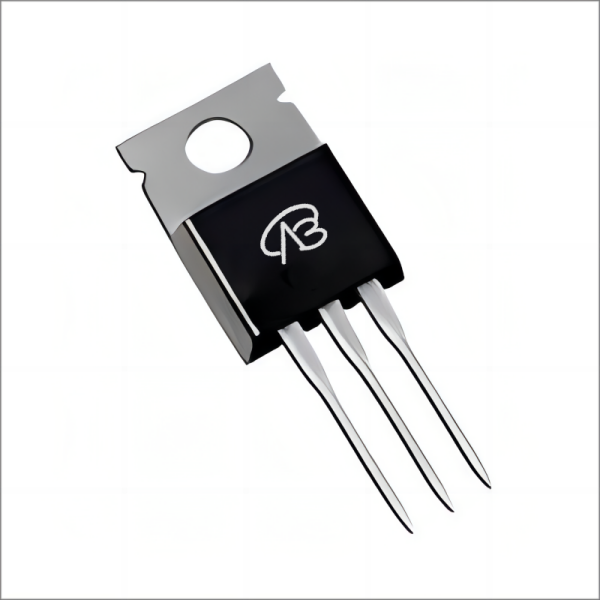
Comparative Analysis: IRF520NPBF (N-channel) vs. VBM1101M
Analysis of the Original Model (IRF520NPBF) Core:
This is a 100V N-channel MOSFET from Infineon in a standard TO-220AB package. Its design focuses on providing reliable switching and medium-current handling in general-purpose applications. Key advantages include: a drain-source voltage (Vdss) of 100V, a continuous drain current (Id) of 9.7A, and an on-resistance (RDS(on)) of 200mΩ at 10V gate drive. It serves as a robust, widely-available component for various power control tasks.
Compatibility and Differences of the Domestic Alternative (VBM1101M):
VBsemi's VBM1101M is a pin-to-pin compatible alternative in a TO-220 package. The main differences are in electrical parameters: while maintaining the same 100V voltage rating, VBM1101M offers significant performance improvements. It features a much lower on-resistance of 127mΩ at 10V and a higher continuous current rating of 18A compared to the original.
Key Application Areas:
Original Model IRF520NPBF: Suitable for general-purpose medium-power switching, linear amplification, and motor control in applications up to 100V/10A, such as power supplies, inverters, and relay drivers.
Alternative Model VBM1101M: Ideal for upgrade scenarios requiring lower conduction loss and higher current capacity within the same voltage range. It can directly replace IRF520NPBF in existing designs for improved efficiency and thermal performance.
Comparative Analysis: IPA093N06N3 G (N-channel) vs. VBMB1606
This comparison highlights the evolution towards higher efficiency and current handling in low-voltage, high-current applications.
Analysis of the Original Model (IPA093N06N3 G) Core:
This Infineon MOSFET is designed for high-efficiency, high-current switching. Its core advantages are:
High Current Capability: Continuous drain current (Id) of 43A at 60V Vdss.
Low On-Resistance: Very low RDS(on) of 9.3mΩ at 10V gate drive, minimizing conduction losses.
Robust Package: TO-220-3 package provides good thermal performance for power dissipation.
Compatibility and Differences of the Domestic Alternative (VBMB1606):
VBsemi's VBMB1606, in a TO-220F package, represents a substantial performance enhancement. It shares the same 60V voltage rating but dramatically improves key metrics:
Extremely Low On-Resistance: RDS(on) is reduced to 5mΩ at 10V (and 13mΩ at 4.5V).
Very High Current Rating: Continuous drain current is rated at 120A.
This makes it a superior choice for applications demanding minimal loss and maximum current throughput.
Key Application Areas:
Original Model IPA093N06N3 G: Excellent for high-current DC-DC converters (e.g., synchronous buck regulators), motor drives (for tools, small EVs), and power distribution in 12V/24V/48V systems where 43A capability and low RDS(on) are critical.
Alternative Model VBMB1606: Suited for next-generation or upgraded designs with extreme demands on efficiency and current density. Its ultra-low 5mΩ RDS(on) and 120A rating make it ideal for high-performance server VRMs, high-power motor controllers, and high-current load switches where thermal management and loss reduction are paramount.
Conclusion
This analysis reveals two distinct selection pathways:
For general-purpose 100V applications, the original IRF520NPBF offers proven reliability, while its domestic alternative VBM1101M provides a direct upgrade path with significantly lower on-resistance (127mΩ vs. 200mΩ) and higher current handling (18A vs. 9.7A), enabling improved efficiency in existing designs.
For demanding high-current, low-voltage (60V) applications, the original IPA093N06N3 G sets a high standard with 43A and 9.3mΩ. The domestic alternative VBMB1606 pushes the boundaries further with exceptional parameters—120A current and 5mΩ on-resistance—catering to the most challenging designs requiring maximum power density and minimal losses.
The core takeaway is that selection is about precise requirement matching. In the context of supply chain diversification, domestic alternatives like VBM1101M and VBMB1606 not only provide reliable backup options but also offer performance enhancements in key areas, giving engineers greater flexibility and resilience in design trade-offs and cost optimization. Understanding the design philosophy and parameter implications of each device is essential to unlock its full potential in your circuit.

Download PDF document
 Download now


