 中文
中文 English
MOSFET Selection for High-Power and High-Voltage Applications: IRF2804PBF, IRLR2908TRPBF vs. China Alternatives VBM1401, VBE1104N
Number of views:9999
 Back to previous page
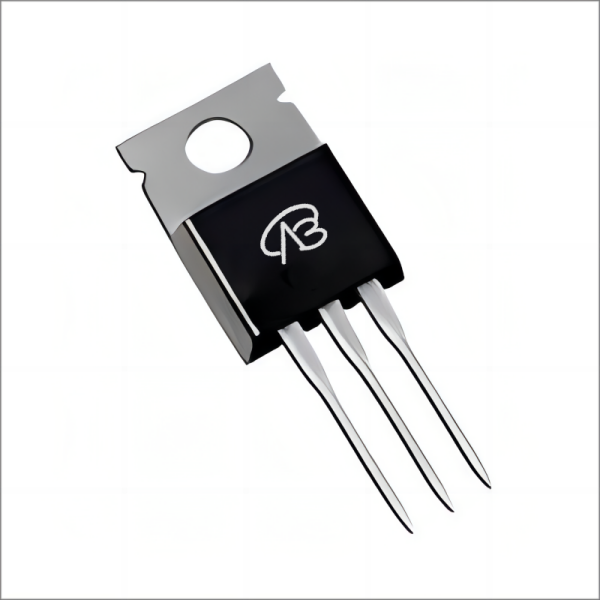
Comparative Analysis: IRF2804PBF (N-channel) vs. VBM1401
Analysis of the Original Model (IRF2804PBF) Core:
This is a 40V N-channel MOSFET from Infineon in a TO-220AB package. Its design core is to deliver extremely high current capability with low conduction loss in high-power applications. Key advantages are: a very low on-resistance of 2.3mΩ at a 10V gate drive, and an exceptionally high continuous drain current rating of 270A (at specified conditions). This makes it suitable for applications demanding minimal voltage drop and high power throughput.
Compatibility and Differences of the Domestic Alternative (VBM1401):
VBsemi's VBM1401 is offered in a TO-220 package and serves as a pin-to-pin compatible alternative. The key differences are in electrical parameters: VBM1401 features a slightly higher on-resistance of 2.5mΩ (@10V) but maintains a very high continuous current rating of 280A. Its voltage rating is the same at 40V.
Key Application Areas:
Original Model IRF2804PBF: Ideal for high-current, low-voltage switching applications where minimal conduction loss is paramount.
High-current DC-DC converters: Such as synchronous buck regulators in server power supplies or telecom equipment.
Motor drives and controllers: For driving large brushed DC motors or in high-power inverter stages.
Power distribution switches: In automotive, industrial, or energy systems requiring high-current path management.
Alternative Model VBM1401: A suitable domestic alternative for similar high-current applications, offering comparable current handling (280A) with a minor trade-off in on-resistance. It provides a reliable option for supply chain diversification.
Comparative Analysis: IRLR2908TRPBF (N-channel) vs. VBE1104N
This comparison focuses on a higher-voltage N-channel MOSFET where a balance of voltage rating, switching speed, and ruggedness is key.
Analysis of the Original Model (IRLR2908TRPBF) Core:
This 80V N-channel MOSFET from Infineon uses a TO-252 (DPAK) package. Its design leverages advanced HEXFET technology to achieve low specific on-resistance. Core advantages include:
Good voltage rating: 80V Vdss suitable for 48V-72V bus applications.
Optimized performance: On-resistance of 22.5mΩ (@10V) with a 30A continuous current rating.
Robust characteristics: Features like a 175°C junction temperature, fast switching speed, and high repetitive avalanche rating enhance reliability in demanding environments.
Compatibility and Differences of the Domestic Alternative (VBE1104N):
VBsemi's VBE1104N is a direct pin-to-pin compatible alternative in a TO-252 package. It presents a "performance-enhanced" profile:
Higher Voltage Rating: 100V Vdss compared to 80V, offering greater margin in high-voltage lines.
Higher Current Capability: 40A continuous drain current vs. 30A.
Lower On-Resistance: 30mΩ (@10V) compared to 22.5mΩ (@10V) of the original, though note the original's spec is measured at 23A. The VBE1104N provides a strong overall performance package.
Key Application Areas:
Original Model IRLR2908TRPBF: An excellent choice for efficient and reliable switching in medium-power, higher-voltage applications.
DC-DC Converters: Particularly in 48V input intermediate bus converters or boost/buck stages.
Motor Drives: For industrial motor controls, fans, or pumps operating from 24V-48V supplies.
Power Supplies: Switch-mode power supplies (SMPS) requiring good efficiency and thermal performance.
Alternative Model VBE1104N: Better suited for upgrade scenarios or new designs requiring higher voltage withstand (100V), higher current (40A), and lower conduction loss. It is ideal for next-generation power stages where enhanced performance and margin are desired.
Conclusion
This analysis reveals two distinct selection strategies:
For ultra-high-current, low-voltage (40V) switching, the original IRF2804PBF, with its extremely low 2.3mΩ on-resistance and massive 270A current rating, remains a top-tier choice for applications like high-power DC-DC conversion and motor drives where conduction loss is critical. Its domestic alternative VBM1401 offers a viable compatible solution with a slightly different performance balance (280A, 2.5mΩ), ensuring supply chain flexibility.
For higher-voltage (80V+) applications prioritizing a blend of voltage rating, current, and ruggedness, the original IRLR2908TRPBF provides a proven, reliable solution with good efficiency. The domestic alternative VBE1104N emerges as a compelling "performance-enhanced" option, surpassing the original with a 100V rating, 40A current, and low 30mΩ on-resistance, making it an excellent choice for demanding or upgraded designs.
The core takeaway is that selection hinges on precise requirement matching. In the context of supply chain diversification, domestic alternatives like VBM1401 and VBE1104N not only provide reliable backup options but also offer performance advantages in specific areas, giving engineers greater flexibility in design optimization and cost control. Understanding each device's parameter profile is key to unlocking its full potential in your circuit.

Download PDF document
 Download now


