 中文
中文 English
MOSFET Selection for High-Power and High-Density Applications: IPW80R280P7XKSA1, BSZ0902NSIATMA1 vs. China Alternatives VBP18R15S, VBQF1302
Number of views:9999
 Back to previous page
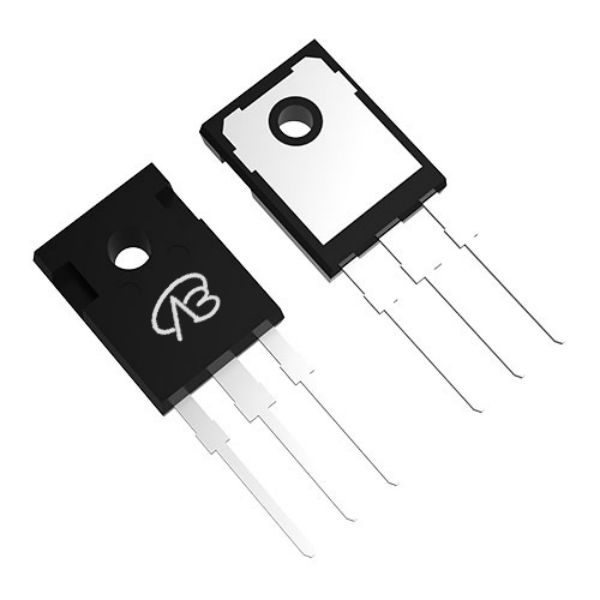
Comparative Analysis: IPW80R280P7XKSA1 (800V N-channel) vs. VBP18R15S
Analysis of the Original Model (IPW80R280P7XKSA1) Core:
This is an 800V N-channel MOSFET from Infineon's CoolMOS P7 series, housed in a TO-247-3 package. Its design core is to set a new benchmark in 800V superjunction technology, combining top-tier performance with advanced ease of use, built upon over 18 years of Infineon's SJ innovation. Key advantages include a high voltage rating of 800V, a continuous drain current of 17A, and a low on-resistance of 280mΩ (measured at 10V, 7.2A). This makes it exceptionally suitable for high-voltage, medium-power applications where efficiency and robustness are critical.
Compatibility and Differences of the Domestic Alternative (VBP18R15S):
VBsemi's VBP18R15S is also an 800V N-channel MOSFET in a TO-247 package, offering a pin-to-pin compatible alternative. The primary differences lie in the electrical parameters: while it matches the 800V drain-source voltage, its continuous current rating is slightly lower at 15A, and its on-resistance is higher at 370mΩ (@10V). This positions it as a viable alternative for applications where the full 17A current of the original is not strictly required, but cost or supply chain considerations are important.
Key Application Areas:
Original Model IPW80R280P7XKSA1: Its high voltage rating and optimized RDS(on) make it ideal for high-efficiency power supplies. Typical applications include:
SMPS (Switched-Mode Power Supplies): PFC (Power Factor Correction) stages and main switches in server, telecom, and industrial power supplies.
Solar Inverters: DC-AC conversion stages.
Motor Drives: For high-voltage inverter stages in industrial applications.
Alternative Model VBP18R15S: Suitable as a cost-effective alternative in 800V applications where the current demand is within 15A, such as in certain auxiliary power supplies or lower-power segments of the above applications.
Comparative Analysis: BSZ0902NSIATMA1 (30V N-channel) vs. VBQF1302
This comparison shifts focus to high-current, low-voltage applications where power density and conduction losses are paramount.
Analysis of the Original Model (BSZ0902NSIATMA1) Core:
This Infineon model is a 30V N-channel MOSFET in a compact TSDSON-8 package. It is specifically optimized for high-performance synchronous buck converters. Its core advantages are:
Exceptional Current Handling: A very high continuous drain current of 102A.
Ultra-Low On-Resistance: An RDS(on) as low as 3.7mΩ at a 4.5V gate drive, minimizing conduction losses.
Integrated Features: Includes a monolithically integrated Schottky diode, which enhances efficiency in synchronous rectification by improving body diode performance.
Robust Design: 100% avalanche tested and offers excellent thermal resistance in a small footprint.
Compatibility and Differences of the Domestic Alternative (VBQF1302):
VBsemi's VBQF1302 is a formidable "performance-enhanced" alternative in a DFN8(3x3) package. It matches the 30V voltage rating but offers significant advantages in key parameters:
Higher Current Capability: A continuous drain current of 70A (note: while lower than the original's 102A, it remains very high for its class).
Lower On-Resistance: Achieves an impressively low RDS(on) of 3mΩ @4.5V and 2mΩ @10V, potentially leading to lower conduction losses than the original.
It utilizes Trench technology for efficient switching.
Key Application Areas:
Original Model BSZ0902NSIATMA1: Its ultra-low RDS(on), extremely high current rating, and integrated Schottky diode make it a top-tier choice for the most demanding high-density power conversion. Applications include:
High-Current POL (Point-of-Load) Converters: For powering CPUs, GPUs, and ASICs in servers and workstations.
Synchronous Rectification in VRMs: (Voltage Regulator Modules).
Battery Protection Circuits / High-Current Load Switches: In power tools and automotive systems.
Alternative Model VBQF1302: With its even lower on-resistance and high 70A current rating, it is an excellent choice for upgrade scenarios or new designs where minimizing conduction loss is critical. It is well-suited for high-efficiency synchronous buck converters and motor drives where its superior RDS(on) can translate directly into higher efficiency or better thermal performance.
Conclusion
In summary, this analysis reveals two distinct selection pathways:
For 800V high-voltage applications, the original Infineon IPW80R280P7XKSA1, with its proven CoolMOS P7 technology offering 280mΩ RDS(on) and 17A current, remains a benchmark for efficiency and robustness in SMPS and industrial drives. Its domestic alternative VBP18R15S provides a functionally compatible and cost-attractive option for designs where the operating current is within 15A.
For 30V ultra-high-current, high-density applications, the original Infineon BSZ0902NSIATMA1 sets an extremely high bar with its 102A current and integrated Schostky diode, making it ideal for the most demanding POL converters. The domestic alternative VBQF1302 presents a compelling "performance-competitive" option, boasting an even lower on-resistance (2mΩ@10V) and a substantial 70A current capability, making it a strong candidate for designs prioritizing minimal conduction loss and high efficiency.
The core takeaway is that selection is driven by precise application requirements. In the context of supply chain diversification, domestic alternatives like VBP18R15S and VBQF1302 not only provide reliable backup options but also demonstrate competitive or superior performance in specific key parameters, offering engineers greater flexibility and resilience in their design and cost optimization efforts. Understanding the design philosophy and parameter implications of each device is essential to unlocking its full potential in your circuit.

Download PDF document
 Download now


