 中文
中文 English
MOSFET Selection for High-Power & High-Efficiency Applications: IPP60R125CP, BSC0901NSIATMA1 vs. China Alternatives VBM16R20, VBQA1302
Number of views:9999
 Back to previous page
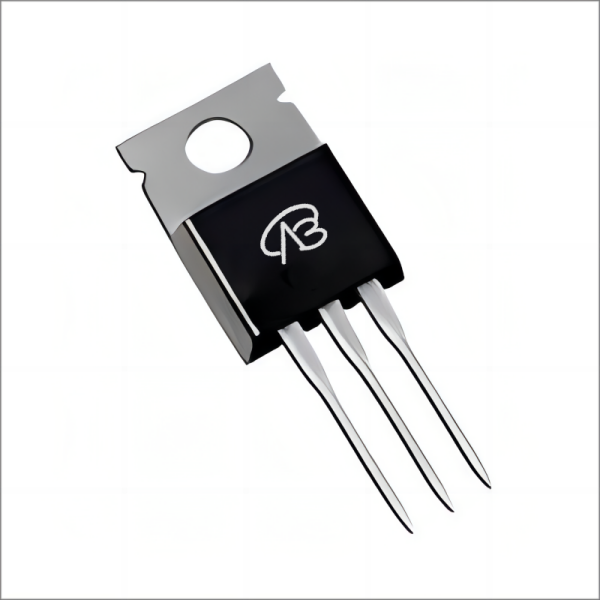
Comparative Analysis: IPP60R125CP (650V Superjunction) vs. VBM16R20
Analysis of the Original Model (IPP60R125CP) Core:
This is a 650V N-channel Superjunction MOSFET from Infineon in a TO-220 package. Its design core is to achieve high efficiency in hard-switching topologies. Key advantages are: an optimized low figure-of-merit (RDS(on) Qg), featuring an ultra-low gate charge (Qg) for fast switching and reduced drive loss. It also offers a high dv/dt rating, high peak current capability, and a robust 208W power dissipation rating, making it suitable for industrial-grade applications.
Compatibility and Differences of the Domestic Alternative (VBM16R20):
VBsemi's VBM16R20 is a direct pin-to-pin compatible alternative in a TO-220 package. The main differences lie in the electrical parameters: VBM16R20 has a slightly lower voltage rating (600V vs. 650V) and a marginally higher on-resistance (160mΩ @10V vs. 125mΩ @10V for the original). Its continuous current rating is also slightly lower at 20A compared to 25A.
Key Application Areas:
Original Model IPP60R125CP: Its high voltage rating, excellent switching performance, and high power dissipation make it ideal for hard-switching topologies in server and telecom power supplies, such as PFC stages, half-bridge, or full-bridge converters.
Alternative Model VBM16R20: A suitable domestic alternative for 600V-rail applications where the ultra-high dv/dt and peak current capability of the original are not critically required, but cost and supply chain diversification are priorities, such as in certain industrial SMPS or UPS systems.
Comparative Analysis: BSC0901NSIATMA1 (30V Sync Rectifier) vs. VBQA1302
The design pursuit of this low-voltage N-channel MOSFET is ultra-low conduction loss and optimized performance for synchronous rectification.
Analysis of the Original Model (BSC0901NSIATMA1) Core:
Its core advantages are reflected in three aspects:
1. Exceptional Conduction Performance: An extremely low on-resistance of 2.6mΩ at 4.5V VGS, supporting a very high continuous drain current of 145A. This minimizes conduction losses.
2. Optimized for Sync Rectification: Features a monolithically integrated Schottky-like diode to improve body diode reverse recovery characteristics, crucial for high-frequency switching.
3. Robust Package: The TDSON-8 package offers excellent thermal resistance for effective heat dissipation in high-current applications.
Compatibility and Differences of the Domestic Alternative (VBQA1302):
VBsemi's VBQA1302, in a DFN8(5x6) package, represents a "performance-enhanced" alternative in key parameters. It boasts a higher continuous current rating (160A vs. 145A) and achieves a lower on-resistance of 1.8mΩ at 10V VGS (compared to the original's performance at 4.5V). This translates to potentially lower conduction losses and higher efficiency margins in many applications.
Key Application Areas:
Original Model BSC0901NSIATMA1: Its ultra-low RDS(on) and integrated Schottky-like diode make it an ideal choice for high-performance synchronous rectification in low-voltage, high-current DC-DC converters, such as server VRMs, telecom board-mounted power supplies, and high-current POL converters.
Alternative Model VBQA1302: Is more suitable for upgraded scenarios demanding even lower conduction loss and higher current capability. Its superior RDS(on) and current rating make it an excellent choice for next-generation high-density power converters, high-current motor drives, or battery protection circuits where minimizing loss is paramount.
Conclusion:
In summary, this comparative analysis reveals two distinct selection paths:
For high-voltage (650V) hard-switching applications in servers and telecom, the original model IPP60R125CP, with its optimized FOM, high dv/dt capability, and robust TO-220 package, demonstrates significant advantages. Its domestic alternative VBM16R20 provides a viable, pin-compatible option for 600V systems where absolute peak performance can be traded for cost and supply chain benefits.
For low-voltage, high-current synchronous rectification focusing on minimal conduction loss, the original model BSC0901NSIATMA1, with its ultra-low 2.6mΩ RDS(on) and integrated diode, is a benchmark for efficiency. The domestic alternative VBQA1302 offers compelling "performance enhancement" with its even lower 1.8mΩ RDS(on) and higher 160A current rating, presenting an attractive upgrade path for designs pushing power density and efficiency limits.
The core conclusion is: Selection hinges on precise requirement matching. In the context of supply chain diversification, domestic alternatives like VBM16R20 and VBQA1302 not only provide feasible backups but also offer competitive or even superior parameters in specific areas, giving engineers greater flexibility and resilience in design trade-offs and cost control. Understanding the design philosophy and parameter implications of each device is key to unlocking its full potential in your circuit.

Download PDF document
 Download now


