 中文
中文 English
MOSFET Selection for High-Power & High-Density Applications: IPP60R099P7XKSA1, ISCH42N04LM7ATMA1 vs. China Alternatives VBM16R32S, VBGQA1400
Number of views:9999
 Back to previous page
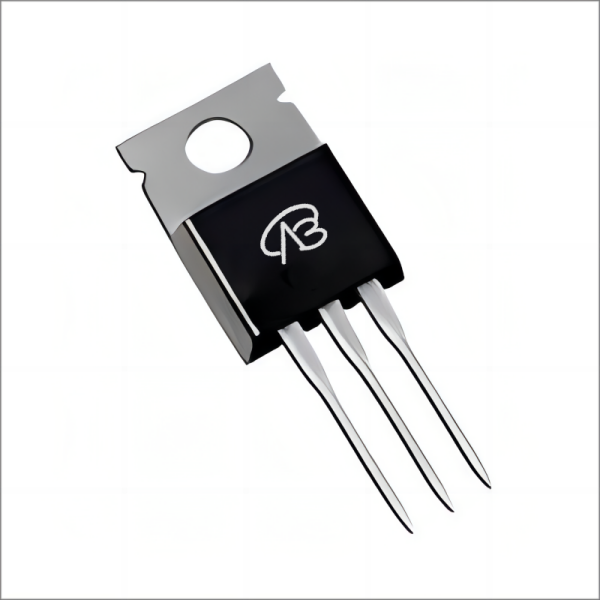
Comparative Analysis: IPP60R099P7XKSA1 (600V N-channel) vs. VBM16R32S
Analysis of the Original Model (IPP60R099P7XKSA1) Core:
This is a 600V N-channel MOSFET from Infineon, part of its revolutionary 7th generation CoolMOS P7 platform based on Superjunction (SJ) technology. Housed in a TO-220-3 package, its design core is to achieve high efficiency and robustness in high-voltage switching applications. Key advantages include: a low on-resistance of 99mΩ at 10V gate drive, a continuous drain current of 20A, and the platform's excellent switching characteristics with minimal ringing, outstanding hard commutation ruggedness of the body diode, and superior ESD capability. The extremely low switching and conduction losses enable more efficient, compact, and cooler designs.
Compatibility and Differences of the Domestic Alternative (VBM16R32S):
VBsemi's VBM16R32S is also a 600V N-channel Superjunction MOSFET in a TO-220 package, offering a direct pin-to-pin compatible alternative. The main differences lie in enhanced electrical parameters: VBM16R32S features a significantly higher continuous drain current (32A vs. 20A) and a lower on-resistance (85mΩ@10V vs. 99mΩ@10V). This indicates a potential for lower conduction losses and higher current handling in compatible form-factor applications.
Key Application Areas:
Original Model IPP60R099P7XKSA1: Its strengths make it ideal for high-efficiency, high-voltage switching applications such as:
Switch Mode Power Supplies (SMPS): PFC stages, flyback, or forward converters in AC-DC power supplies.
Industrial Motor Drives: Inverters for fans, pumps, and other motor control systems.
Solar Inverters: Power conversion stages in photovoltaic systems.
Alternative Model VBM16R32S: With its higher current rating and lower RDS(on), it is suitable for upgraded scenarios within the same voltage class that demand higher power throughput or improved efficiency, such as higher-power SMPS or motor drives where thermal performance is critical.
Comparative Analysis: ISCH42N04LM7ATMA1 (40V N-channel) vs. VBGQA1400
This comparison shifts focus to high-current, low-voltage applications where minimizing conduction loss is paramount.
Analysis of the Original Model (ISCH42N04LM7ATMA1) Core:
This Infineon model is a 40V N-channel MOSFET in a compact SON-8 (5x6) package. Its design pursuit is the ultimate combination of ultra-low on-resistance and excellent thermal performance in a small footprint. Core advantages are:
Exceptional Conduction Performance: An extremely low on-resistance of 0.39mΩ at 10V gate drive, supporting a very high continuous drain current of 541A (note: package and thermal limits apply).
Superior Thermal Design: Features excellent thermal resistance for effective heat dissipation from its power package.
High Ruggedness: 100% avalanche tested, ensuring reliability under stressful conditions.
Compatibility and Differences of the Domestic Alternative (VBGQA1400):
VBsemi's VBGQA1400 is also a 40V N-channel MOSFET in a DFN8(5x6) package, making it a form-factor compatible alternative. While key voltage ratings are similar, there are performance trade-offs: VBGQA1400 has a lower continuous current rating (250A vs. 541A) and a higher on-resistance (0.8mΩ@10V vs. 0.39mΩ@10V). It utilizes SGT (Shielded Gate Trench) technology.
Key Application Areas:
Original Model ISCH42N04LM7ATMA1: Its ultra-low RDS(on) and extremely high current capability make it ideal for the most demanding high-current, space-constrained applications:
Server & Telecom Power: Synchronous rectification and high-current DC-DC converters in VRMs and POL modules.
Battery Management Systems (BMS): High-side or low-side protection switches for lithium-ion battery packs.
High-Current Motor Drives: Drone propulsion, e-bikes, or industrial servo drives.
Alternative Model VBGQA1400: Serves as a viable alternative for applications where the extreme current level of the original is not fully required, but a compact, robust 40V solution is needed. It is suitable for moderate-to-high current DC-DC conversion, motor drives, and load switches where its 250A capability and SGT benefits are sufficient.
Conclusion:
This analysis reveals two distinct selection paths based on application priority:
For high-voltage (600V) switching applications focusing on efficiency and robustness, the original IPP60R099P7XKSA1, with its proven CoolMOS P7 technology offering excellent switching performance and ruggedness, is a strong choice for SMPS and industrial drives. Its domestic alternative VBM16R32S provides a compelling performance-enhanced option within the same package, offering higher current (32A) and lower RDS(on) (85mΩ) for designers seeking an upgrade path or alternative supply.
For ultra-high-current, low-voltage (40V) applications where minimizing conduction loss in a compact space is critical, the original ISCH42N04LM7ATMA1 stands out with its benchmark-setting ultra-low 0.39mΩ RDS(on) and massive 541A current rating, making it ideal for the most demanding server, BMS, and motor drive circuits. The domestic alternative VBGQA1400 offers a form-factor compatible solution with substantial capability (250A, 0.8mΩ), suitable for many high-current applications that do not require the absolute maximum performance of the original.
The core conclusion is that selection hinges on precise requirement matching. In the context of supply chain diversification, domestic alternatives like VBM16R32S and VBGQA1400 not only provide feasible backup options but also offer specific advantages or cost-benefit trade-offs, giving engineers greater flexibility and resilience in design and sourcing decisions. Understanding the design philosophy and parameter implications of each device is key to unlocking its full value in the circuit.

Download PDF document
 Download now


