 中文
中文 English
MOSFET Selection for High-Power Switching Applications: IPP60R099CP, IRFB4115PBF vs. China Alternatives VBM16R32S, VBM1151N
Number of views:9999
 Back to previous page
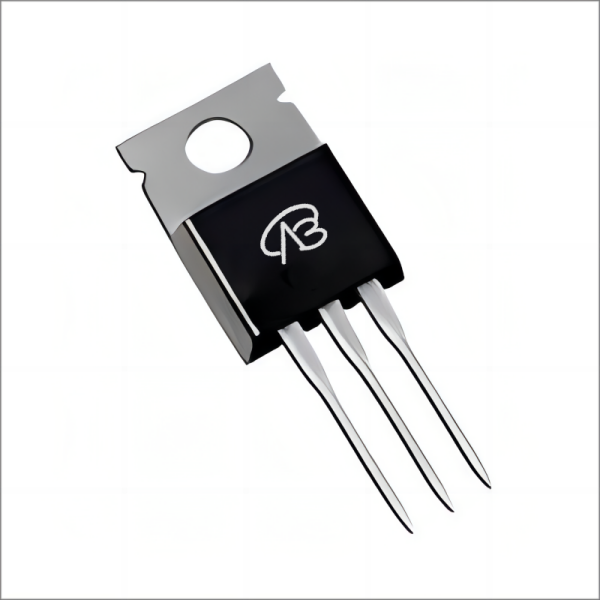
Comparative Analysis: IPP60R099CP (650V N-channel) vs. VBM16R32S
Analysis of the Original Model (IPP60R099CP) Core:
This is a 650V N-channel MOSFET from Infineon in a TO-220 package. Its design core is to deliver high efficiency and robustness in hard-switching power supplies. Key advantages include: an extremely low on-resistance of 99mΩ (at 10V, 18A), very low gate charge for fast switching, a high dv/dt rating, and high pulse current capability. It is characterized by its high voltage rating and optimized performance for industrial-grade applications.
Compatibility and Differences of the Domestic Alternative (VBM16R32S):
VBsemi's VBM16R32S is also offered in a TO-220 package and serves as a pin-to-pin compatible alternative. The main differences are in the electrical parameters: VBM16R32S has a slightly lower voltage rating (600V vs. 650V) but offers a superior on-resistance of 85mΩ (@10V) and a similar continuous drain current rating of 32A. It utilizes a Super Junction Multi-EPI process.
Key Application Areas:
Original Model IPP60R099CP: Its high voltage rating and robust switching characteristics make it ideal for high-voltage, hard-switching topologies. Typical applications include:
Server and Telecom Switch-Mode Power Supplies (SMPS)
Industrial power systems requiring 650V withstand capability.
Alternative Model VBM16R32S: More suitable for applications where a 600V rating is sufficient, and lower conduction loss is prioritized. Its lower RDS(on) can lead to higher efficiency in compatible 600V systems, such as certain SMPS and power conversion stages.
Comparative Analysis: IRFB4115PBF (150V N-channel) vs. VBM1151N
This comparison focuses on high-current, lower-voltage switching applications where low conduction loss is paramount.
Analysis of the Original Model (IRFB4115PBF) Core:
This Infineon 150V MOSFET in a TO-220 package is designed for high-current handling. Its core advantages are:
High Current Capability: Continuous drain current rating of 104A.
Low On-Resistance: Very low RDS(on) of 11mΩ at 10V gate drive, minimizing conduction losses.
Robust Package: The TO-220 package provides good thermal performance for high-power dissipation.
Compatibility and Differences of the Domestic Alternative (VBM1151N):
VBsemi's VBM1151N is a direct, pin-to-pin compatible alternative that offers performance enhancement in key areas. It features the same 150V rating but boasts an even lower on-resistance of 8.5mΩ (@10V) and a high continuous current rating of 100A, utilizing a Trench technology process.
Key Application Areas:
Original Model IRFB4115PBF: An excellent choice for applications demanding high current and low loss in the 100-150V range. Typical uses include:
Low-voltage, high-current DC-DC converters
Motor drives and inverters
Power tools and automotive systems
Alternative Model VBM1151N: Suited for the same application spaces but where minimizing conduction loss and thermal stress is critical. Its lower RDS(on) makes it a strong candidate for upgraded designs seeking higher efficiency or the ability to handle similar currents with lower temperature rise.
Summary
This analysis reveals two distinct selection pathways based on voltage and current requirements:
For high-voltage (650V) hard-switching applications like server/telecom SMPS, the original IPP60R099CP offers proven reliability and a full 650V rating. Its domestic alternative VBM16R32S provides a compelling option for 600V systems, trading a slight reduction in voltage rating for significantly lower on-resistance (85mΩ vs. 99mΩ), which can translate to efficiency gains.
For high-current, lower-voltage (150V) applications, the original IRFB4115PBF sets a high standard with 104A current and 11mΩ RDS(on). The domestic alternative VBM1151N positions itself as a "performance-enhanced" choice, matching the voltage and current ratings while achieving a substantially lower on-resistance of 8.5mΩ, enabling potentially lower losses and higher power density.
The core conclusion is that selection hinges on precise requirement matching. In the context of supply chain diversification, domestic alternatives like VBM16R32S and VBM1151N not only provide viable backup options but also demonstrate competitive or superior performance in specific key parameters (like RDS(on)), offering engineers greater flexibility in design optimization and cost management. Understanding the specific demands of your voltage, current, and loss budget is essential to leveraging the full value of these components.

Download PDF document
 Download now


