 中文
中文 English
MOSFET Selection for High-Power and High-Efficiency Applications: IPP339N20NM6AKSA1, IRLR3110ZTRPBF vs. China Alternatives VBM1202N, VBE1101N
Number of views:9999
 Back to previous page
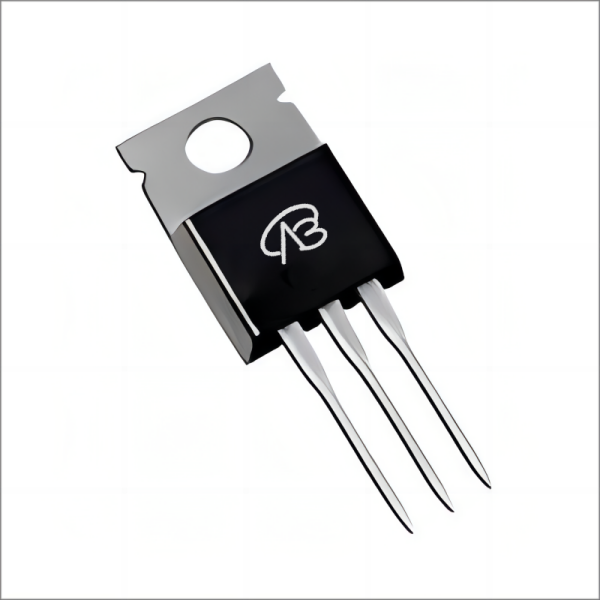
Comparative Analysis: IPP339N20NM6AKSA1 (N-channel) vs. VBM1202N
Analysis of the Original Model (IPP339N20NM6AKSA1) Core:
This is a 200V N-channel MOSFET from Infineon in a TO-220-3 package. Its design core focuses on achieving an excellent figure-of-merit (FOM) and robust performance in high-power applications. Key advantages include: a low on-resistance of 33.9mΩ at 10V gate drive, a high continuous drain current of 39A, and a power dissipation rating of 125W. It features an excellent gate charge × RDS(on) product, very low reverse recovery charge (Qrr), and a high avalanche energy rating. Rated for 175°C operation, it is suitable for demanding environments.
Compatibility and Differences of the Domestic Alternative (VBM1202N):
VBsemi's VBM1202N is also offered in a TO-220 package and serves as a pin-to-pin compatible alternative. The key differences lie in the enhanced electrical parameters: VBM1202N boasts a significantly lower on-resistance of 17mΩ at 10V and a much higher continuous current rating of 80A, while maintaining the same 200V voltage rating. This represents a substantial improvement in conduction performance and current-handling capability.
Key Application Areas:
Original Model IPP339N20NM6AKSA1: Its combination of 200V rating, 39A current, low RDS(on), and excellent FOM makes it ideal for high-efficiency, medium-to-high power applications. Typical uses include:
Switch-mode power supplies (SMPS) and PFC circuits.
Motor drives and inverters.
High-power DC-DC converters.
Applications requiring high avalanche ruggedness.
Alternative Model VBM1202N: With its superior 80A current rating and ultra-low 17mΩ RDS(on), it is an excellent choice for performance-upgraded scenarios or new designs requiring higher power density, lower conduction losses, and higher current capacity within the same 200V voltage class.
Comparative Analysis: IRLR3110ZTRPBF (N-channel) vs. VBE1101N
This comparison focuses on N-channel MOSFETs in compact packages designed for high-current, low-voltage applications where efficiency and thermal performance in a small footprint are paramount.
Analysis of the Original Model (IRLR3110ZTRPBF) Core:
This Infineon MOSFET in a TO-252 (DPAK) package is designed for high efficiency and power density. Its core advantages are:
High Current Capacity: A continuous drain current rating of 63A at 100V Vdss.
Low On-Resistance: RDS(on) is as low as 14mΩ at 10V gate drive (38A), ensuring minimal conduction losses.
Compact Power Package: The TO-252 offers a good balance between size and thermal performance for space-constrained, high-current applications.
Compatibility and Differences of the Domestic Alternative (VBE1101N):
VBsemi's VBE1101N, also in a TO-252 package, is a direct pin-to-pin compatible alternative that offers performance enhancement. Key parameter improvements include: a lower on-resistance of 8.5mΩ at 10V gate drive (and 10.5mΩ at 4.5V), and a higher continuous drain current rating of 85A, while maintaining the 100V voltage rating.
Key Application Areas:
Original Model IRLR3110ZTRPBF: Its high current (63A) and low RDS(on) in a compact DPAK make it suitable for:
Low-voltage, high-current DC-DC converters (e.g., for computing, telecom).
Motor drive and control circuits in automotive or industrial systems.
Power switching in server and networking equipment.
Alternative Model VBE1101N: With its even lower RDS(on) (8.5mΩ) and higher current rating (85A), it is ideal for next-generation designs pushing the limits of power density and efficiency within the 100V range, or for direct upgrades seeking lower losses and higher margin.
Conclusion:
In summary, this analysis reveals clear selection and upgrade paths:
For 200V-class, high-power applications where the original IPP339N20NM6AKSA1 offers a strong balance of RDS(on), current, and ruggedness, the domestic alternative VBM1202N presents a significant performance-enhanced option. With its drastically lower 17mΩ RDS(on) and doubled 80A current rating in the same TO-220 package, it enables designs with higher efficiency, greater power handling, or provides substantial headroom for reliability.
For 100V-class, high-current applications in compact packages, where the original IRLR3110ZTRPBF delivers excellent performance in a DPAK, the domestic alternative VBE1101N serves as a compelling upgrade choice. Its superior parameters—lower RDS(on) (8.5mΩ vs. 14mΩ) and higher current (85A vs. 63A)—make it suitable for pushing efficiency boundaries or demanding higher power density without changing the footprint.
The core conclusion is that selection depends on precise requirement matching. In the context of supply chain diversification, these domestic alternatives not only provide viable backup options but also offer tangible performance gains in key parameters, giving engineers greater flexibility and resilience in design trade-offs and cost optimization. Understanding the specific parameter advantages of each device is crucial to unlocking its full potential in the circuit.

Download PDF document
 Download now


