 中文
中文 English
MOSFET Selection for High-Power and High-Current Applications: IPP200N15N3G, IRFH5300TRPBF vs. China Alternatives VBM1205N, VBQA1302
Number of views:9999
 Back to previous page
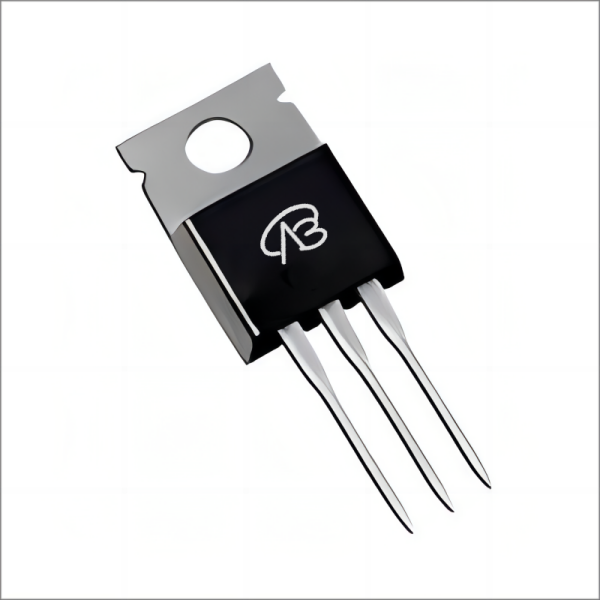
Comparative Analysis: IPP200N15N3G (N-channel, TO-220) vs. VBM1205N
Analysis of the Original Model (IPP200N15N3G) Core:
This is a 150V N-channel MOSFET from Infineon in a standard TO-220-3 through-hole package. Its design core is to provide robust power handling and good thermal performance in high-voltage applications. Key advantages are: a high voltage rating of 150V, a continuous drain current of 50A, and a low on-resistance of 20mΩ at 10V gate drive. The TO-220 package facilitates easy mounting on heat sinks for effective thermal management in power-dense designs.
Compatibility and Differences of the Domestic Alternative (VBM1205N):
VBsemi's VBM1205N is also offered in a TO-220 package, providing direct form-factor compatibility. The main differences are in electrical parameters: VBM1205N has a higher voltage rating (200V) but a higher on-resistance (56mΩ @10V) and a lower continuous current rating (35A) compared to the original model.
Key Application Areas:
Original Model IPP200N15N3G: Its combination of 150V rating, 50A current, and low 20mΩ RDS(on) makes it well-suited for high-power switching applications requiring good thermal dissipation.
Switching Power Supplies: Used in PFC stages, high-voltage DC-DC converters, and inverter circuits.
Motor Drives: Ideal for driving industrial motors, automotive actuators, or high-power brushless DC motors.
UPS and Power Inverters: Serves as a main switching element in uninterruptible power supplies and solar inverters.
Alternative Model VBM1205N: More suitable for applications requiring a higher voltage margin (up to 200V) but with moderate current demands (around 35A), where the TO-220 package is preferred for thermal management.
Comparative Analysis: IRFH5300TRPBF (N-channel, PQFN) vs. VBQA1302
This comparison focuses on ultra-low on-resistance and high-current capability in a surface-mount package for low-voltage, high-current applications.
Analysis of the Original Model (IRFH5300TRPBF) Core:
This Infineon MOSFET features an advanced PQFN-8 (5x6) package. Its design pursues minimal conduction loss and excellent thermal performance in a compact footprint. Core advantages include:
Exceptional Current Handling: An extremely high continuous drain current rating of 336A.
Ultra-Low Conduction Loss: A remarkably low on-resistance of 1.4mΩ at 10V gate drive.
Superior Thermal Performance: The package offers very low thermal resistance to the PCB (<0.5°C/W), enabling efficient heat dissipation.
Compact Profile: A low profile (<0.9mm) saves vertical space.
Compatibility and Differences of the Domestic Alternative (VBQA1302):
VBsemi's VBQA1302 uses a compatible DFN8(5x6) package. It presents a compelling "performance-competitive" alternative: while the voltage rating (30V) matches, its on-resistance is slightly lower at 1.8mΩ (@10V), and it offers a substantial continuous current rating of 160A.
Key Application Areas:
Original Model IRFH5300TRPBF: Its ultra-low RDS(on) and massive current rating make it a top-tier choice for the most demanding high-current, low-voltage applications.
OR-ing MOSFETs: For 12V bus protection and managing inrush currents in server and telecom power systems.
High-Current DC-DC Converters: As a synchronous rectifier or main switch in point-of-load (POL) converters for CPUs, GPUs, and ASICs.
Battery-Powered Motor Inverters: For driving high-power motors in electric vehicles, drones, or power tools.
Alternative Model VBQA1302: Serves as a strong domestic alternative for applications requiring high current (up to 160A) and low conduction loss, providing a viable option for designs prioritizing supply chain diversification without significant performance compromise in many 30V systems.
Conclusion:
This analysis reveals two distinct selection pathways based on application priorities:
For high-voltage, high-power applications where thermal management via a heatsink is feasible, the original model IPP200N15N3G, with its balanced 150V/50A/20mΩ performance in a TO-220 package, remains a reliable workhorse for power supplies and motor drives. Its domestic alternative VBM1205N offers a higher voltage rating (200V) but with trade-offs in current and RDS(on), making it suitable for designs where voltage withstand is the primary concern.
For low-voltage, ultra-high-current applications demanding minimal PCB footprint and lowest possible conduction loss, the original model IRFH5300TRPBF sets a high benchmark with its 336A rating and 1.4mΩ RDS(on) in a thermally-optimized PQFN package. The domestic alternative VBQA1302 provides a competitive surface-mount solution with 160A capability and 1.8mΩ RDS(on), offering a valuable alternative for cost-sensitive or supply-chain-resilient designs in 30V systems.
The core takeaway is that selection hinges on precise requirement matching. In an era of supply chain diversification, domestic alternatives like VBM1205N and VBQA1302 not only provide feasible backup options but also offer specific parametric advantages, granting engineers greater flexibility in design trade-offs and cost optimization. A deep understanding of each device's design philosophy and parameter implications is key to unlocking its full potential in your circuit.

Download PDF document
 Download now


