 中文
中文 English
MOSFET Selection for High-Power and Automotive Applications: IPP120N20NFD, IAUC24N10S5L300ATMA1 vs. China Alternatives VBM1201N, VBQA1102N
Number of views:9999
 Back to previous page
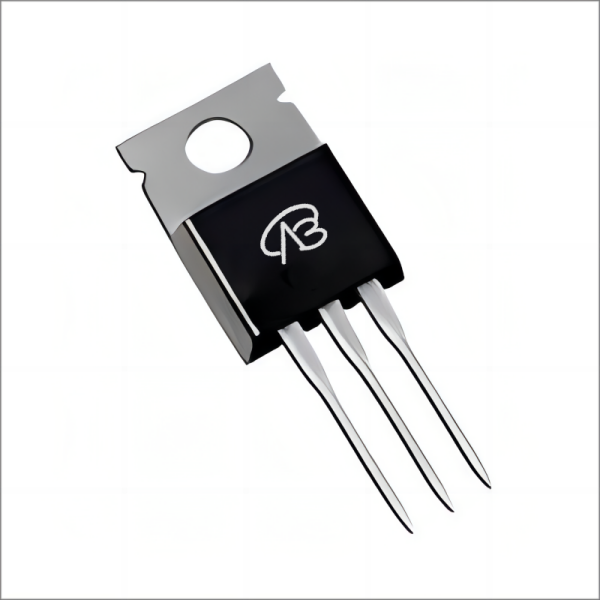
Comparative Analysis: IPP120N20NFD (High-Power N-channel) vs. VBM1201N
Analysis of the Original Model (IPP120N20NFD) Core:
This is a 200V N-channel MOSFET from Infineon in a TO-220-3 package. Its design core is to deliver high current capability and ruggedness in industrial and power applications. Key advantages include: an extremely low on-resistance of 12mΩ at 10V gate drive, a high continuous drain current of 84A, and a 175°C maximum junction temperature. It features a fast body diode (FD) with reduced Qₘ, is optimized for hard-switching durability, and is halogen-free per IEC61249-2-21.
Compatibility and Differences of the Domestic Alternative (VBM1201N):
VBsemi's VBM1201N is also offered in a TO-220 package and serves as a pin-to-pin compatible alternative. The key differences lie in its enhanced electrical parameters: VBM1201N boasts an even lower on-resistance of 7.6mΩ (at 10V) and a higher continuous current rating of 100A at the same 200V voltage rating.
Key Application Areas:
Original Model IPP120N20NFD: Its high current (84A) and low RDS(on) make it ideal for high-power switching applications requiring robustness.
Industrial Motor Drives: For controlling high-current brushed/brushless DC motors.
Power Supplies & UPS: Used in PFC stages, inverter bridges, and high-current DC-DC converters.
Welding Equipment & Power Tools: As the main switching element in high-power output stages.
Alternative Model VBM1201N: With superior current (100A) and conduction loss (7.6mΩ) performance, it is perfectly suited for upgraded or new designs demanding higher power density, lower losses, and increased current headroom in similar 200V applications.
Comparative Analysis: IAUC24N10S5L300ATMA1 (Automotive N-channel) vs. VBQA1102N
This comparison shifts focus to the demanding automotive sector, where reliability, qualification, and compact efficiency are paramount.
Analysis of the Original Model (IAUC24N10S5L300ATMA1) Core:
This AEC-Q101 qualified 100V N-channel MOSFET from Infineon comes in a TDSON-8 package. Its design pursues a balance of automotive-grade reliability, logic-level drive, and good power handling in a compact space. Core advantages are: 100% avalanche tested, suitable for automatic optical inspection (AOI), MSL1 rated for high-temperature reflow, and features a logic-level threshold (37mΩ @ 4.5V Vgs) with a continuous current of 24A.
Compatibility and Differences of the Domestic Alternative (VBQA1102N):
VBsemi's VBQA1102N, in a DFN8(5x6) package, presents a performance-enhanced alternative. While both are 100V rated, VBQA1102N offers significantly better key parameters: a much lower on-resistance of 17mΩ (at 10V Vgs) compared to 37mΩ, and a higher continuous current rating of 30A versus 24A.
Key Application Areas:
Original Model IAUC24N10S5L300ATMA1: Its automotive qualification and balanced performance make it a reliable choice for 12V/24V automotive systems.
Automotive Body Control Modules: For driving relays, lamps, and heaters.
Electric Power Steering (EPS) Auxiliary Drives: In low-power assist motor circuits.
Battery Management Systems (BMS): For load switching and protection circuits.
Alternative Model VBQA1102N: With its lower RDS(on) (17mΩ) and higher current (30A), it is more suitable for automotive or industrial applications requiring higher efficiency, lower thermal stress, and greater current capability within a compact footprint, such as in more demanding DC-DC converters, motor drives, or solenoid drivers.
Conclusion
In summary, this analysis reveals two distinct selection pathways:
For high-power industrial applications around 200V, the original IPP120N20NFD, with its 84A current and 12mΩ RDS(on), is a proven, rugged solution. Its domestic alternative VBM1201N provides a compelling performance upgrade with 100A and 7.6mΩ, making it an excellent choice for designs seeking higher efficiency and power density.
For automotive and compact 100V applications, the AEC-Q101 qualified IAUC24N10S5L300ATMA1 offers guaranteed reliability for automotive use. The domestic alternative VBQA1102N delivers significant performance gains (30A, 17mΩ) in a small package, ideal for efficiency-critical designs that can benefit from its enhanced specifications.
The core takeaway is that selection hinges on precise requirement matching. In the context of supply chain diversification, domestic alternatives like VBM1201N and VBQA1102N not only provide viable backup options but also offer performance advantages in key areas, giving engineers greater flexibility and resilience in design trade-offs and cost optimization. Understanding the design philosophy and parameter implications of each device is essential to unlocking its full potential in your circuit.

Download PDF document
 Download now


