 中文
中文 English
MOSFET Selection for High-Power Switching Applications: IPP037N08N3 G, IPA60R180P7S vs. China Alternatives VBM1803, VBMB16R18S
Number of views:9999
 Back to previous page
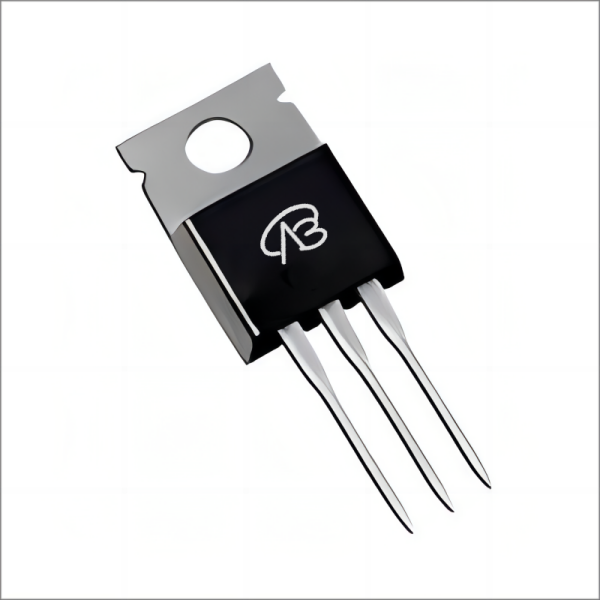
Comparative Analysis: IPP037N08N3 G (80V N-channel) vs. VBM1803
Analysis of the Original Model (IPP037N08N3 G) Core:
This is an 80V N-channel MOSFET from Infineon in a TO-220-3 package. Its design core is optimized for high-frequency switching and synchronous rectification in DC/DC converters. Key advantages include an extremely low on-resistance (RDS(on)) of 3.1mΩ at 10V gate drive and a high continuous drain current (Id) of 100A. It features an excellent gate charge (Qg) × RDS(on) figure of merit (FOM), ensuring low switching losses. The device is 100% avalanche tested, RoHS compliant, halogen-free, and qualified for target applications per JEDEC standards, guaranteeing high reliability.
Compatibility and Differences of the Domestic Alternative (VBM1803):
VBsemi's VBM1803 is a direct pin-to-pin compatible alternative in a TO-220 package. It matches the original's 80V voltage rating. Its key parameters show a very competitive profile: a slightly lower RDS(on) of 3.0mΩ at 10V and a significantly higher continuous current rating of 195A. The threshold voltage is 3V. This indicates that VBM1803 offers potentially lower conduction loss and higher current-handling capability in similar applications.
Key Application Areas:
Original Model IPP037N08N3 G: Ideal for high-current, medium-voltage applications where efficiency and reliability are paramount. Typical uses include:
Synchronous rectification in high-current 48V/12V DC-DC converters (e.g., for servers, telecom).
High-frequency switching in POL (Point-of-Load) converters.
Motor drives and uninterruptible power supplies (UPS) requiring robust 80V switching.
Alternative Model VBM1803: Suits the same application domains as the original but is particularly advantageous for designs pushing for even lower conduction losses, higher power density, or requiring a higher current margin. Its enhanced current rating (195A) makes it a robust choice for upgraded or demanding high-power DC/DC stages.
Comparative Analysis: IPA60R180P7S (600V N-channel) vs. VBMB16R18S
This comparison shifts to the high-voltage domain, where the design focus is on balancing switching efficiency, ruggedness, and ease of use at elevated voltages.
Analysis of the Original Model (IPA60R180P7S) Core:
This 600V N-channel MOSFET from Infineon utilizes the revolutionary CoolMOS™ 7th generation Superjunction (SJ) technology in a TO-220FP-3 package. Its core advantages are multifaceted:
Advanced Technology Platform: Combines fast switching with excellent ease of use—featuring very low ringing tendency, outstanding robustness of the body diode during hard commutation, and excellent ESD capability.
High Efficiency: Extremely low switching and conduction losses enable more efficient, compact, and cooler-running switch-mode power supplies.
Solid Ratings: With an RDS(on) of 145mΩ at 10V and a continuous current of 18A, it is well-suited for medium-power off-line applications.
Compatibility and Differences of the Domestic Alternative (VBMB16R18S):
VBsemi's VBMB16R18S is a pin-to-pin alternative in a TO-220F package. It matches the original's 600V drain-source voltage and 18A continuous current rating. The primary parameter difference is a higher on-resistance of 230mΩ at 10V. It is built on a Superjunction Multi-EPI process, targeting similar high-voltage switching applications.
Key Application Areas:
Original Model IPA60R180P7S: Excels in high-efficiency, medium-power off-line switching applications thanks to its 7th generation CoolMOS™ benefits. Typical applications include:
Power Factor Correction (PFC) stages in SMPS.
Hard-switched and resonant converters (e.g., LLC) for industrial power supplies, PC power supplies, and LED lighting.
Solar inverters and other renewable energy systems.
Alternative Model VBMB16R18S: Serves as a functional replacement in 600V applications where the specific ultra-low-loss and ruggedness features of the latest CoolMOS™ generation are not critical, but a reliable, cost-effective SJ MOSFET is required. It is suitable for standard PFC, flyback, or forward converter designs.
Conclusion
In summary, this analysis reveals two distinct selection pathways based on voltage class:
For 80V high-current applications, the original IPP037N08N3 G sets a high standard with its very low 3.1mΩ RDS(on), 100A current capability, and reliability features, making it a top-tier choice for demanding synchronous rectification and high-frequency DC/DC conversion. Its domestic alternative, VBM1803, presents a compelling "performance-enhanced" option, offering a marginally lower RDS(on) and a substantially higher current rating (195A), making it an excellent choice for designs seeking maximum current capability or an upgrade path.
For 600V medium-power applications, the original IPA60R180P7S, with its advanced 7th generation CoolMOS™ technology, offers superior switching performance, ruggedness, and efficiency, making it ideal for high-performance, efficiency-critical off-line SMPS designs. The domestic alternative VBMB16R18S provides a viable, cost-effective replacement for standard 600V switching needs, matching the voltage and current ratings while accepting a compromise on conduction loss (higher RDS(on)).
The core takeaway is that selection hinges on precise requirement matching. In the landscape of supply chain diversification, domestic alternatives like VBM1803 and VBMB16R18S not only offer feasible backup options but, in the case of VBM1803, demonstrate significant parameter surpassing. This provides engineers with greater flexibility and resilience in design trade-offs and cost optimization. A deep understanding of each device's technological strengths and parameter implications is key to unlocking its full potential within your circuit.

Download PDF document
 Download now


