 中文
中文 English
MOSFET Selection for High-Power Switching: IPP034NE7N3G, IPD90N06S4L-06 vs. China Alternatives VBM1805, VBE1606
Number of views:9999
 Back to previous page
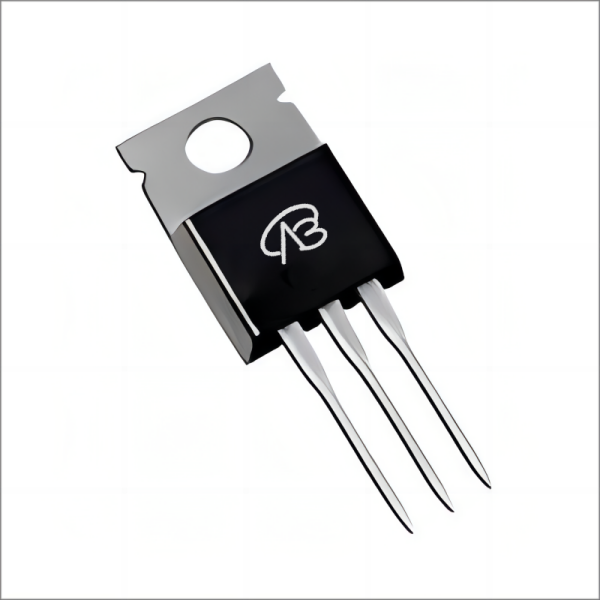
Comparative Analysis: IPP034NE7N3G (N-channel) vs. VBM1805
Analysis of the Original Model (IPP034NE7N3G) Core:
This is a 75V N-channel MOSFET from Infineon in a TO-220-3 package. Its design core is to deliver extremely high current handling with minimal conduction loss for synchronous rectification and high-frequency DC/DC conversion. Key advantages are: a very low on-resistance of 3.4mΩ at a 10V gate drive, a continuous drain current rating of 100A, and optimized switching characteristics featuring an excellent gate charge × RDS(on) figure of merit (FOM). It is 100% avalanche tested and qualified for target applications per JEDEC standards.
Compatibility and Differences of the Domestic Alternative (VBM1805):
VBsemi's VBM1805 is offered in a TO-220 package and serves as a functional alternative. The main differences in electrical parameters: VBM1805 has a slightly lower voltage rating (80V vs. 75V) and a marginally higher on-resistance of 4.8mΩ (@10V). However, it boasts a significantly higher continuous current rating of 160A.
Key Application Areas:
Original Model IPP034NE7N3G: Its ultra-low RDS(on) and high current capability make it ideal for high-efficiency, high-current switching.
Synchronous Rectification in High-Current DC/DC Converters: For server power supplies, telecom rectifiers.
Motor Drives and Solenoid Control: In industrial automation and automotive systems.
High-Current Load Switching and Power Distribution.
Alternative Model VBM1805: More suitable for applications demanding even higher continuous current (up to 160A) where a slight increase in conduction loss is acceptable, or where an 80V rating and domestic supply are prioritized.
Comparative Analysis: IPD90N06S4L-06 (N-channel) vs. VBE1606
This comparison focuses on automotive-grade and high-reliability medium-power applications where low RDS(on) and robust performance are paramount.
Analysis of the Original Model (IPD90N06S4L-06) Core:
This is an AEC-Q101 qualified 60V N-channel MOSFET from Infineon in a TO-252-3 (DPAK) package. Its design pursues an optimal balance of ultra-low on-resistance (6.3mΩ @10V), high current capability (90A), and automotive-grade reliability. It features 100% avalanche testing, a wide operating temperature range up to 175°C, and is MSL1 rated for high-temperature reflow.
Compatibility and Differences of the Domestic Alternative (VBE1606):
VBsemi's VBE1606 comes in a TO-252 package and presents a "performance-enhanced" alternative. It matches the 60V voltage rating but offers a superior continuous current rating of 97A and a significantly lower on-resistance of 4.5mΩ (@10V). It also specifies a low threshold voltage and RDS(on) at 4.5V drive, enhancing compatibility with lower drive voltages.
Key Application Areas:
Original Model IPD90N06S4L-06: Its automotive-grade qualification, low RDS(on), and robust package make it a top choice for reliability-focused applications.
Automotive Systems: ECU power switching, motor drives, LED lighting.
Industrial Control: PLCs, actuator drives.
High-Efficiency DC/DC Conversion: Especially in space-constrained but thermally challenging environments.
Alternative Model VBE1606: Better suited for upgrade scenarios requiring higher current capability, lower conduction loss (4.5mΩ), or enhanced performance at lower gate drive voltages, while maintaining a standard TO-252 footprint.
Summary
This analysis reveals two distinct selection pathways:
For ultra-low loss, high-current switching in applications like server power or industrial drives, the original IPP034NE7N3G, with its benchmark 3.4mΩ RDS(on) and 100A rating, remains a premier choice. Its domestic alternative VBM1805 offers a compelling option with a massive 160A current rating for designs where ultimate current handling outweighs minimal RDS(on) differences.
For automotive-grade and high-reliability medium-power applications, the original IPD90N06S4L-06 sets a high standard with its AEC-Q101 qualification, 6.3mΩ RDS(on), and 90A capability. The domestic alternative VBE1606 provides significant "performance enhancement" with lower RDS(on) (4.5mΩ) and higher current (97A), making it an excellent upgrade for efficiency-critical designs.
Core Conclusion: Selection is not about absolute superiority but precise requirement matching. In the context of supply chain diversification, domestic alternatives like VBM1805 and VBE1606 not only provide viable backups but also offer parameter-specific advantages, giving engineers greater flexibility in design trade-offs and cost control. Understanding each device's design philosophy and parameter implications is key to unlocking its full potential in your circuit.

Download PDF document
 Download now


