 中文
中文 English
MOSFET Selection for High-Power Switching: IPP023N08N5AKSA1, IPD110N12N3 G vs. China Alternatives VBM1803, VBE1101N
Number of views:9999
 Back to previous page
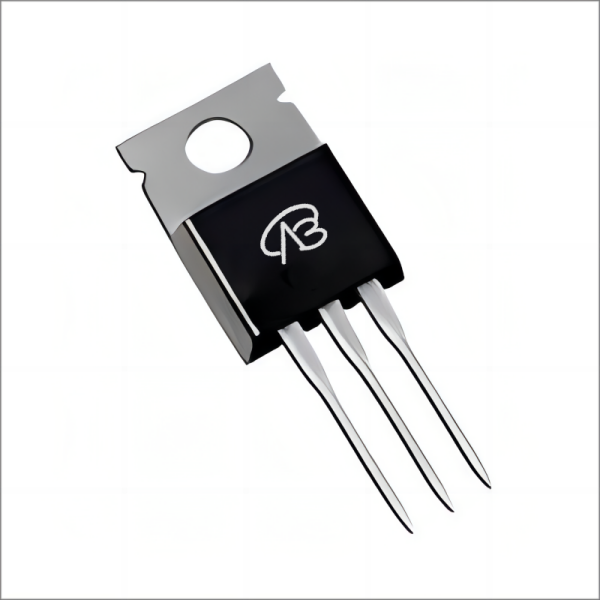
Comparative Analysis: IPP023N08N5AKSA1 (80V N-channel) vs. VBM1803
Analysis of the Original Model (IPP023N08N5AKSA1) Core:
This is an 80V N-channel MOSFET from Infineon in a TO-220-3 package. Its design core is to achieve an exceptional balance of ultra-low conduction loss and high-frequency switching capability for demanding power stages. Key advantages include an extremely low on-resistance of 2.3mΩ (measured at 10V, 100A), a high continuous drain current rating of 120A, and an excellent Figure of Merit (FOM, gate charge × RDS(on)). It is 100% avalanche tested, features a lead-free plating, and is qualified for industrial applications, making it a robust choice for high-performance circuits.
Compatibility and Differences of the Domestic Alternative (VBM1803):
VBsemi's VBM1803 is offered in a compatible TO-220 package and serves as a functional pin-to-pin alternative. The key differences lie in its electrical parameters: while it shares the same 80V voltage rating, its on-resistance is slightly higher at 3mΩ (@10V). However, it boasts a significantly higher continuous current rating of 195A, potentially offering a greater margin in current-handling capability.
Key Application Areas:
Original Model IPP023N08N5AKSA1: Its ultra-low RDS(on) and excellent FOM make it ideal for high-current, high-frequency switching applications where efficiency is paramount.
Synchronous Rectification in High-Current DC-DC Converters: Such as server VRMs, telecom power supplies.
Motor Drives and Inverters: For industrial motors, e-bikes, and power tools.
High-Frequency Switching Power Supplies (SMPS): Where low switching and conduction losses are critical.
Alternative Model VBM1803: With its very high current rating (195A) and competitive on-resistance, it is well-suited for upgrade scenarios or designs demanding an even higher current margin, potentially offering advantages in applications with high surge currents or where thermal headroom is a priority.
Comparative Analysis: IPD110N12N3 G (120V N-channel) vs. VBE1101N
This comparison focuses on MOSFETs designed for mid-voltage (100-120V) applications where a balance of voltage rating, on-resistance, and switching performance is required.
Analysis of the Original Model (IPD110N12N3 G) Core:
This 120V N-channel MOSFET from Infineon uses a TO-252-3 (DPAK) package. Its design pursues low conduction loss and good switching performance in a compact, surface-mount package suitable for automated assembly. Core advantages include a low on-resistance of 11mΩ (@10V, 75A), a continuous current rating of 75A, and a high maximum operating junction temperature of 175°C. It also features an excellent FOM and is qualified for industrial standards.
Compatibility and Differences of the Domestic Alternative (VBE1101N):
VBsemi's VBE1101N is offered in a compatible TO-252 package. It presents a compelling "performance-enhanced" alternative in several key aspects: while its voltage rating is slightly lower at 100V (vs. 120V), it offers a lower on-resistance of 8.5mΩ (@10V) and a higher continuous current rating of 85A. This combination suggests potentially lower conduction losses and higher current capability in applicable voltage ranges.
Key Application Areas:
Original Model IPD110N12N3 G: Its 120V rating and robust performance make it suitable for applications operating from 48V to 100V bus voltages.
DC-DC Converters in Telecom/Server Power: For intermediate bus conversion or point-of-load (POL) modules.
Motor Drives: For 48V BLDC motor control in automotive auxiliary systems or industrial applications.
Solar Inverters and UPS Systems: In lower-power stages or auxiliary circuits.
Alternative Model VBE1101N: With its lower RDS(on) and higher current rating, it is an excellent choice for upgrade scenarios within its 100V rating. It is particularly suitable for applications demanding maximum efficiency and current capacity in 48V-60V systems, such as high-current DC-DC converters or motor drives where the lower voltage rating is acceptable.
Summary and Selection Paths:
This analysis reveals two distinct selection strategies based on voltage and performance needs:
For ultra-high-current 80V applications where minimizing conduction loss is critical, the original IPP023N08N5AKSA1, with its industry-leading 2.3mΩ RDS(on) and 120A rating, remains a top-tier choice for flagship designs in servers, high-end power tools, and industrial drives. Its domestic alternative VBM1803 provides a viable, package-compatible option with a formidable 195A current rating, making it suitable for cost-sensitive designs or those requiring an exceptional current margin, albeit with a slight compromise in RDS(on).
For compact, surface-mount 100-120V applications, the original IPD110N12N3 G offers a reliable, industry-qualified solution with a good balance of 120V blocking, 11mΩ RDS(on), and 75A current in a DPAK package. The domestic alternative VBE1101N emerges as a strong "performance-enhanced" candidate for designs operating at or below 100V, delivering lower on-resistance (8.5mΩ) and higher current (85A), which can translate directly into efficiency gains and thermal improvements.
Core Conclusion: The choice is not about absolute superiority but precise requirement matching. In the context of supply chain diversification, domestic alternatives like VBM1803 and VBE1101N not only provide feasible backup options but also offer compelling performance trade-offs—sometimes surpassing the original in specific parameters like current handling. This gives engineers greater flexibility and resilience in design optimization, cost control, and sourcing strategies. A deep understanding of each device's parameter implications is essential to unlock its full potential within your circuit.

Download PDF document
 Download now


