 中文
中文 English
MOSFET Selection for High-Power and High-Frequency Applications: IPP019N06NF2SAKMA1, IRFH8324TRPBF vs. China Alternatives VBM1602, VBQA1303
Number of views:9999
 Back to previous page
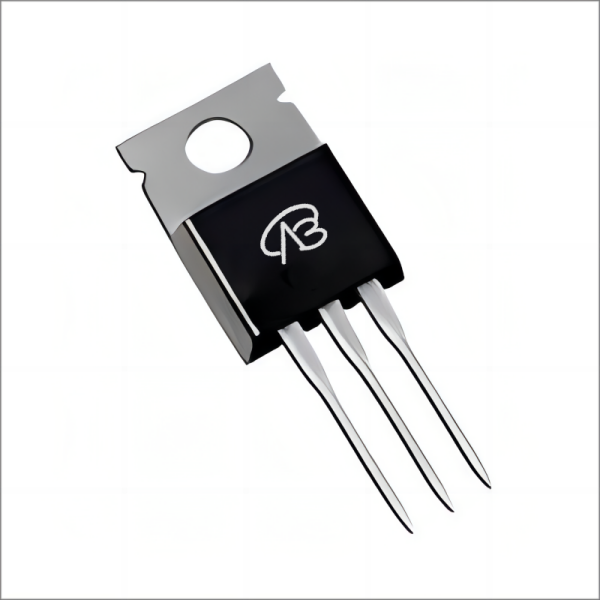
Comparative Analysis: IPP019N06NF2SAKMA1 (High-Power N-channel) vs. VBM1602
Analysis of the Original Model (IPP019N06NF2SAKMA1) Core:
This is a 60V N-channel MOSFET from Infineon in a TO-220-3-U05 package. Its design core is to deliver robust power handling and high efficiency in demanding applications. Key advantages include: an extremely low on-resistance of 1.9mΩ (at 10V, 100A), a very high continuous drain current rating of 185A, and 100% avalanche tested reliability. It is optimized for a wide range of high-current applications.
Compatibility and Differences of the Domestic Alternative (VBM1602):
VBsemi's VBM1602 is also offered in a TO-220 package, providing a form-factor compatible alternative. The key differences are in electrical parameters: VBM1602 has a slightly higher on-resistance (2.1mΩ @10V vs. 1.9mΩ) but offers an even higher continuous current rating of 270A. Both share the same 60V voltage rating.
Key Application Areas:
Original Model IPP019N06NF2SAKMA1: Its ultra-low RDS(on) and high current capability make it ideal for high-power, high-efficiency systems.
High-Current DC-DC Converters: For server power supplies, telecom infrastructure.
Motor Drives and Controllers: In industrial automation, electric vehicles, and robotics.
Power Distribution & Switching: As a main switch in UPS systems and high-power load switches.
Alternative Model VBM1602: Suits applications requiring the highest possible continuous current (up to 270A) where a slight increase in conduction loss is acceptable. It's a strong alternative for upgrades or designs needing maximum current headroom in a TO-220 package.
Comparative Analysis: IRFH8324TRPBF (High-Frequency N-channel) vs. VBQA1303
This N-channel MOSFET is designed for applications where switching frequency, thermal performance, and board space are critical.
Analysis of the Original Model (IRFH8324TRPBF) Core:
This Infineon 30V MOSFET in a PQFN-8 (5x6) package excels in high-frequency power conversion. Its core advantages are:
Excellent Switching Performance: Low gate charge and capacitance enable high-frequency operation.
Superior Thermal Design: Features very low thermal resistance to PCB (<2.3°C/W) and a low profile (<1.2mm).
Strong Conduction: Low on-resistance of 4.1mΩ (at 10V, 20A) and high pulse current capability (90A).
Compatibility and Differences of the Domestic Alternative (VBQA1303):
VBsemi's VBQA1303 uses a compatible DFN8(5x6) package. It presents a "performance-enhanced" profile: it matches the 30V rating but offers a significantly lower on-resistance of 3mΩ (@10V) and a higher continuous current rating of 120A compared to the original's 23A.
Key Application Areas:
Original Model IRFH8324TRPBF: Ideal for space-constrained, high-frequency designs where thermal management is paramount.
Synchronous Rectification in High-Frequency Buck Converters: For point-of-load (POL) converters in computing and networking.
Compact Power Modules: In blade servers, telecom boards, and GPU power delivery.
Alternative Model VBQA1303: Better suited for applications demanding lower conduction loss and higher continuous current within the same compact footprint. It's an excellent upgrade for designs needing higher power density or efficiency margins in 30V systems.
Conclusion
This analysis reveals two distinct selection paths:
For high-power, high-current applications using a TO-220 package, the original IPP019N06NF2SAKMA1, with its ultra-low 1.9mΩ RDS(on) and 185A current rating, remains a top-tier choice for maximizing efficiency in demanding circuits like motor drives and server power supplies. Its domestic alternative VBM1602 offers a compelling trade-off with an even higher current rating (270A), making it suitable for designs prioritizing ultimate current headroom.
For high-frequency, compact applications using a PQFN/DFN package, the original IRFH8324TRPBF stands out with its optimized switching characteristics and excellent thermal performance, making it a preferred choice for synchronous rectification in modern POL converters. The domestic alternative VBQA1303 provides significant "performance enhancement" with lower RDS(on) (3mΩ) and much higher continuous current (120A), offering a powerful upgrade path for next-generation high-density designs.
The core takeaway is that selection is about precise requirement matching. In an era of supply chain diversification, domestic alternatives like VBM1602 and VBQA1303 not only provide viable backup options but also offer parameter advantages in key areas, giving engineers greater flexibility and resilience in design trade-offs and cost optimization. Understanding each device's design philosophy and parameter implications is essential to unlocking its full potential in your circuit.

Download PDF document
 Download now


