 中文
中文 English
MOSFET Selection for High-Power and Space-Constrained Applications: IPF015N10N5ATMA1, IRLMS1503TRPBF vs. China Alternatives VBGL7101, VB7322
Number of views:9999
 Back to previous page
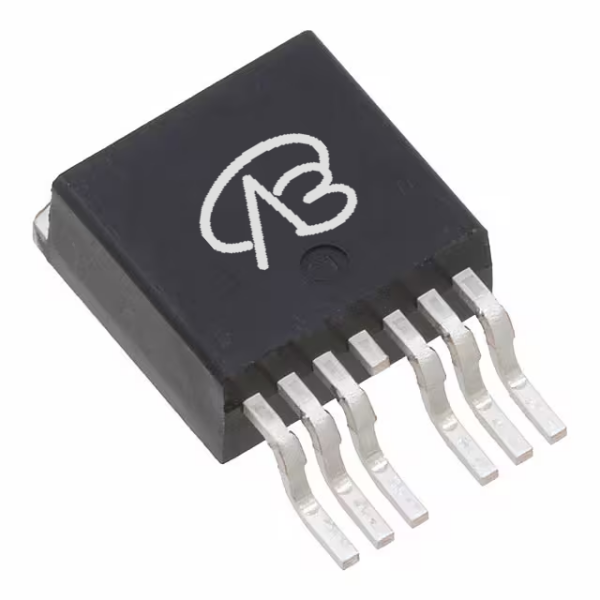
Comparative Analysis: IPF015N10N5ATMA1 (N-channel) vs. VBGL7101
Analysis of the Original Model (IPF015N10N5ATMA1) Core:
This is a 100V N-channel MOSFET from Infineon in a TO-263-7 package, designed for high-power, high-frequency applications. Its core advantages are exceptional current capability and extremely low conduction loss. It features a continuous drain current (Id) of 276A and an ultra-low on-resistance (RDS(on)) of 1.53mΩ at 10V gate drive. With a high power dissipation rating of 375W and 100% avalanche tested, it is built for robustness. Its excellent Figure of Merit (FOM, gate charge x RDS(on)) makes it ideal for high-frequency switching and synchronous rectification where efficiency is paramount.
Compatibility and Differences of the Domestic Alternative (VBGL7101):
VBsemi's VBGL7101 is a direct pin-to-pin compatible alternative in the same TO263-7L package. It demonstrates significant performance enhancement in key parameters: it offers a lower on-resistance of 1.2mΩ at 10V and a high continuous current rating of 250A. While the current rating is slightly lower than the original's 276A, the reduced RDS(on) can lead to lower conduction losses and improved thermal performance in many high-current applications.
Key Application Areas:
Original Model IPF015N10N5ATMA1: Its extreme current handling and low loss profile make it perfect for demanding high-power circuits.
Synchronous Rectification in High-Current SMPS: For server power supplies, telecom rectifiers, and high-end industrial converters.
Motor Drives and Inverters: In industrial motor control, robotics, and electric vehicle auxiliary systems.
High-Frequency DC-DC Converters: Where low FOM is critical for minimizing switching losses.
Alternative Model VBGL7101: Serves as a powerful "performance-enhanced" alternative, suitable for the same high-power applications where lower conduction resistance is desired, potentially offering efficiency gains and a more resilient supply chain option.
Comparative Analysis: IRLMS1503TRPBF (N-channel) vs. VB7322
This comparison shifts focus to space-constrained applications. The design pursuit for this N-channel MOSFET is maximizing performance within a miniature footprint.
Analysis of the Original Model (IRLMS1503TRPBF) Core:
This is a 30V N-channel MOSFET from Infineon in a space-saving SOT-23-6 package. It leverages Infineon's fifth-generation HEXFET technology to achieve a very low on-resistance for its size—100mΩ at 10V gate drive—while handling a continuous current of 3.2A. The custom Micro6 leadframe provides a 60% lower RDS(on) compared to standard SOT-23 packages, offering designers a reliable and efficient solution for compact circuits requiring good power handling.
Compatibility and Differences of the Domestic Alternative (VB7322):
VBsemi's VB7322 is a pin-to-pin compatible alternative in the SOT23-6 package. It represents a substantial "performance upgrade" over the original. Key improvements include a significantly lower on-resistance of 26mΩ at 10V (and 27mΩ at 4.5V) and a higher continuous current rating of 6A, effectively doubling the current capability while drastically reducing conduction losses.
Key Application Areas:
Original Model IRLMS1503TRPBF: Its balance of small size and decent current handling makes it ideal for power management in portable and space-limited devices.
Load Switching: For power rails and module enable/disable control in IoT devices, consumer electronics.
DC-DC Conversion: As a switching element in compact point-of-load (PoL) buck or boost converters.
Battery Management Systems (BMS): For protection circuits and discharge path control.
Alternative Model VB7322: Is perfectly suited for upgraded scenarios within the same compact footprint. Its superior current (6A) and lower RDS(on) make it an excellent choice for designs requiring higher power density, better efficiency, or headroom for more demanding loads, such as in more powerful portable devices or compact motor drivers.
Conclusion
In summary, this analysis reveals two distinct selection strategies based on application priority:
For high-power, high-frequency applications like server SMPS or motor drives, the original IPF015N10N5ATMA1 sets a high standard with its 276A current and 1.53mΩ RDS(on). Its domestic alternative VBGL7101 offers a compelling "enhanced" option with even lower on-resistance (1.2mΩ), providing a potential path to higher efficiency and a reliable secondary source.
For space-constrained, efficiency-critical applications in portable electronics, the original IRLMS1503TRPBF provides a trusted, compact solution. Its domestic alternative VB7322 delivers a remarkable "performance leap" within the same tiny package, featuring much lower RDS(on) (26mΩ) and higher current (6A), enabling next-generation miniaturized designs with greater power capability.
The core takeaway is that selection is about precise requirement matching. In the context of supply chain diversification, domestic alternatives like VBGL7101 and VB7322 not only provide viable backup options but also offer significant parameter advancements in many cases. This gives engineers greater flexibility, resilience, and potential for performance optimization during design trade-offs and cost management. Understanding the design philosophy and parameter implications of each device is key to unlocking its full value in your circuit.

Download PDF document
 Download now


