 中文
中文 English
MOSFET Selection for Power Switching and Signal Control: IPD78CN10NG, SN7002NH6327 vs. China Alternatives VBE1106N, VB162K
Number of views:9999
 Back to previous page
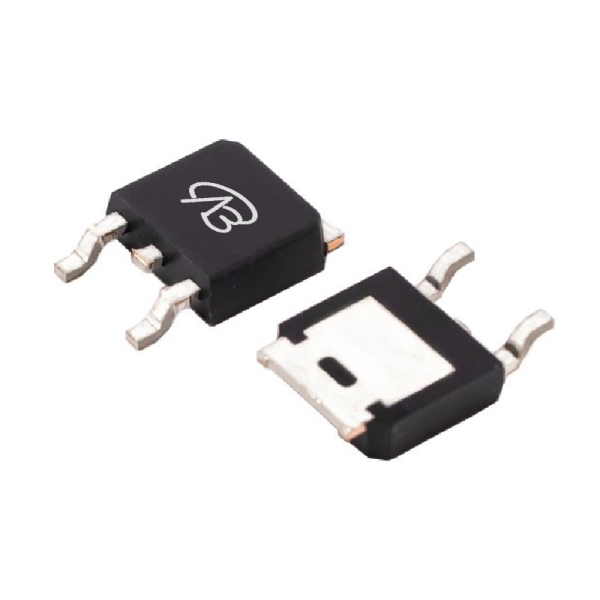
Comparative Analysis: IPD78CN10NG (N-channel Power MOSFET) vs. VBE1106N
Analysis of the Original Model (IPD78CN10NG) Core:
This is a 100V N-channel MOSFET from Infineon in a TO-252-3 package. Its design focuses on achieving an excellent balance between conduction loss and switching performance for medium-power applications. Key advantages include: a low on-resistance of 78mΩ at 10V gate drive, a continuous drain current rating of 13A, and a high maximum operating temperature of 175°C. It features an outstanding gate charge × RDS(on) figure of merit (FOM), making it suitable for high-frequency switching and synchronous rectification.
Compatibility and Differences of the Domestic Alternative (VBE1106N):
VBsemi's VBE1106N is also packaged in TO-252 and serves as a pin-to-pin compatible alternative. The key differences lie in its enhanced electrical parameters: VBE1106N offers a significantly lower on-resistance of 55mΩ at 10V (compared to 78mΩ) and a higher continuous current rating of 25A (versus 13A), while maintaining the same 100V voltage rating.
Key Application Areas:
Original Model IPD78CN10NG: Ideal for applications requiring robust performance and reliability in medium-power 100V systems. Typical uses include:
High-frequency switching power supplies (e.g., SMPS).
Synchronous rectification in DC-DC converters.
Motor drives and inverter circuits.
Applications demanding high-temperature operation up to 175°C.
Alternative Model VBE1106N: Better suited for upgrade scenarios where lower conduction loss and higher current capability are prioritized. It is an excellent choice for:
Higher-efficiency power supplies and converters.
Designs needing increased current margin or reduced thermal stress.
Cost-effective replacements seeking performance enhancement.
Comparative Analysis: SN7002NH6327 (N-channel Small-Signal MOSFET) vs. VB162K
This comparison shifts to small-signal switching, where the design priority is reliable control under low-current conditions.
Analysis of the Original Model (SN7002NH6327) Core:
This is a 60V N-channel enhancement-mode MOSFET from Infineon in a compact SOT-23 package. It is designed for signal-level switching and amplification. Its core advantages are:
Logic-Level Gate Drive: Can be fully turned on with low gate voltage.
AEC-Q101 Qualified: Suitable for automotive and industrial applications requiring high reliability.
Adequate Ratings: 60V drain-source voltage and 200mA continuous current meet many low-power control needs.
Compatibility and Differences of the Domestic Alternative (VB162K):
VBsemi's VB162K is a direct SOT-23 pin-to-pin alternative. The parameters are closely matched: both are 60V devices. VB162K has a slightly lower continuous current rating of 0.3A (300mA vs. 200mA) and an on-resistance of 2.8Ω at 10V. It maintains logic-level compatibility and is also AEC-Q101 qualified.
Key Application Areas:
Original Model SN7002NH6327: Perfect for space-constrained, low-power signal switching applications requiring high reliability. Examples include:
Load switching in portable/battery-powered devices.
Signal interface protection and level shifting.
Automotive electronic control modules (due to AEC-Q101).
General-purpose low-side switches.
Alternative Model VB162K: Serves as a highly compatible functional replacement in similar low-power control circuits, offering a viable alternative for supply chain diversification without sacrificing key performance metrics like voltage rating and logic-level operation.
Conclusion:
This analysis reveals two distinct selection strategies:
For 100V medium-power switching, the original IPD78CN10NG offers a reliable, high-temperature solution with a good FOM. Its domestic alternative, VBE1106N, provides a performance-enhanced option with significantly lower on-resistance and higher current capability, making it ideal for efficiency upgrades or more demanding designs.
For 60V small-signal control, the original SN7002NH6327 is a benchmark for compact, reliable logic-level switching. Its domestic alternative, VB162K, acts as a highly compatible functional substitute, ensuring design continuity while offering supply chain flexibility.
The core takeaway is that selection depends on precise requirement matching. Domestic alternatives like VBE1106N and VB162K not only provide reliable backup options but also, in some cases, offer parameter advantages or cost benefits, giving engineers greater flexibility in design trade-offs and component sourcing. Understanding each device's design intent and parameter implications is key to unlocking its full potential in your circuit.

Download PDF document
 Download now


