 中文
中文 English
MOSFET Selection for High-Voltage and High-Current Applications: IPD60R600PFD7SAUMA1, IAUC100N10S5N040 vs. China Alternatives VBE16R07S, VBGQA1105
Number of views:9999
 Back to previous page
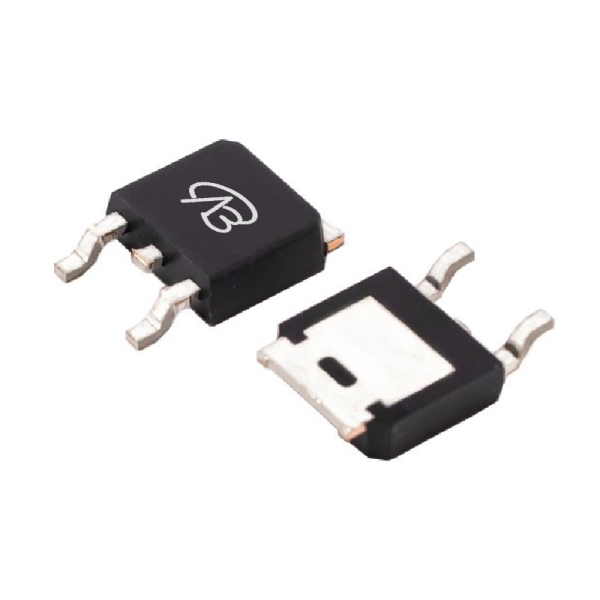
Comparative Analysis: IPD60R600PFD7SAUMA1 (600V N-channel) vs. VBE16R07S
Analysis of the Original Model (IPD60R600PFD7SAUMA1) Core:
This is a 600V N-channel CoolMOS™ PFD7 series MOSFET from Infineon, utilizing a DPAK package. Its design core is based on the revolutionary Super Junction (SJ) principle, optimized for cost-sensitive high-voltage applications. Key advantages include a 600V drain-source voltage rating, a continuous drain current of 6A, and an on-resistance (RDS(on)) of 600mΩ at 10V gate drive. The CoolMOS PFD7 platform offers the benefits of fast-switching SJ MOSFETs—such as high efficiency and reduced switching losses—while delivering excellent cost-effectiveness and ease of use for consumer applications.
Compatibility and Differences of the Domestic Alternative (VBE16R07S):
VBsemi's VBE16R07S is a pin-to-pin compatible alternative in a TO-252 package. The key differences lie in the electrical parameters: while it matches the 600V voltage rating, it offers a slightly higher continuous current rating of 7A. However, its on-resistance is marginally higher at 650mΩ @ 10V. It is also built on a Super Junction Multi-EPI technology platform.
Key Application Areas:
Original Model IPD60R600PFD7SAUMA1: Its combination of 600V rating, good switching performance, and cost-effectiveness makes it ideal for consumer and industrial high-voltage applications. Typical uses include:
Switched-Mode Power Supplies (SMPS): Chargers, adapters, and LED lighting drivers.
Motor Drives: Control circuits for fans, pumps, and appliances.
Power Factor Correction (PFC) stages.
Alternative Model VBE16R07S: A viable domestic alternative suitable for the same 600V application spaces where the slightly higher RDS(on) is acceptable, and the slightly higher current rating or supply chain diversification are priorities. It serves as a reliable backup or cost-optimized choice for adapters, lighting, and auxiliary power circuits.
Comparative Analysis: IAUC100N10S5N040 (100V N-channel) vs. VBGQA1105
This comparison shifts focus to high-current, lower-voltage applications where ultra-low conduction loss is paramount.
Analysis of the Original Model (IAUC100N10S5N040) Core:
This Infineon MOSFET is a 100V N-channel device in a TDSON-8 (5x6) package, designed for high-power density and efficiency. Its core advantages are:
Exceptional Current Handling: A very high continuous drain current rating of 100A.
Ultra-Low On-Resistance: An RDS(on) as low as 3.4mΩ at 10V gate drive and 50A, minimizing conduction losses.
Power-Dense Package: The TDSON-8 package offers a good balance between compact size and thermal performance for high-current applications.
Compatibility and Differences of the Domestic Alternative (VBGQA1105):
VBsemi's VBGQA1105 is a DFN8(5x6) packaged alternative. It presents a compelling "performance-competitive" option:
It matches the 100V voltage rating.
It surpasses the original in continuous current rating, offering a robust 105A.
Its on-resistance is 5.6mΩ @ 10V, which is higher than the original's 3.4mΩ but remains very low, making it suitable for many high-current paths. It utilizes SGT (Shielded Gate Trench) technology.
Key Application Areas:
Original Model IAUC100N10S5N040: Its ultra-low RDS(on) and high current capability make it ideal for demanding, efficiency-critical applications:
Synchronous Rectification in high-current DC-DC converters (e.g., for servers, telecom).
Motor Drives and Inverters for e-mobility, power tools, and industrial equipment.
High-Current Load Switching and OR-ing circuits.
Alternative Model VBGQA1105: An excellent domestic alternative for applications requiring very high continuous current (up to 105A). While its RDS(on) is higher, it provides a significant cost and supply chain advantage and is well-suited for:
High-current DC-DC converter stages where its current rating is beneficial.
Motor drives and solenoid control where the 100V/105A rating is adequate.
Designs seeking a balance between performance, availability, and cost.
Conclusion
In summary, this analysis reveals two distinct selection pathways:
For 600V high-voltage applications like adapters and lighting, the original IPD60R600PFD7SAUMA1, with its optimized CoolMOS PFD7 technology offering a balance of 600mΩ RDS(on), 6A current, and cost-effectiveness, remains a strong benchmark. Its domestic alternative VBE16R07S provides a compatible, slightly higher-current (7A) option with a marginally higher RDS(on) (650mΩ), serving as a practical choice for supply chain diversification or cost-sensitive projects.
For 100V high-current applications demanding minimal conduction loss, the original IAUC100N10S5N040 sets a high standard with its ultra-low 3.4mΩ RDS(on) and 100A current in a compact package. The domestic alternative VBGQA1105 offers a compelling package-compatible solution, trading a moderately higher RDS(on) (5.6mΩ) for an even higher current rating (105A), making it a powerful and viable alternative for many high-power designs.
The core takeaway is that selection is about precise requirement matching. In an era of supply chain diversification, domestic alternatives like VBE16R07S and VBGQA1105 not only provide reliable backup options but also offer competitive or enhanced specifications in key areas, granting engineers greater flexibility and resilience in their design and sourcing strategies. Understanding the design philosophy and parameter trade-offs of each device is essential to unlocking its full potential in your circuit.

Download PDF document
 Download now


