 中文
中文 English
MOSFET Selection for High-Voltage & High-Current Applications: IPD5N25S3430ATMA1, BSC096N10LS5ATMA1 vs. China Alternatives VBGE1252M, VBGQA1101N
Number of views:9999
 Back to previous page
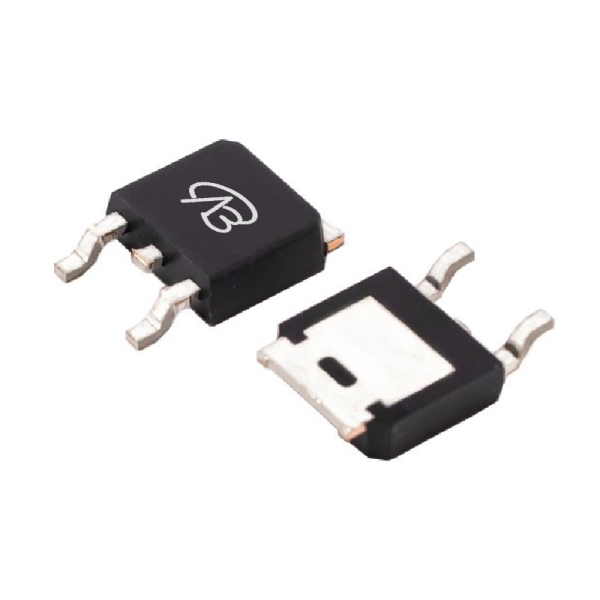
Comparative Analysis: IPD5N25S3430ATMA1 (High-Voltage N-channel) vs. VBGE1252M
Analysis of the Original Model (IPD5N25S3430ATMA1) Core:
This is a 250V N-channel MOSFET from Infineon in a TO-252 package. Its design core is to provide robust and reliable switching in high-voltage applications. Key advantages include: a high drain-source voltage (Vdss) of 250V, a continuous drain current (Id) of 5A, and it is AEC-qualified with 100% avalanche testing, ensuring high reliability for automotive or industrial environments. Its on-resistance is 430mΩ at 10V gate drive.
Compatibility and Differences of the Domestic Alternative (VBGE1252M):
VBsemi's VBGE1252M is a pin-to-pin compatible alternative in the same TO-252 package. The main differences are in electrical parameters: VBGE1252M offers a significantly lower on-resistance of 200mΩ at 10V and a much higher continuous drain current of 15A, while maintaining the same 250V voltage rating. This represents a substantial performance improvement in conduction losses and current handling.
Key Application Areas:
Original Model IPD5N25S3430ATMA1: Its high voltage rating and AEC qualification make it suitable for reliable switching in 250V systems, such as industrial controls, auxiliary power supplies, or automotive non-drive applications where proven reliability is paramount.
Alternative Model VBGE1252M: With its superior current capability (15A) and lower on-resistance (200mΩ), it is ideal for upgrading existing 250V circuits to achieve higher efficiency and power density, or for new designs in SMPS, PFC circuits, and motor drives requiring better conduction performance.
Comparative Analysis: BSC096N10LS5ATMA1 (High-Current N-channel) vs. VBGQA1101N
This comparison shifts focus to high-current, low-voltage applications where low on-resistance and fast switching are critical for efficiency.
Analysis of the Original Model (BSC096N10LS5ATMA1) Core:
This Infineon MOSFET in a TDSON-8 package is optimized for high-frequency switching. Its core advantages are:
Excellent Conduction Performance: With an on-resistance of only 9.6mΩ at 10V and a continuous current rating of 72A, it minimizes conduction losses in high-current paths.
Optimized for Switching: Designed specifically for high-frequency applications like chargers, featuring excellent thermal resistance and 100% avalanche tested.
Advanced Package: The TDSON-8 package offers a good balance between power handling and footprint.
Compatibility and Differences of the Domestic Alternative (VBGQA1101N):
VBsemi's VBGQA1101N, in a DFN8(5x6) package, is a highly competitive alternative. While the package differs, it serves similar high-current application spaces. Its parameters show strong performance: a slightly lower continuous current of 55A but a comparable on-resistance of 9.5mΩ at 10V. Notably, it also offers a low on-resistance of 11.5mΩ at a 4.5V gate drive, making it suitable for logic-level applications.
Key Application Areas:
Original Model BSC096N10LS5ATMA1: Its ultra-low RDS(on) and high current make it an ideal choice for high-efficiency, high-current DC-DC converters, synchronous rectification in server/telecom power supplies, and fast-charging circuits.
Alternative Model VBGQA1101N: With its excellent RDS(on) at both 10V and 4.5V drive, it is well-suited for high-current point-of-load (POL) converters, motor drives, and battery management systems (BMS) where efficiency and compact size are key.
Conclusion
In summary, this analysis reveals two distinct selection paths with compelling domestic alternatives:
For high-voltage (250V) applications, the original IPD5N25S3430ATMA1 offers proven reliability. Its domestic alternative VBGE1252M provides a significant performance upgrade in current (15A vs. 5A) and on-resistance (200mΩ vs. 430mΩ), making it an excellent choice for efficiency-driven designs requiring robust high-voltage switching.
For high-current, low-voltage (100V) applications, the original BSC096N10LS5ATMA1 sets a high benchmark with 72A current and 9.6mΩ RDS(on). The domestic alternative VBGQA1101N presents a strong option with similar low RDS(on) (9.5mΩ), high current (55A), and the added benefit of good performance at lower gate drive voltages, offering flexibility in high-power density designs.
The core conclusion is that selection depends on precise requirement matching. In the context of supply chain diversification, these domestic alternatives not only provide reliable backup options but also deliver competitive or superior performance in key parameters, giving engineers greater flexibility in design trade-offs and cost control. Understanding each device's design philosophy and parameter implications is essential to maximizing its value in your circuit.

Download PDF document
 Download now


