 中文
中文 English
MOSFET Selection for Industrial-Grade Power Solutions: IPD50N04S4-08, ISC750P10LMATMA1 vs. China Alternatives VBE1405, VBQA2104N
Number of views:9999
 Back to previous page
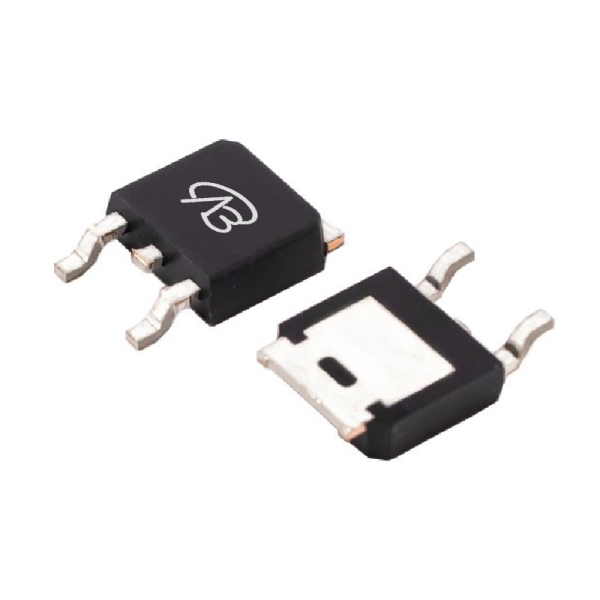
Comparative Analysis: IPD50N04S4-08 (N-channel) vs. VBE1405
Analysis of the Original Model (IPD50N04S4-08) Core:
This is a 40V N-channel MOSFET from Infineon in a TO-252 (DPAK) package. Its design core is to provide high-current capability and reliability for automotive and industrial environments. Key advantages include: a high continuous drain current rating of 50A, a low on-resistance of 7.2mΩ at 10V gate drive, and compliance with AEC-Q101 standards. It features a wide operating temperature range up to 175°C, is 100% avalanche tested, and is MSL1 rated with a peak reflow temperature of 260°C, ensuring robustness in harsh conditions.
Compatibility and Differences of the Domestic Alternative (VBE1405):
VBsemi's VBE1405 is also offered in a TO-252 package and serves as a pin-to-pin compatible alternative. The key differences are in the electrical parameters: VBE1405 offers a significantly higher continuous current rating of 85A and a lower on-resistance of 5mΩ at 10V. Both share the same 40V drain-source voltage rating.
Key Application Areas:
Original Model IPD50N04S4-08: Its high current (50A), low RDS(on), and AEC-Q101 qualification make it ideal for demanding 12V/24V systems. Typical applications include:
Automotive loads: Solenoid drivers, motor controls, and power distribution.
Industrial power switches: High-current DC-DC converters, motor drives, and inverter circuits.
Power management units (PMUs) requiring high reliability and thermal performance.
Alternative Model VBE1405: With its superior current handling (85A) and lower conduction loss (5mΩ), it is an excellent performance-enhanced choice for applications requiring higher power density, higher efficiency, or an upgrade path, such as next-generation high-current DC-DC converters or motor drives.
Comparative Analysis: ISC750P10LMATMA1 (P-channel) vs. VBQA2104N
This P-channel MOSFET is designed for high-side switching in higher voltage applications, emphasizing low on-resistance at logic-level gate drive.
Analysis of the Original Model (ISC750P10LMATMA1) Core:
This Infineon 100V P-channel MOSFET uses a TDSON-8-7 package for good thermal performance. Its design core is efficient high-side switching. Key advantages are: a -100V drain-source voltage, a continuous current of -32A, and a low on-resistance of 86mΩ at a logic-level 4.5V gate drive. It is 100% avalanche tested, features logic-level enhancement mode, and is compliant with halogen-free standards (IEC61249-2-21).
Compatibility and Differences of the Domestic Alternative (VBQA2104N):
VBsemi's VBQA2104N comes in a DFN8(5x6) package. While the package differs, it serves as a functional alternative for similar applications. It matches the -100V voltage rating and offers a competitive continuous current of -28A. Crucially, it provides a significantly lower on-resistance of 36mΩ at 4.5V gate drive, which translates to reduced conduction losses.
Key Application Areas:
Original Model ISC750P10LMATMA1: Its -100V rating, logic-level drive, and good current capability make it suitable for:
High-side load switches in 48V/60V systems (e.g., telecom, industrial).
Battery isolation and reverse polarity protection circuits.
Power management in applications requiring P-channel switching with a high voltage margin.
Alternative Model VBQA2104N: With its substantially lower RDS(on) (36mΩ vs. 86mΩ), it is a strong candidate for applications where minimizing conduction loss and improving efficiency in high-side P-channel circuits are priorities, even with a slightly lower continuous current rating.
Conclusion
In summary, this analysis reveals two distinct selection and upgrade paths:
For high-reliability, high-current N-channel applications, the original model IPD50N04S4-08, with its 50A rating, 7.2mΩ RDS(on), and AEC-Q101 qualification, is a proven choice for automotive and industrial power systems. Its domestic alternative VBE1405 offers a compelling performance upgrade with 85A current capability and a lower 5mΩ RDS(on), making it ideal for designs pushing the limits of power density and efficiency.
For high-voltage P-channel high-side switching, the original model ISC750P10LMATMA1 provides a robust -100V, -32A solution with logic-level drive. The domestic alternative VBQA2104N presents a significant advantage in conduction performance with its 36mΩ RDS(on), offering a path to higher efficiency in suitable applications, despite a different package and slightly lower current rating.
The core takeaway is that selection is driven by precise application requirements. In the context of supply chain diversification, domestic alternatives like VBE1405 and VBQA2104N not only provide viable backup options but also deliver performance advantages in key parameters, giving engineers greater flexibility and resilience in design trade-offs and cost optimization. Understanding the design intent and parameter implications of each device is essential to unlocking its full potential in your circuit.

Download PDF document
 Download now


