 中文
中文 English
MOSFET Selection for Power Switching Applications: IPD135N03LG, IPD053N06N vs. China Alternatives VBE1310, VBE1606
Number of views:9999
 Back to previous page
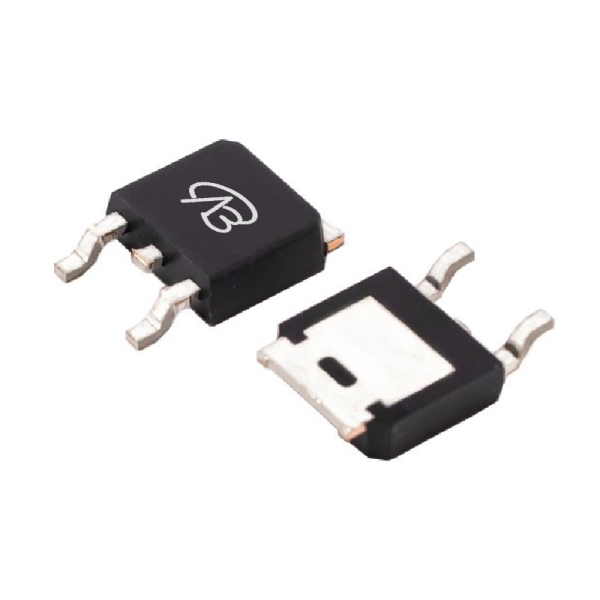
Comparative Analysis: IPD135N03LG (30V N-Channel) vs. VBE1310
Analysis of the Original Model (IPD135N03LG) Core:
This is a 30V N-channel MOSFET from Infineon in a TO-252 (DPAK) package. Its design centers on providing robust performance for medium-current switching. Key advantages include a continuous drain current (Id) of 30A and an on-resistance (RDS(on)) of 13.5mΩ at 10V gate drive. It offers a reliable balance for applications requiring good current handling in a standard package.
Compatibility and Differences of the Domestic Alternative (VBE1310):
VBsemi's VBE1310 is a direct pin-to-pin compatible alternative in the same TO-252 package. The key differences are in enhanced electrical parameters: VBE1310 features a significantly lower on-resistance of 7mΩ at 10V (vs. 13.5mΩ) and a much higher continuous drain current rating of 70A (vs. 30A), while maintaining the same 30V voltage rating.
Key Application Areas:
Original Model IPD135N03LG: Well-suited for standard 12V/24V system applications requiring dependable 30A switching, such as DC-DC converters, motor drives, and general-purpose power switches where its 13.5mΩ RDS(on) provides good efficiency.
Alternative Model VBE1310: An excellent upgrade choice for applications demanding lower conduction losses and higher current capability within the same 30V range. Its 7mΩ RDS(on) and 70A current rating make it ideal for high-efficiency synchronous rectification, high-current load switches, or designs seeking thermal headroom and performance margin.
Comparative Analysis: IPD053N06N (60V N-Channel) vs. VBE1606
This comparison focuses on higher-voltage switching, where the original model is optimized for performance in applications like SMPS synchronous rectification.
Analysis of the Original Model (IPD053N06N) Core:
This 60V N-channel MOSFET from Infineon, also in a TO-252 package, is engineered for high-performance switching power supplies. Its core strengths are a low on-resistance of 5.3mΩ at 10V, a continuous current of 45A, and features like 100% avalanche testing and excellent thermal resistance. It is a robust choice for demanding 48V or lower-voltage systems.
Compatibility and Differences of the Domestic Alternative (VBE1606):
VBsemi's VBE1606 is a direct pin-to-pin compatible alternative. It presents a substantial performance enhancement: it matches the 60V rating but offers an even lower on-resistance of 4.5mΩ at 10V (vs. 5.3mΩ) and a dramatically higher continuous drain current rating of 97A (vs. 45A).
Key Application Areas:
Original Model IPD053N06N: An optimal choice for high-efficiency 48V-60V systems, particularly in synchronous rectification for server/telecom SMPS, industrial power supplies, and motor drives where its 5.3mΩ RDS(on) and 45A capability deliver proven performance.
Alternative Model VBE1606: A superior performance alternative for next-generation designs pushing power density and efficiency limits. Its 4.5mΩ RDS(on) and 97A current capability make it suitable for ultra-high-current DC-DC converters, high-power motor drives, and any application where minimizing conduction loss and maximizing current throughput in a 60V system are critical.
Summary and Selection Paths:
This analysis reveals two distinct upgrade paths through domestic alternatives:
For 30V N-channel applications, the original IPD135N03LG provides solid, reliable performance. Its domestic alternative VBE1310 offers a significant upgrade in key parameters—lower RDS(on) (7mΩ vs. 13.5mΩ) and higher current (70A vs. 30A)—making it an compelling choice for efficiency-focused designs or those requiring future-proofing for higher loads.
For 60V N-channel applications targeting high-performance SMPS, the original IPD053N06N is a benchmark with its low 5.3mΩ RDS(on). The domestic alternative VBE1606 pushes the envelope further with even lower resistance (4.5mΩ) and more than double the current rating (97A vs. 45A), representing a major leap in performance for the most demanding power stages.
Core Conclusion: Selection is driven by precise requirement matching. In an era of supply chain diversification, domestic alternatives like VBE1310 and VBE1606 not only provide reliable, pin-compatible options but also deliver substantial performance gains in conduction loss and current handling. This gives engineers greater flexibility in design optimization, thermal management, and cost-performance trade-offs. Understanding the parameter advantages of each device is key to unlocking its full potential in your circuit.

Download PDF document
 Download now


