 中文
中文 English
MOSFET Selection for High-Power & High-Frequency Applications: IPB60R040CFD7ATMA1, ISZ106N12LM6ATMA1 vs. China Alternatives VBL165R36S, VBQF1101N
Number of views:9999
 Back to previous page
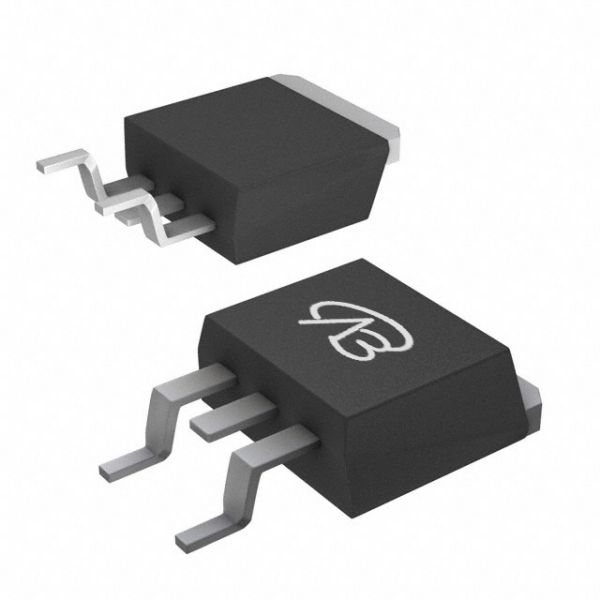
Comparative Analysis: IPB60R040CFD7ATMA1 (600V N-channel) vs. VBL165R36S
Analysis of the Original Model (IPB60R040CFD7ATMA1) Core:
This is a 600V N-channel MOSFET from Infineon in a TO-263 package. Its design core is to deliver robust performance in high-voltage applications. Key advantages include: a high continuous drain current of 50A and a low on-resistance of 40mΩ at a 10V gate drive. This combination ensures low conduction losses in high-power circuits.
Compatibility and Differences of the Domestic Alternative (VBL165R36S):
VBsemi's VBL165R36S is also housed in a TO-263 package, offering pin-to-pin compatibility. The main differences are in the electrical parameters: VBL165R36S has a higher voltage rating (650V vs. 600V) but a higher on-resistance (75mΩ @10V vs. 40mΩ) and a lower continuous current rating (36A vs. 50A).
Key Application Areas:
Original Model IPB60R040CFD7ATMA1: Its high voltage and current rating with low RDS(on) make it ideal for high-power, high-voltage switching.
Switching Power Supplies (SMPS): PFC (Power Factor Correction) stages, and high-voltage DC-DC converters.
Motor Drives: Inverters for industrial motors and appliances.
Solar Inverters: Power switching in photovoltaic systems.
Alternative Model VBL165R36S: More suitable for applications requiring a higher voltage safety margin (650V) but where the current demand is moderate (within 36A). It serves as a viable alternative in cost-sensitive designs or for supply chain diversification.
Comparative Analysis: ISZ106N12LM6ATMA1 (120V N-channel) vs. VBQF1101N
This comparison focuses on high-current, high-frequency switching performance in a compact form factor.
Analysis of the Original Model (ISZ106N12LM6ATMA1) Core:
This Infineon MOSFET in a TSDSON-8FL package is engineered for high efficiency and power density. Its core advantages are:
Excellent Conduction & Current: Very low on-resistance of 10.6mΩ at 10V and a high continuous current of 62A.
High-Frequency Suitability: The low RDS(on) and compact package are designed for fast switching, crucial for high-frequency DC-DC conversion.
Thermal Performance: A power dissipation rating of 94W indicates good thermal capability for its size.
Compatibility and Differences of the Domestic Alternative (VBQF1101N):
VBsemi's VBQF1101N uses a DFN8(3x3) package and offers a competitive performance profile. Key comparisons:
Voltage & Current: VBQF1101N has a slightly lower voltage rating (100V vs. 120V) and a lower continuous current (50A vs. 62A).
Conduction Performance: It boasts a comparable, very low on-resistance of 10mΩ at 10V.
Drive: Features a lower gate threshold voltage (2.5V vs. typ. for ISZ106N12LM6), which can be beneficial for low-voltage drive circuits.
Key Application Areas:
Original Model ISZ106N12LM6ATMA1: Ideal for high-current, high-frequency applications where maximum performance is critical.
Synchronous Rectification: In high-current 48V/12V DC-DC converters for servers, telecom.
High-Current Motor Drives: For drones, power tools, or high-performance servo drives.
High-Density POL (Point-of-Load) Converters.
Alternative Model VBQF1101N: A strong alternative for applications where the voltage requirement is around 100V and current demand is up to 50A. Its very low RDS(on) and potentially easier drive make it suitable for:
High-efficiency DC-DC converters in intermediate bus architectures.
Motor drives and load switches in compact, power-dense designs.
Summary
This analysis reveals two distinct selection pathways based on application priority:
For high-voltage, high-power switching (600V class), the original IPB60R040CFD7ATMA1, with its 50A current and 40mΩ RDS(on), remains a top-tier choice for demanding industrial and renewable energy applications. The domestic alternative VBL165R36S provides a higher voltage rating (650V) and package compatibility, making it a suitable choice for designs prioritizing voltage margin and cost, accepting a trade-off in current and conduction loss.
For high-current, high-frequency switching (100-120V class), the original ISZ106N12LM6ATMA1 offers exceptional performance with 62A current and 10.6mΩ RDS(on) in a thermally capable package, making it ideal for the most demanding server, telecom, and high-performance motor drives. The domestic alternative VBQF1101N presents a compelling, performance-competitive option with its 10mΩ RDS(on) and 50A capability in a compact DFN package, suitable for a wide range of high-efficiency, space-constrained applications up to 100V.
The core conclusion is that selection is not about absolute superiority but precise requirement matching. In the context of supply chain diversification, domestic alternatives like VBL165R36S and VBQF1101N provide not only feasible backups but also competitive performance in key parameters, offering engineers greater flexibility and resilience in design trade-offs and cost control. Understanding the specific design philosophy and parameter implications of each device is essential to unlocking its full potential in your circuit.

Download PDF document
 Download now


