 中文
中文 English
MOSFET Selection for High-Power and High-Frequency Applications: IPB120P04P4-04, BSZ075N08NS5 vs. China Alternatives VBL2403, VBGQF1806
Number of views:9999
 Back to previous page
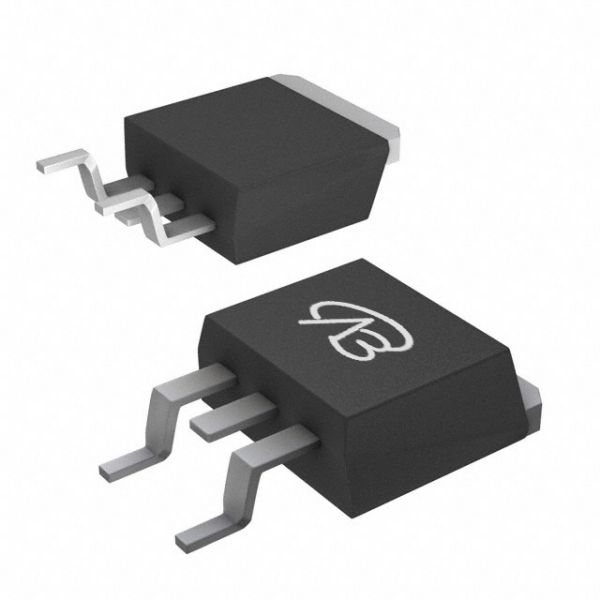
Comparative Analysis: IPB120P04P4-04 (P-channel) vs. VBL2403
Analysis of the Original Model (IPB120P04P4-04) Core:
This is a 40V P-channel MOSFET from Infineon in a TO-263-3 (D2PAK) package. Its design core is to achieve extremely high current handling and low conduction loss in power applications. Key advantages include: an ultra-high continuous drain current rating of 120A and a very low on-resistance of 3.5mΩ (measured at 10V, 100A). It features AEC qualification, 100% avalanche tested, and is designed for reliability in demanding environments up to 175°C junction temperature.
Compatibility and Differences of the Domestic Alternative (VBL2403):
VBsemi's VBL2403 is also offered in a TO263 package and serves as a pin-to-pin compatible alternative. The key differences in electrical parameters are: VBL2403 has a similar voltage rating (-40V) and an impressively low on-resistance of 3mΩ (@10V). While its listed continuous current is -150A, designers should cross-reference detailed datasheets for specific thermal and application conditions. It represents a performance-competitive domestic option.
Key Application Areas:
Original Model IPB120P04P4-04: Its exceptional current capability and low RDS(on) make it ideal for high-current switching and power path management in systems like:
High-current load switches and OR-ing controllers in server, telecom, or industrial power supplies.
Battery disconnect switches and protection circuits in high-power battery management systems (BMS).
High-side switches in synchronous buck converters for high-current point-of-load (POL) applications.
Alternative Model VBL2403: Suitable as a direct replacement in the above applications where supply chain diversification is needed, offering comparable or superior conduction performance for high-current P-channel circuits.
Comparative Analysis: BSZ075N08NS5 (N-channel) vs. VBGQF1806
This N-channel MOSFET is optimized for high-frequency switching and synchronous rectification, where the figure of merit (FOM, Qg RDS(on)) is crucial.
Analysis of the Original Model (BSZ075N08NS5) Core:
Its core advantages are reflected in three aspects:
1. Optimized for DC/DC Conversion: Specifically engineered for high-frequency switching and synchronous rectification in DC/DC converters.
2. Excellent Switching Performance: Features an outstanding gate charge (Qg) to on-resistance RDS(on) product, enabling high efficiency at high switching frequencies.
3. Robust Package and Reliability: Housed in a TSDSON-8FL package with an enlarged source interconnect for improved solder joint reliability. It offers a low RDS(on) of 7.5mΩ (@10V) and a high continuous current of 73A at 80V.
Compatibility and Differences of the Domestic Alternative (VBGQF1806):
VBsemi's VBGQF1806, in a DFN8(3x3) package, presents a compelling alternative. It matches the 80V rating and offers an identical on-resistance of 7.5mΩ (@10V). Its continuous current is rated at 56A. The key advantage lies in its dual RDS(on) specification, showing good performance even at a lower gate drive of 4.5V (11.5mΩ), which can be beneficial for designs with limited gate drive voltage.
Key Application Areas:
Original Model BSZ075N08NS5: An ideal choice for high-efficiency, high-frequency power conversion. Typical applications include:
Synchronous rectification in high-frequency LLC, phase-shifted full-bridge, or buck converters for server/telecom power.
Low-side switches in high-current POL converters and VRMs.
Motor drives requiring fast switching.
Alternative Model VBGQF1806: Serves as a strong domestic alternative for the above high-frequency switching applications, particularly where package size (DFN) is a constraint or where performance at lower Vgs is valued. It is well-suited for synchronous rectification and DC/DC conversion stages.
Conclusion
In summary, this analysis reveals two distinct selection paths for high-performance applications:
For high-current P-channel applications requiring robust power handling, the original model IPB120P04P4-04, with its 120A current rating and low 3.5mΩ RDS(on), sets a high standard for power switches in servers, industrial equipment, and BMS. Its domestic alternative VBL2403 offers a directly compatible and performance-competitive solution with potentially lower on-resistance, providing a reliable option for supply chain diversification.
For high-frequency N-channel applications focused on switching efficiency, the original model BSZ075N08NS5, with its optimized FOM, 73A current capability, and reliable package, is a top-tier choice for synchronous rectification in advanced DC/DC converters. The domestic alternative VBGQF1806 matches its key RDS(on) performance and offers flexibility with its dual Vgs specification, making it a viable alternative for space-constrained, high-efficiency designs.
The core conclusion is that selection hinges on precise requirement matching. In the context of supply chain diversification, domestic alternatives like VBL2403 and VBGQF1806 not only provide feasible backup options but also demonstrate competitive or enhanced performance in specific parameters, offering engineers greater flexibility and resilience in design trade-offs and cost control. A deep understanding of each device's design philosophy and parametric implications is essential to unlock its full potential within the circuit.

Download PDF document
 Download now


