 中文
中文 English
MOSFET Selection for High-Current Automotive & Power Applications: IPB120N04S4-02, IAUCN04S7N015ATMA1 vs. China Alternatives VBL1402, VBQA1401
Number of views:9999
 Back to previous page
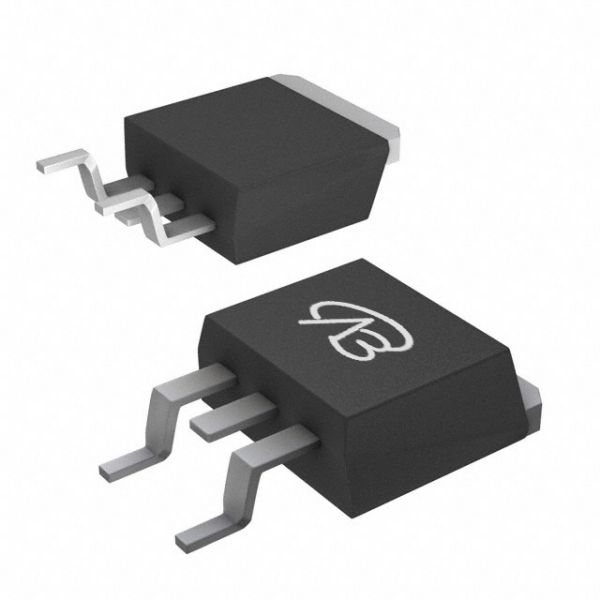
Comparative Analysis: IPB120N04S4-02 (N-channel, TO-263) vs. VBL1402
Analysis of the Original Model (IPB120N04S4-02) Core:
This is a 40V N-channel MOSFET from Infineon in a TO-263-3 (D2PAK) package. Its design core is to offer an excellent balance of very high current capability and low conduction loss in a standard, robust package. Key advantages are: a high continuous drain current rating of 120A and an ultra-low on-resistance (RDS(on)) of 1.8mΩ measured at 10V, 100A. It features AEC qualification, 100% avalanche testing, and a wide operating temperature range up to 175°C, making it suitable for demanding industrial applications.
Compatibility and Differences of the Domestic Alternative (VBL1402):
VBsemi's VBL1402 is offered in the same TO263 package, providing direct footprint compatibility. The key differences are in the electrical parameters: VBL1402 boasts a higher continuous current rating of 150A but has a slightly higher on-resistance of 2.0mΩ (at 10V gate drive) compared to the original's 1.8mΩ.
Key Application Areas:
Original Model IPB120N04S4-02: Its combination of 120A current, 1.8mΩ RDS(on), and the thermally efficient TO-263 package makes it ideal for high-current, efficiency-critical applications.
High-Current DC-DC Converters: Serving as the main switch or synchronous rectifier in server, telecom, or industrial power supplies.
Motor Drives and Solenoid Control: For driving brushed/BLDC motors or actuators in industrial automation.
Battery Protection/Management Systems (BMS): As a discharge switch in high-current paths.
Alternative Model VBL1402: With its even higher 150A current rating, it is a suitable alternative or upgrade for applications where peak or continuous current demand is paramount, and a minor increase in RDS(on) is acceptable. It fits well in similar high-power conversion and motor control circuits requiring a robust package.
Comparative Analysis: IAUCN04S7N015ATMA1 (N-channel, Automotive TDSON-8) vs. VBQA1401
This comparison focuses on advanced automotive-grade MOSFETs where power density, ultra-low loss, and supreme reliability are non-negotiable.
Analysis of the Original Model (IAUCN04S7N015ATMA1) Core:
This Infineon OptiMOS™ part is a 40V N-channel MOSFET in a compact TDSON-8 (5.5x5.2mm) package, designed specifically for automotive applications. Its core advantages are exceptional:
Extreme Current Density: A remarkable continuous current rating of 173A from a small footprint.
Minimized Conduction Losses: An ultra-low RDS(on) of 1.53mΩ at 10V gate drive.
Automotive-Grade Reliability: It exceeds AEC-Q101 standards, features enhanced electrical testing, and is qualified for the rigorous demands of automotive environments.
Compatibility and Differences of the Domestic Alternative (VBQA1401):
VBsemi's VBQA1401 uses a DFN8(5x6) package, which is similar in size and likely compatible with many TDSON-8 layouts, though careful footprint verification is advised. Electrically, it offers a significantly lower on-resistance of 0.8mΩ (at 10V) but has a lower continuous current rating of 100A compared to the original's 173A.
Key Application Areas:
Original Model IAUCN04S7N015ATMA1: Its unparalleled combination of current density and ultra-low RDS(on) in an automotive-qualified package makes it a top-tier choice for the most demanding 12V/24V automotive systems.
Automotive BLDC Motor Drives: For electric pumps, fans, window lifts, and other high-current actuators.
High-Efficiency DC-DC Conversion in Vehicles: In main converters, POL (Point-of-Load) modules, and LED drivers.
Battery Switch Modules and Smart Junction Boxes.
Alternative Model VBQA1401: With its outstanding 0.8mΩ RDS(on), it is an excellent alternative for applications where minimizing conduction loss is the absolute priority, and the 100A current capability is sufficient. It targets high-efficiency power stages in automotive or industrial settings where thermal performance and efficiency are critical.
Conclusion:
This analysis reveals two distinct selection strategies for high-current applications:
For standard high-power applications using a TO-263 package, the original IPB120N04S4-02 provides a proven, AEC-qualified solution with 120A and 1.8mΩ RDS(on). Its domestic alternative VBL1402 offers a compelling option with a higher 150A current rating, suitable for designs prioritizing maximum current headroom with package compatibility.
For advanced automotive and high-power-density applications, the original IAUCN04S7N015ATMA1 sets a very high benchmark with its extreme 173A current in a small package and 1.53mΩ RDS(on), backed by full automotive-grade certification. The domestic alternative VBQA1401 takes a different approach, achieving a remarkably low 0.8mΩ RDS(on), making it a superior choice for applications where minimizing conduction losses is the dominant factor over ultra-high peak current.
The core takeaway is that selection must be driven by precise application requirements. In the context of supply chain diversification, domestic alternatives like VBL1402 and VBQA1401 not only provide viable backup options but also offer specific performance advantages (higher current or lower RDS(on)), giving engineers greater flexibility and resilience in design trade-offs and cost optimization. Understanding the specific design priorities—maximum current, lowest resistance, or automotive qualification—is key to unlocking the full value of these components in your circuit.

Download PDF document
 Download now


