 中文
中文 English
MOSFET Selection for High-Power Applications: IPB048N15N5LFATMA1, IPTC014N10NM5ATMA1 vs. China Alternatives VBGL11505, VBGQTA1101
Number of views:9999
 Back to previous page
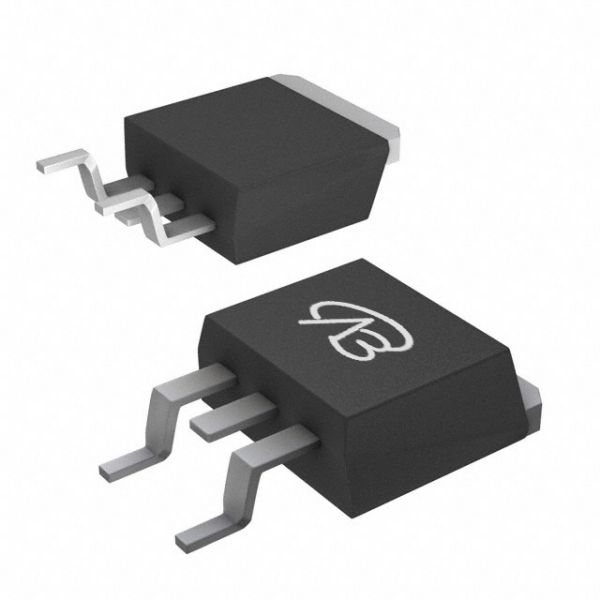
Comparative Analysis: IPB048N15N5LFATMA1 (N-channel) vs. VBGL11505
Analysis of the Original Model (IPB048N15N5LFATMA1) Core:
This is a 150V N-channel MOSFET from Infineon in a TO-263-3 (D2PAK) package. Its design core is delivering high current with very low conduction loss and robust reliability for demanding applications. Key advantages are: an extremely low on-resistance of 4.8mΩ at 10V gate drive, a high continuous drain current rating of 150A, and features like 100% avalanche testing and a wide Safe Operating Area (SOA). These make it exceptionally suitable for hot-swap and eFuse applications where inrush current management and fault tolerance are paramount.
Compatibility and Differences of the Domestic Alternative (VBGL11505):
VBsemi's VBGL11505 is a direct pin-to-pin compatible alternative in the same TO-263 package. The main differences are in electrical parameters: VBGL11505 offers the same 150V voltage rating but has a slightly higher on-resistance of 5.6mΩ (@10V) and a slightly lower continuous current rating of 140A compared to the original. It utilizes SGT (Shielded Gate Trench) technology for good switching performance.
Key Application Areas:
Original Model IPB048N15N5LFATMA1: Its combination of very low RDS(on), high current capability, and proven ruggedness makes it ideal for high-reliability, high-power switching.
Server/Telecom Power Supplies: Hot-swap controllers and OR-ing circuits in 48V-60V intermediate bus architectures.
Industrial Power Systems: Electronic circuit breakers (eFuses) and solid-state relays.
High-Current DC-DC Converters: Synchronous rectification or high-side switching in high-power modules.
Alternative Model VBGL11505: A viable alternative for the same 150V application spaces where the specific current and resistance parameters of the original are not fully taxed. It provides a cost-effective and supply-chain-resilient option for designs requiring robust 150V switching with high current (up to 140A) capability.
Comparative Analysis: IPTC014N10NM5ATMA1 (N-channel) vs. VBGQTA1101
This comparison shifts to ultra-low resistance MOSFETs in advanced packages, where the design pursuit is minimizing conduction loss in very high-current paths.
Analysis of the Original Model (IPTC014N10NM5ATMA1) Core:
This Infineon MOSFET is a powerhouse in an HDSOP-16 package. Its core advantages are exceptional:
Ultra-Low Conduction Loss: An impressively low on-resistance of just 1.3mΩ at 10V gate drive.
Extreme Current Handling: A massive continuous drain current rating of 365A.
Advanced Thermal Performance: The HDSOP-16 package is designed for excellent thermal resistance, crucial for dissipating heat in such high-current applications.
Ruggedness: Features like 100% avalanche testing ensure reliability.
Compatibility and Differences of the Domestic Alternative (VBGQTA1101):
VBsemi's VBGQTA1101 (in a TOLT-16 package, likely compatible) presents itself as a "performance-competitive" alternative. It matches the 100V voltage rating and significantly surpasses key parameters: an even lower on-resistance of 1.2mΩ (@10V) and a higher continuous current rating of 415A. This indicates a potential for lower conduction loss and higher current margin in similar applications.
Key Application Areas:
Original Model IPTC014N10NM5ATMA1: Its ultra-low RDS(on) and extremely high current rating make it a top-tier choice for the most demanding high-efficiency, high-density power conversion.
High-Current POL (Point-of-Load) Converters: For powering CPUs, GPUs, and ASICs in servers and workstations.
Energy Storage & Inverter Systems: Battery disconnect switches and inverter bridge legs.
High-Power Motor Drives: For industrial automation and electric vehicles.
Alternative Model VBGQTA1101: Targets the same high-performance applications but with numerically superior conduction and current specs. It is suitable for upgrade scenarios or new designs where maximizing current density and minimizing loss are critical, offering a compelling domestic alternative.
Conclusion:
This analysis reveals two distinct selection paradigms for high-power applications:
For 150V systems demanding robustness and high current (like hot-swap and eFuse), the original IPB048N15N5LFATMA1, with its 4.8mΩ RDS(on) and 150A rating, sets a high standard for reliability and performance. Its domestic alternative VBGL11505 provides a compatible, viable option with slightly derated specs (5.6mΩ, 140A), suitable for many applications within that voltage class.
For 100V ultra-high-current applications where conduction loss is paramount, the original IPTC014N10NM5ATMA1 (1.3mΩ, 365A) in its thermally-optimized package represents a peak performance solution. The domestic alternative VBGQTA1101 emerges as a strong contender, offering enhanced parameters (1.2mΩ, 415A), which can enable higher efficiency or power density in next-generation designs.
The core conclusion is: Selection hinges on precise requirement matching. In the context of supply chain diversification, domestic alternatives like VBGL11505 and VBGQTA1101 provide not just backup options but also competitive, sometimes superior, performance choices. This gives engineers greater flexibility in design optimization, cost control, and supply chain resilience. Understanding the specific demands of your application—voltage, current, loss budget, and thermal environment—is key to unlocking the full value of these powerful switching devices.

Download PDF document
 Download now


