 中文
中文 English
MOSFET Selection for High-Power Density Applications: IPB042N10N3G, BSC027N04LSG vs. China Alternatives VBGL1103, VBQA1402
Number of views:9999
 Back to previous page
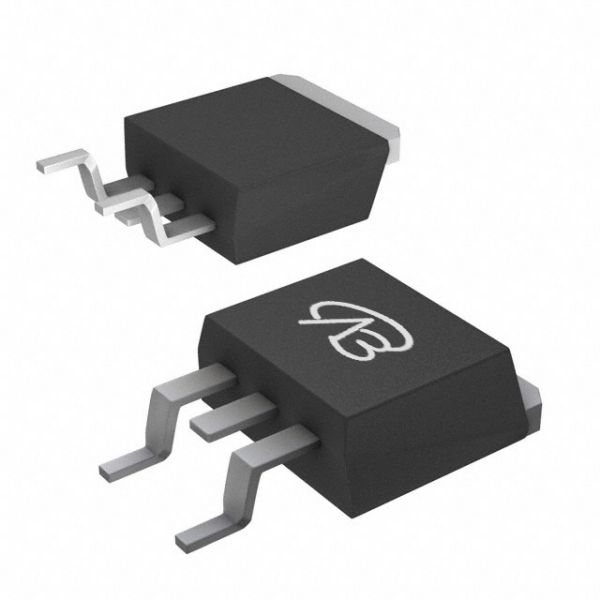
Comparative Analysis: IPB042N10N3G (100V N-channel) vs. VBGL1103
Analysis of the Original Model (IPB042N10N3G) Core:
This is a 100V N-channel MOSFET from Infineon in a TO-263-3 (D2PAK) package. Its design core is achieving an excellent figure of merit (FOM) for high-frequency switching and synchronous rectification in medium-high voltage applications. Key advantages include: a very low on-resistance of 4.2mΩ (measured at 10V, 100A), a high continuous drain current of 137A, and a robust 175°C maximum junction temperature. Its optimized gate charge (Qg) to RDS(on) product ensures efficient switching performance.
Compatibility and Differences of the Domestic Alternative (VBGL1103):
VBsemi's VBGL1103 is a direct pin-to-pin compatible alternative in the same TO-263 package. It offers competitive and even enhanced key parameters: the same 100V voltage rating, a slightly lower on-resistance of 3.7mΩ (@10V), and a high continuous current rating of 120A. Utilizing SGT (Shielded Gate Trench) technology, it targets similar high-performance switching applications.
Key Application Areas:
Original Model IPB042N10N3G: Ideal for high-current, high-frequency switching applications requiring a 100V breakdown. Typical uses include:
Synchronous rectification in 48V/60V intermediate bus converters and server/telecom SMPS.
High-current motor drives and inverters.
High-power DC-DC converters where low conduction loss is critical.
Alternative Model VBGL1103: Well-suited as a high-performance domestic alternative for the same 100V application space, particularly where a lower RDS(on) can offer efficiency gains or thermal headroom. It's a strong candidate for upgrades in synchronous rectification and motor control circuits.
Comparative Analysis: BSC027N04LSG (40V N-channel) vs. VBQA1402
This comparison focuses on ultra-low-loss switching for lower voltage, high-current applications, where the design pursuit is minimizing conduction and switching losses in compact form factors.
Analysis of the Original Model (BSC027N04LSG) Core:
This Infineon MOSFET features a TDSON-8 (5x6) package and is optimized for fast-switching DC/DC converters. Its core advantages are:
Exceptional Conduction Performance: An ultra-low on-resistance of 2.7mΩ (@10V, 50A) supporting a continuous current of 100A.
Optimized Switching Characteristics: Engineered for fast switching with an excellent FOM, crucial for high-frequency point-of-load (POL) converters.
Robust Package: The TDSON-8 offers a good balance of power handling and footprint, suitable for high-density board layouts.
The domestic alternative VBQA1402 presents a "performance-enhanced" option: It achieves significant improvement in the key parameter of on-resistance while maintaining package compatibility. It features the same 40V voltage rating but boasts an even lower on-resistance of 2.0mΩ (@10V) and a higher continuous current rating of 120A.
Key Application Areas:
Original Model BSC027N04LSG: An ideal choice for high-efficiency, high-current DC/DC conversion in 12V/24V systems. Typical applications include:
Synchronous buck converters for CPU/GPU core voltage (VRM).
High-current POL converters in servers, networking, and storage equipment.
Low-voltage motor drives and battery protection circuits.
Alternative Model VBQA1402: Excellent for next-generation designs or upgrades demanding the lowest possible conduction loss and higher current capability within the 40V range. It is particularly suitable for maximizing efficiency in high-current POL applications and motor drives.
Conclusion:
In summary, this analysis reveals two distinct selection paths for high-power applications:
For 100V N-channel applications requiring a balance of voltage, current, and switching performance, the original IPB042N10N3G, with its proven 4.2mΩ RDS(on) and 137A current capability, remains a robust choice for telecom power, industrial motor drives, and high-power converters. Its domestic alternative VBGL1103 offers a compelling, pin-compatible solution with slightly better conduction loss (3.7mΩ), making it a viable alternative for enhancing efficiency or ensuring supply chain resilience in these applications.
For 40V N-channel applications where minimizing loss in high-current paths is paramount, the original BSC027N04LSG, with its ultra-low 2.7mΩ RDS(on) and fast-switching optimization, is a top-tier solution for high-density POL converters. The domestic alternative VBQA1402 pushes the envelope further with a remarkably low 2.0mΩ RDS(on) and 120A rating, offering a significant performance upgrade for designs seeking maximum efficiency and power density.
The core takeaway is that selection hinges on precise requirement matching. In the context of supply chain diversification, domestic alternatives like VBGL1103 and VBQA1402 not only provide reliable backup options but also demonstrate competitive or superior performance in key parameters, offering engineers greater flexibility and resilience in design trade-offs and cost optimization. Understanding the specific demands of your voltage, current, and switching frequency is essential to leverage the full value of these components in your circuit.

Download PDF document
 Download now


