 中文
中文 English
MOSFET Selection for High-Power & High-Frequency Applications: IPA60R099C6XKSA1, BSC057N08NS3G vs. China Alternatives VBMB165R36S, VBQA1806
Number of views:9999
 Back to previous page
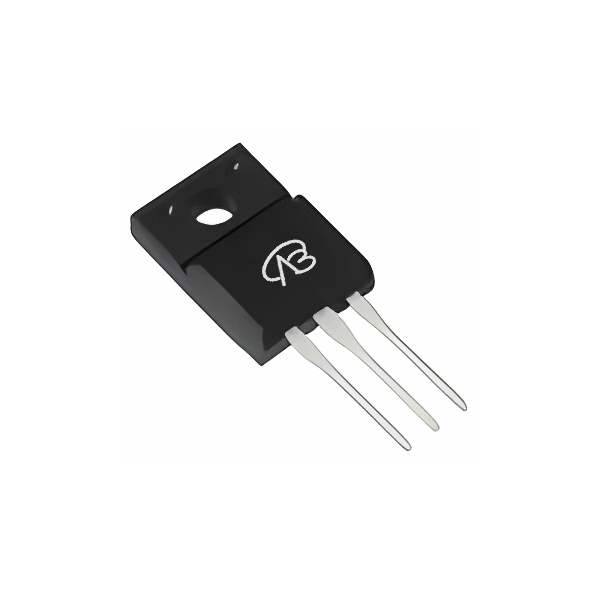
Comparative Analysis: IPA60R099C6XKSA1 (600V SJ MOSFET) vs. VBMB165R36S
Analysis of the Original Model (IPA60R099C6XKSA1) Core:
This is a 600V N-channel CoolMOS™ C6 Superjunction MOSFET from Infineon in a TO-220-FP package. Its design core leverages the superjunction principle to achieve an excellent trade-off between high voltage blocking and low conduction loss. Key advantages include: a low on-resistance of 99mΩ at 10V gate drive, a continuous drain current rating of 37.9A, and the fast-switching capability inherent to CoolMOS™ technology, which minimizes switching losses. This makes it ideal for high-efficiency, high-frequency switching applications.
Compatibility and Differences of the Domestic Alternative (VBMB165R36S):
VBsemi's VBMB165R36S is also an N-channel Superjunction MOSFET in a TO-220F package, offering a form-factor compatible alternative. The key differences are in electrical parameters: VBMB165R36S features a higher voltage rating (650V vs. 600V) and a significantly lower on-resistance (75mΩ @10V vs. 99mΩ). However, its continuous current rating is slightly lower (36A vs. 37.9A). This represents a performance enhancement in voltage withstand and conduction loss for the same package type.
Key Application Areas:
Original Model IPA60R099C6XKSA1: Excellently suited for high-voltage, medium-power switching applications requiring good efficiency. Typical uses include:
Switch-Mode Power Supplies (SMPS): PFC stages, flyback, or forward converters in industrial and computing power supplies.
Motor Drives: Inverters for fans, pumps, and other industrial motor controls.
Solar Inverters: DC-AC conversion stages in photovoltaic systems.
Alternative Model VBMB165R36S: With its higher voltage rating and lower RDS(on), it is well-suited for applications demanding enhanced efficiency and margin in 600-650V systems, such as upgraded SMPS designs or motor drives where lower conduction loss is prioritized.
Comparative Analysis: BSC057N08NS3G (80V Low-RDS(on) MOSFET) vs. VBQA1806
This comparison focuses on high-current, low-voltage applications where minimizing conduction loss is paramount.
Analysis of the Original Model (BSC057N08NS3G) Core:
This Infineon MOSFET is an 80V N-channel device in a TDSON-8 (5x6) package. Its design pursues ultra-low on-resistance and high current capability in a compact footprint. Core advantages are: an extremely low RDS(on) of 5.7mΩ (measured at 10V, 50A), a high continuous drain current of 100A, and a package optimized for thermal performance and power density, making it ideal for synchronous rectification and high-current switching.
Compatibility and Differences of the Domestic Alternative (VBQA1806):
VBsemi's VBQA1806 is an N-channel Trench MOSFET in a DFN8(5x6) package, offering a pin-to-pin compatible alternative. Its parameters show a competitive profile: the same 80V voltage rating, a slightly lower continuous current (60A vs. 100A), but an impressively low on-resistance of 5mΩ @10V (even lower than the original's 5.7mΩ). This makes it a compelling choice for applications where the ultra-low RDS(on) is critical, even within a slightly lower current envelope.
Key Application Areas:
Original Model BSC057N08NS3G: Its ultra-low RDS(on) and very high current rating make it an ideal choice for the most demanding high-current, low-voltage applications:
Synchronous Rectification in DC-DC Converters: Particularly in high-current server VRMs, telecom, and networking equipment.
High-Current Motor Drives: For robotics, e-mobility, and industrial automation.
High-Power Load Switches and OR-ing Circuits.
Alternative Model VBQA1806: With its exceptionally low 5mΩ RDS(on), it is an excellent alternative for applications where minimizing conduction loss is the top priority and the operating current is within 60A. It is suitable for:
High-Efficiency Synchronous Buck Converters.
Motor drives and solenoid controls in the medium-to-high current range.
Upgrading designs that can benefit from lower RDS(on) for improved thermal performance and efficiency.
Summary
This analysis reveals two distinct selection pathways:
For 600V-class high-voltage switching, the original IPA60R099C6XKSA1 offers a proven balance of voltage, current, and switching performance. Its domestic alternative, VBMB165R36S, provides a compelling upgrade in key parameters—higher voltage (650V) and lower on-resistance (75mΩ)—making it a strong candidate for designs seeking enhanced efficiency and voltage margin in similar applications.
For 80V high-current, low-loss applications, the original BSC057N08NS3G sets a high benchmark with its 100A capability and 5.7mΩ RDS(on). The domestic alternative VBQA1806, while rated for a lower continuous current (60A), achieves an even lower on-resistance of 5mΩ, positioning it as a high-performance option for applications where ultra-low conduction loss is critical within its current range.
The core conclusion is that selection hinges on precise requirement matching. In the context of supply chain diversification, domestic alternatives like VBMB165R36S and VBQA1806 not only provide viable backups but also offer specific parametric advantages—such as lower RDS(on) or higher voltage ratings—giving engineers greater flexibility in design optimization, cost control, and performance enhancement. Understanding the design philosophy and parameter implications of each device is key to unlocking its full potential in your circuit.

Download PDF document
 Download now


