 中文
中文 English
MOSFET Selection for High-Power Automotive and SMPS Applications: IAUT300N08S5N011ATMA1, BSC040N10NS5 vs. China Alternatives VBGQT1801, VBGQA1105
Number of views:9999
 Back to previous page
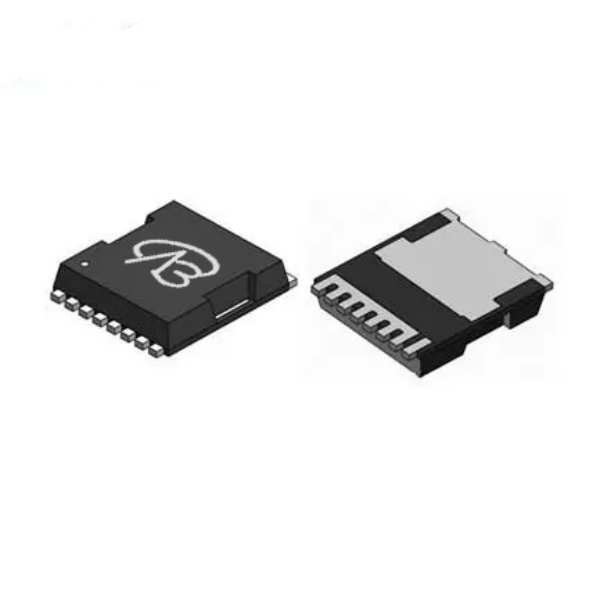
Comparative Analysis: IAUT300N08S5N011ATMA1 (N-channel) vs. VBGQT1801
Analysis of the Original Model (IAUT300N08S5N011ATMA1) Core:
This is an 80V N-channel OptiMOS power MOSFET from Infineon, packaged in HSOF-8 and designed for stringent automotive applications. Its design core is to achieve exceptional power handling and reliability in harsh environments. Key advantages include: an ultra-low on-resistance of 1.1mΩ at a 10V gate drive, enabling a massive continuous drain current of 410A. It features enhanced robustness with 100% avalanche testing, extended AEC-Q101 qualification, and a high maximum operating junction temperature of 175°C, making it ideal for mission-critical automotive systems.
Compatibility and Differences of the Domestic Alternative (VBGQT1801):
VBsemi's VBGQT1801, in a TOLL package, serves as a high-performance alternative. The key differences lie in the electrical parameters: while both are 80V rated, VBGQT1801 offers a slightly higher on-resistance of 1mΩ (vs. 1.1mΩ) at 10V but a lower continuous current rating of 350A (vs. 410A). It utilizes SGT (Shielded Gate Trench) technology for good switching performance.
Key Application Areas:
Original Model IAUT300N08S5N011ATMA1: Its unparalleled current capability (410A) and ultra-low RDS(on), combined with automotive-grade ruggedness, make it the premier choice for high-current automotive systems.
Electric Vehicle Power Systems: Main traction inverters, high-power DC-DC converters, and battery management system (BMS) switches.
Heavy-Duty Load Switching: Solenoid/valve drivers and motor controllers requiring extreme current handling.
Alternative Model VBGQT1801: A strong domestic alternative suitable for applications demanding very low conduction loss and high current (up to 350A) within an 80V range, such as high-performance server power supplies, industrial motor drives, and lower-tier or cost-sensitive automotive auxiliary systems where the full 410A rating is not required.
Comparative Analysis: BSC040N10NS5 (N-channel) vs. VBGQA1105
This comparison shifts focus to high-frequency, high-efficiency switching applications typical in advanced power supplies.
Analysis of the Original Model (BSC040N10NS5) Core:
This 100V N-channel MOSFET from Infineon, in a TDSON-8 (5x6) package, is optimized for high-performance SMPS like synchronous rectification. Its design pursues an optimal balance of low resistance, fast switching, and excellent thermal performance. Core advantages are: a low on-resistance of 4mΩ at 10V (tested at 50A), supporting a continuous current of 86A and a high power dissipation of 139W. It features 100% avalanche testing and is characterized by low gate charge for high-frequency operation.
Compatibility and Differences of the Domestic Alternative (VBGQA1105):
VBsemi's VBGQA1105, in a DFN8(5x6) package, is a pin-to-pin compatible alternative. The main differences are in the specifications: VBGQA1105 has a higher continuous current rating of 105A (vs. 86A) but a correspondingly higher on-resistance of 5.6mΩ at 10V (vs. 4mΩ). It also employs SGT technology for efficient switching.
Key Application Areas:
Original Model BSC040N10NS5: Its optimized parameters make it an industry-standard choice for high-efficiency, medium-to-high power SMPS.
Synchronous Rectification: Primary choice for the secondary side in high-current AC-DC adapters, server/telecom SMPS (e.g., 48V to 12V/5V conversion).
High-Frequency DC-DC Converters: Used in buck/boost converters for computing and networking equipment.
Alternative Model VBGQA1105: Offers a compelling alternative with a higher current rating (105A), making it suitable for SMPS designs that prioritize current headroom and cost-effectiveness, potentially in applications where the slightly higher RDS(on) is acceptable within the thermal design, or for upgrading existing designs for higher output current.
Conclusion
In summary, this analysis reveals two distinct selection pathways based on application priority:
For ultra-high-current automotive and industrial applications, the original Infineon IAUT300N08S5N011ATMA1, with its best-in-class 410A current and 1.1mΩ RDS(on) backed by full automotive qualification, remains the top-tier choice for the most demanding reliability and performance scenarios. Its domestic alternative, VBGQT1801, provides a viable high-performance option with excellent parameters (350A, 1mΩ), suitable for applications where the absolute maximum current of the original is not critical.
For high-performance SMPS and power conversion, the original BSC040N10NS5 offers a proven, optimized balance of 4mΩ RDS(on), 86A current, and thermal performance for synchronous rectification. The domestic alternative VBGQA1105 presents a "current-enhanced" option with 105A capability, offering designers a flexible choice for cost-optimized or current-upgraded designs.
The core takeaway is that selection is defined by precise requirement matching. In the era of supply chain diversification, domestic alternatives like VBGQT1801 and VBGQA1105 not only provide reliable backup options but also offer competitive or enhanced parameters in specific areas, granting engineers greater flexibility and resilience in design trade-offs and cost management. Understanding the specific demands of your application—be it peak current, switching frequency, or thermal budget—is key to unlocking the full value of these power switching solutions.

Download PDF document
 Download now


