 中文
中文 English
MOSFET Selection for High-Power & Signal-Level Switching: BUK9620-55A,118, NX2301P,215 vs. China Alternatives VBL1615, VB2212N
Number of views:9999
 Back to previous page
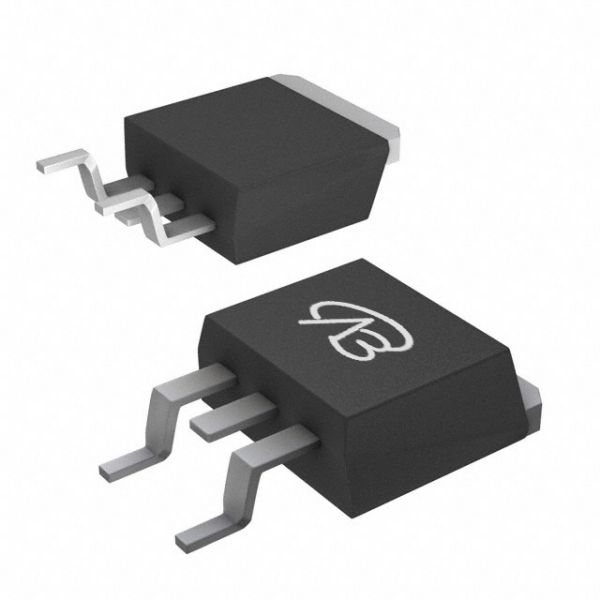
Comparative Analysis: BUK9620-55A,118 (N-channel) vs. VBL1615
Analysis of the Original Model (BUK9620-55A,118) Core:
This is a 55V N-channel MOSFET from Nexperia in a D2PAK (TO-263) package. Its design core is to deliver robust power handling and high efficiency in demanding high-current applications. Key advantages include: a high continuous drain current rating of 54A, a drain-source voltage (Vdss) of 55V, and it is designed for low conduction losses in circuits like motor drives and power supplies.
Compatibility and Differences of the Domestic Alternative (VBL1615):
VBsemi's VBL1615 is offered in a TO-263 package and serves as a potential alternative for high-power N-channel applications. The key parameter comparison shows:
Voltage Rating: VBL1615 has a slightly higher Vdss of 60V compared to 55V.
Current Capability: VBL1615 boasts a higher continuous drain current of 75A versus 54A.
On-Resistance: VBL1615 features a low RDS(on) of 11mΩ @ 10V, which is typically lower than the original part, promising reduced conduction losses.
Technology: It utilizes Trench technology for good switching performance.
Key Application Areas:
Original Model BUK9620-55A,118: Ideal for high-current switching applications such as:
Motor drives for industrial equipment, power tools, or automotive systems.
High-current DC-DC converters and power supply units (PSUs).
Inverter and power stage designs requiring 55V breakdown and ~50A current handling.
Alternative Model VBL1615: Suitable for upgrade or new designs requiring even higher current capacity (up to 75A) and a marginally higher voltage rating (60V). Its lower RDS(on) can lead to improved efficiency in high-power circuits, making it a strong candidate for next-generation power systems, high-performance motor controllers, or server power supplies.
Comparative Analysis: NX2301P,215 (P-channel) vs. VB2212N
This comparison shifts focus to low-power, space-constrained signal-level switching applications.
Analysis of the Original Model (NX2301P,215) Core:
This is a 20V P-channel MOSFET from Nexperia in a compact SOT-23 package. Its design pursues a balance of small size, adequate current handling, and low gate drive requirements for control and load switching tasks. Key parameters include a Vdss of -20V, a continuous drain current (Id) of -2A, and an RDS(on) of 120mΩ @ 4.5V.
Compatibility and Differences of the Domestic Alternative (VB2212N):
VBsemi's VB2212N is a direct pin-to-pin compatible alternative in an SOT23-3 package. The parameter comparison reveals:
Voltage Rating: Both have a -20V Vdss.
Current Capability: VB2212N offers a higher continuous drain current of -3.5A compared to -2A.
On-Resistance: VB2212N features a significantly lower RDS(on) of 90mΩ @ 4.5V (and 71mΩ @ 10V) versus 120mΩ @ 4.5V for the original, enabling lower voltage drop and better efficiency.
Technology: Also employs Trench technology.
Key Application Areas:
Original Model NX2301P,215: Perfect for compact circuits requiring P-channel switching, such as:
Load switches and power management in portable devices, IoT sensors, and consumer electronics.
Level translation and signal isolation circuits.
Battery-powered device power path management (e.g., on/off control).
Alternative Model VB2212N: Offers a performance-enhanced drop-in replacement. Its lower RDS(on) and higher current rating make it suitable for applications demanding lower conduction losses, higher load current capability (up to -3.5A), or where design margin is critical, all within the same tiny SOT-23 footprint.
Conclusion
In summary, this analysis outlines two distinct selection pathways:
For high-power N-channel applications, the original BUK9620-55A,118 provides a reliable 55V/54A solution in a standard D2PAK package. Its domestic alternative, VBL1615, presents a compelling "performance-upgraded" option with higher voltage (60V), significantly higher current (75A), and lower on-resistance, making it an excellent choice for next-generation high-efficiency, high-power-density designs.
For compact P-channel signal switching, the original NX2301P,215 offers a proven -20V/2A solution in a miniature SOT-23 package. Its domestic alternative, VB2212N, provides a direct compatible replacement with superior performance—higher current (-3.5A) and lower on-resistance—offering engineers an easy path to gain efficiency and margin in space-constrained designs.
The core takeaway is that selection is about precise requirement matching. In the context of supply chain diversification, domestic alternatives like VBL1615 and VB2212N not only provide viable backup options but also deliver parameter advancements in key areas, granting engineers greater flexibility and resilience in design trade-offs and cost optimization. Understanding the design intent and parameter implications of each device is essential to unlocking its full potential in your circuit.

Download PDF document
 Download now


