 中文
中文 English
MOSFET Selection for High-Power and Compact Power Applications: BUK9615-100A,118, PMPB12R5EPX vs. China Alternatives VBM1101N, VBQG2317
Number of views:9999
 Back to previous page
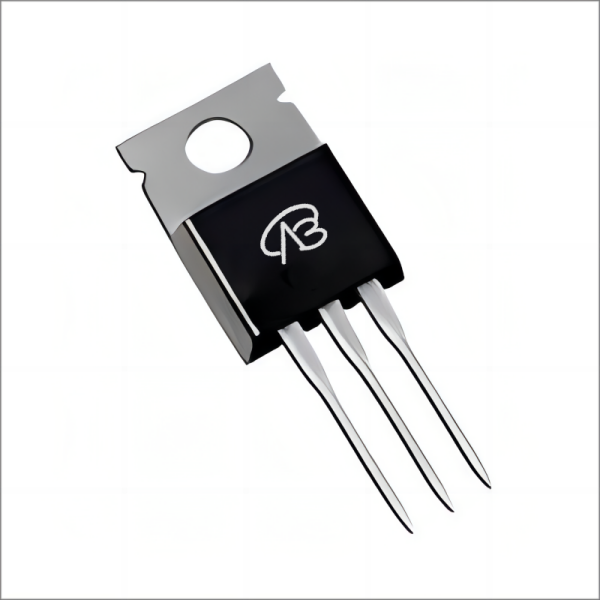
Comparative Analysis: BUK9615-100A,118 (N-channel) vs. VBM1101N
Analysis of the Original Model (BUK9615-100A,118) Core:
This is a 100V N-channel MOSFET from Nexperia in a D2PAK package. Its design core is to deliver robust power handling and efficient thermal performance in high-current applications. Key advantages include: a low on-resistance of 11.5mΩ at 10V gate drive, and a high continuous drain current rating of 75A. This makes it suitable for circuits demanding high power density and reliability.
Compatibility and Differences of the Domestic Alternative (VBM1101N):
VBsemi's VBM1101N is offered in a TO-220 package and serves as a functional alternative for high-power circuits. The key differences are in the electrical parameters: VBM1101N matches the 100V voltage rating but offers a higher continuous current of 100A. Its on-resistance is slightly lower at 9mΩ (@10V), potentially offering reduced conduction losses, though package thermal performance may differ.
Key Application Areas:
Original Model BUK9615-100A,118: Ideal for high-power switching applications such as:
Motor drives and inverters in industrial equipment.
High-current DC-DC converters and power supplies.
Automotive systems requiring 100V withstand voltage and high current.
Alternative Model VBM1101N: Suitable for upgrade scenarios requiring even higher current capability (up to 100A) and slightly lower on-resistance, often in power stages where thermal management via TO-220 is acceptable.
Comparative Analysis: PMPB12R5EPX (P-channel) vs. VBQG2317
Analysis of the Original Model (PMPB12R5EPX) Core:
This is a -30V P-channel MOSFET from Nexperia in a compact DFN2020M-6 package. Its design pursues efficient power management in minimal space. Core advantages include: a low on-resistance of 15mΩ at 10V gate drive, a continuous drain current of -12.5A, and the benefits of a trench MOSFET structure for improved performance.
Compatibility and Differences of the Domestic Alternative (VBQG2317):
VBsemi's VBQG2317 is a direct pin-to-pin compatible alternative in a DFN6(2x2) package. The main parameter differences are: VBQG2317 has the same -30V voltage rating, but a slightly lower continuous current of -10A and a marginally higher on-resistance of 17mΩ (@10V).
Key Application Areas:
Original Model PMPB12R5EPX: Excellent for space-constrained applications requiring a P-channel switch with good current handling, such as:
Load switches and power path management in portable devices.
High-side switching in compact DC-DC converters.
Battery management systems (BMS) for discharge control.
Alternative Model VBQG2317: A viable alternative for P-channel applications where package compatibility is critical and the slightly reduced current (10A vs. 12.5A) and slightly higher RDS(on) are acceptable for the design margins.
Summary
This analysis reveals two distinct selection paths:
For high-power N-channel applications, the original BUK9615-100A,118 offers a proven balance of 75A current and 11.5mΩ RDS(on) in a D2PAK package. Its domestic alternative VBM1101N provides a performance-enhanced option with 100A current and 9mΩ RDS(on) in a TO-220 package, suitable for upgrades demanding lower conduction loss.
For compact P-channel applications, the original PMPB12R5EPX delivers strong performance (12.5A, 15mΩ) in a miniaturized DFN2020M-6 package. The domestic alternative VBQG2317 offers direct package compatibility with slightly relaxed parameters, serving as a practical backup or cost-effective option.
The core conclusion is that selection depends on precise requirement matching. Domestic alternatives not only provide supply chain resilience but also offer performance enhancements or cost-effective compatibility, giving engineers greater flexibility in design trade-offs.

Download PDF document
 Download now


