 中文
中文 English
MOSFET Selection for High-Power Density Applications: BUK766R0-60E,118, BUK9Y2R4-40HX vs. China Alternatives VBL1606, VBGED1401
Number of views:9999
 Back to previous page
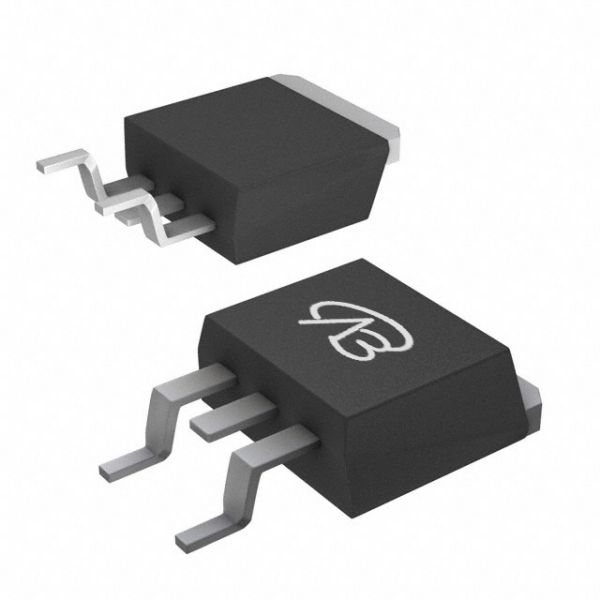
Comparative Analysis: BUK766R0-60E,118 (N-channel) vs. VBL1606
Analysis of the Original Model (BUK766R0-60E,118) Core:
This is a 60V N-channel MOSFET from Nexperia in a D2PAK (TO-263) package. Its design core is to deliver robust power handling and low conduction loss in a standard high-power package. Key advantages are: a low on-resistance of 4.58mΩ at 10V gate drive, and a high continuous drain current rating of 75A. This combination makes it suitable for applications demanding high current throughput with minimal loss.
Compatibility and Differences of the Domestic Alternative (VBL1606):
VBsemi's VBL1606 is offered in a TO-263 package, providing a form-factor compatible alternative. The key differences are in electrical parameters: VBL1606 matches the 60V voltage rating but offers a significantly higher continuous current rating of 150A and a slightly lower on-resistance of 4mΩ at 10V. This represents a performance-enhanced alternative in the same package footprint.
Key Application Areas:
Original Model BUK766R0-60E,118: Ideal for high-current 48V-60V system applications requiring a balance of performance and proven package reliability.
DC-DC Converters: High-current buck, boost, or synchronous rectification stages in industrial power supplies, telecom systems.
Motor Drives: Driving high-power brushed DC or BLDC motors in industrial tools, robotics.
Power Distribution: Load switches and OR-ing circuits in server and automotive systems.
Alternative Model VBL1606: Suited for upgrade scenarios or new designs where higher current capability (150A) and marginally lower RDS(on) are critical, potentially enabling higher power density or reduced thermal stress in similar 60V applications.
Comparative Analysis: BUK9Y2R4-40HX (N-channel) vs. VBGED1401
This comparison focuses on ultra-low resistance switching in a compact, thermally efficient package.
Analysis of the Original Model (BUK9Y2R4-40HX) Core:
This Nexperia MOSFET utilizes the SOT-669 (LFPAK56) package, targeting an exceptional balance of ultra-low on-resistance and high current in a small footprint. Its core advantages are: an extremely low RDS(on) of 2.4mΩ at 10V and a very high continuous current rating of 120A at 40V. This makes it a top-tier choice for space-constrained, high-efficiency, high-current applications.
Compatibility and Differences of the Domestic Alternative (VBGED1401):
VBsemi's VBGED1401 is also in the LFPAK56 package, ensuring direct pin-to-pin compatibility. It presents a substantial parametric enhancement: while maintaining the 40V rating, it offers a dramatically lower RDS(on) of 0.7mΩ at 10V and a vastly higher continuous current rating of 250A. This positions it as a super-performance alternative.
Key Application Areas:
Original Model BUK9Y2R4-40HX: Excels in applications where minimizing conduction loss and saving board space are paramount for 40V systems.
High-Frequency DC-DC Conversion: Synchronous rectifier or control FET in high-current, high-frequency POL (Point-of-Load) converters for computing and networking.
Advanced Motor Control: High-efficiency drives for high-performance drones, servo drives, and automotive actuators.
Battery Management Systems (BMS): High-side or discharge path switches in high-power lithium battery packs.
Alternative Model VBGED1401: Targets the most demanding applications where the absolute lowest conduction loss (0.7mΩ) and highest current capacity (250A) are required. It is ideal for next-generation, ultra-high-efficiency power stages, extreme power-density modules, or as a direct upgrade to reduce losses and thermal challenges.
Summary
This analysis reveals two distinct selection pathways for high-performance N-channel MOSFETs:
For 60V high-current applications using a D2PAK package, the original BUK766R0-60E,118 offers a solid balance of 75A current and 4.58mΩ RDS(on). Its domestic alternative VBL1606 provides a significant upgrade in current handling (150A) and slightly better RDS(on) (4mΩ), making it a powerful option for enhanced performance or new designs.
For 40V ultra-high-current applications in the compact LFPAK56 package, the original BUK9Y2R4-40HX sets a high bar with 120A and 2.4mΩ. The domestic alternative VBGED1401 achieves a remarkable performance leap with 250A and an ultra-low 0.7mΩ RDS(on), catering to the most demanding efficiency and power density challenges.
The core conclusion is that selection hinges on precise requirement matching. In the context of supply chain diversification, domestic alternatives like VBL1606 and VBGED1401 not only provide reliable backup options but also deliver substantial parametric advancements, offering engineers greater flexibility in performance trade-offs and cost optimization for high-power designs.

Download PDF document
 Download now


