 中文
中文 English
MOSFET Selection for High-Power and Signal-Level Switching: BUK763R8-80E,118, BST82,235 vs. China Alternatives VBL1803, VB1106K
Number of views:9999
 Back to previous page
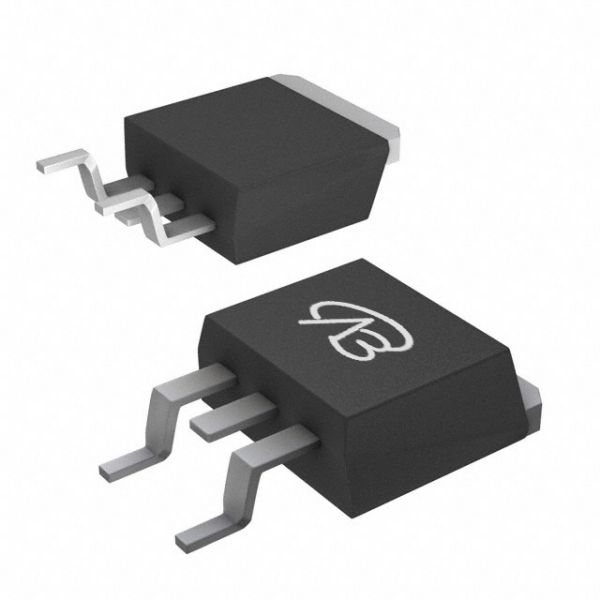
Comparative Analysis: BUK763R8-80E,118 (N-channel) vs. VBL1803
Analysis of the Original Model (BUK763R8-80E,118) Core:
This is an 80V N-channel MOSFET from Nexperia in a D2PAK (TO-263) package. Its design core is to deliver very high current handling with low conduction loss in a robust power package. Key advantages are: a high continuous drain current rating of 120A and a low on-resistance of 3.8mΩ (typical at 10V gate drive). This combination is ideal for minimizing power dissipation in high-current paths.
Compatibility and Differences of the Domestic Alternative (VBL1803):
VBsemi's VBL1803 is offered in a TO-263 package, providing mechanical compatibility. The key electrical parameters show a different balance: VBL1803 boasts an even higher continuous current rating of 215A but has a moderately higher on-resistance of 5mΩ (at 10V) compared to the original's 3.8mΩ. Both share the same 80V drain-source voltage rating.
Key Application Areas:
Original Model BUK763R8-80E,118: Its strength lies in applications demanding high efficiency at high currents within the 80V range. Typical uses include:
High-current DC-DC converters and voltage regulators.
Motor drives and inverters for industrial equipment or electric vehicles.
Power distribution switches in servers and telecom infrastructure.
Alternative Model VBL1803: Suited for upgrade scenarios where the primary demand is for higher current carrying capability (215A vs. 120A), and a slight increase in RDS(on) is acceptable. It targets similar high-power applications but offers more headroom for peak or continuous current.
Comparative Analysis: BST82,235 (N-channel) vs. VB1106K
This comparison shifts to small-signal switching, where the priorities are high voltage blocking in a miniature package and acceptable on-resistance for low currents.
Analysis of the Original Model (BST82,235) Core:
This is a 100V N-channel MOSFET from Nexperia in a compact SOT-23 package. Its design focuses on providing high voltage capability (100V Vdss) for signal isolation, level shifting, or switching small loads. It features a continuous drain current of 190mA and an on-resistance of 10Ω (at 5V gate drive).
Compatibility and Differences of the Domestic Alternative (VB1106K):
VBsemi's VB1106K is a direct pin-to-pin compatible alternative in the SOT-23-3 package. It matches the 100V voltage rating. The parameters differ as follows: VB1106K has a slightly higher continuous current rating of 260mA but also a significantly higher on-resistance of 2800mΩ (2.8Ω at 10V gate drive) compared to the original's 10Ω.
Key Application Areas:
Original Model BST82,235: Ideal for space-constrained circuits requiring switching of small signals or loads up to 190mA, with a need for 100V breakdown voltage. Common applications include:
Signal line isolation and switching in communication interfaces.
Load switching for sensors or indicators in industrial controls.
High-side switch in low-power battery management systems.
Alternative Model VB1106K: Better suited for applications where the primary requirement is the high 100V voltage rating and pin compatibility, the load current is very low (within 260mA), and the higher channel resistance is not a critical factor for power loss.
Conclusion
This analysis reveals two distinct selection paths based on power level:
For high-power switching (80V range), the original BUK763R8-80E,118 offers an excellent balance of very low 3.8mΩ RDS(on) and high 120A current capability, making it a top choice for efficient high-current converters and motor drives. The domestic alternative VBL1803 trades slightly higher RDS(on) (5mΩ) for a substantially higher current rating (215A), positioning it as a robust upgrade for designs demanding maximum current headroom.
For small-signal switching (100V range), the original BST82,235 provides a good compromise of 100V rating, 190mA current, and 10Ω on-resistance in a tiny SOT-23 package, ideal for signal path control. The domestic alternative VB1106K maintains voltage rating and package compatibility but is optimized for scenarios where minimal current switching (260mA) is needed and higher on-resistance is acceptable.
The core takeaway is that selection depends on precise requirement matching. Domestic alternatives like VBL1803 and VB1106K provide viable, sometimes enhanced, options within a diversified supply chain, offering engineers greater flexibility in design trade-offs and cost optimization. Understanding each device's parameter implications is key to leveraging its full value in the circuit.

Download PDF document
 Download now


