 中文
中文 English
MOSFET Selection for High-Power Automotive and Hot-Swap Applications: BUK6607-55C,118, PSMN8R9-100BSE,118 vs. China Alternatives VBL1606, VBL1101N
Number of views:9999
 Back to previous page
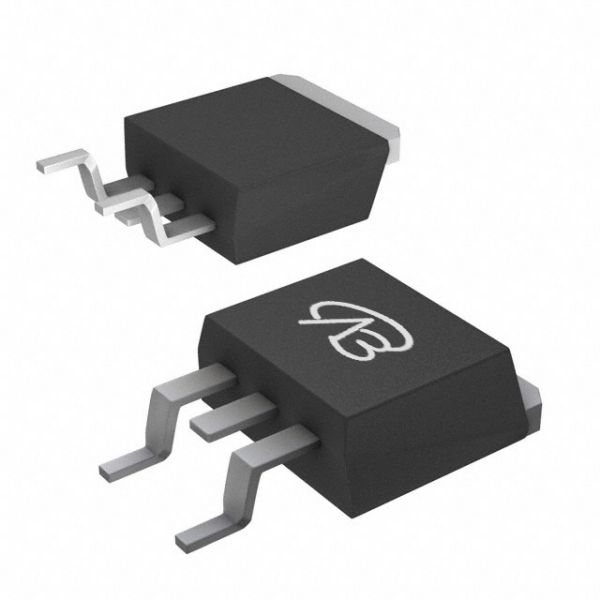
Comparative Analysis: BUK6607-55C,118 (N-channel) vs. VBL1606
Analysis of the Original Model (BUK6607-55C,118) Core:
This is a 55V, 100A N-channel MOSFET from Nexperia in a D2PAK package. Its design core leverages advanced TrenchMOS technology to achieve high current handling with low conduction loss in automotive-grade applications. Key advantages are: a low on-resistance of 5.5mΩ (typical @10V, 25A), a continuous drain current rating of 100A, and compliance with AEC-Q101 standards for high reliability in demanding automotive environments.
Compatibility and Differences of the Domestic Alternative (VBL1606):
VBsemi's VBL1606 is also offered in a TO-263 (compatible with D2PAK) package, providing a direct pin-to-pin alternative. The main differences lie in the electrical parameters: VBL1606 features a slightly higher voltage rating (60V vs. 55V) and a significantly lower on-resistance of 4mΩ (@10V). Its continuous current rating is also higher at 150A, indicating a potential performance enhancement in terms of conduction loss and current capacity.
Key Application Areas:
Original Model BUK6607-55C,118: Its AEC-Q101 qualification and robust parameters make it ideal for high-current automotive applications such as:
Motor drives (e.g., for pumps, fans, window lifts).
Solenoid/valve drivers.
High-current DC-DC converters and load switches in 12V/24V automotive systems.
Alternative Model VBL1606: Suitable for applications requiring similar or higher voltage/current margins with potentially lower conduction loss. It is a strong candidate for upgrades in high-performance automotive systems, industrial power supplies, or high-current motor drives where its lower RDS(on) and higher Id can translate to improved efficiency and thermal performance.
Comparative Analysis: PSMN8R9-100BSE,118 (N-channel) vs. VBL1101N
This N-channel MOSFET is designed for applications requiring exceptional robustness in linear mode (SOA) and high current switching, such as hot-swap controllers.
Analysis of the Original Model (PSMN8R9-100BSE,118) Core:
This 100V N-channel MOSFET from Nexperia in a D2PAK package is defined by its "SuperSOA" capability. Its core advantages are:
Strong Linear Mode Performance: Engineered to withstand high surge currents during turn-on, making it perfect for hot-swap applications.
Low Conduction Loss: An on-resistance of 8mΩ (@10V) helps minimize I²R losses when fully on.
High-Temperature Operation: Rated for operation up to 175°C, ensuring reliability under stressful conditions.
Compatibility and Differences of the Domestic Alternative (VBL1101N):
VBsemi's VBL1101N comes in a TO-263 package, offering pin-to-pin compatibility. It presents a "performance-enhanced" profile: while the voltage rating is identical at 100V, it offers a higher continuous current rating (100A vs. 75A) and provides two key RDS(on) specs: 10mΩ (@10V) and 23mΩ (@4.5V). This gives designers flexibility for different gate drive conditions.
Key Application Areas:
Original Model PSMN8R9-100BSE,118: Its superior Safe Operating Area (SOA) makes it the ideal choice for:
Hot-swap and power-ORing controllers in servers, telecom, and networking equipment.
Applications requiring in-rush current limiting and robust short-circuit protection.
Industrial power systems where linear mode operation is critical.
Alternative Model VBL1101N: Suitable for upgraded scenarios demanding higher continuous current capability (100A) while maintaining a 100V rating. It can be a viable alternative for hot-swap circuits, high-power DC-DC converters, and motor drives where the enhanced current rating is beneficial, though its SOA performance should be verified against the specific application requirements.
Conclusion:
In summary, this comparative analysis reveals two distinct selection paths for high-power applications:
For AEC-Q101 automotive-grade, high-current switching, the original model BUK6607-55C,118, with its proven reliability, 100A rating, and 5.5mΩ RDS(on), remains a top choice for demanding automotive environments. Its domestic alternative VBL1606 offers a compelling "performance-enhanced" option with lower RDS(on) (4mΩ) and higher current rating (150A), suitable for designers seeking efficiency gains and higher margin in automotive or similar rugged industrial applications.
For hot-swap and SuperSOA-critical applications, the original model PSMN8R9-100BSE,118 is specialized for its exceptional linear mode robustness and 175°C capability, making it hard to beat for in-rush current management. The domestic alternative VBL1101N provides significant "current capability enhancement" (100A) and dual RDS(on) specifications, opening the door for upgrade applications in power systems where very high continuous current is needed alongside a 100V rating.
The core conclusion is: Selection hinges on precise requirement matching. In the context of supply chain diversification, domestic alternatives like VBL1606 and VBL1101N not only provide feasible backup options but also offer parameter advancements in key areas, giving engineers more flexible and resilient choices for design optimization and cost control. Understanding the specific design philosophy—be it automotive reliability or linear mode ruggedness—is essential to leveraging the full value of these components in your circuit.

Download PDF document
 Download now


