 中文
中文 English
MOSFET Selection for High-Voltage and General-Purpose Switching: BSS306NH6327, IPW65R080CFD vs. China Alternatives VB1330, VBP165R47S
Number of views:9999
 Back to previous page
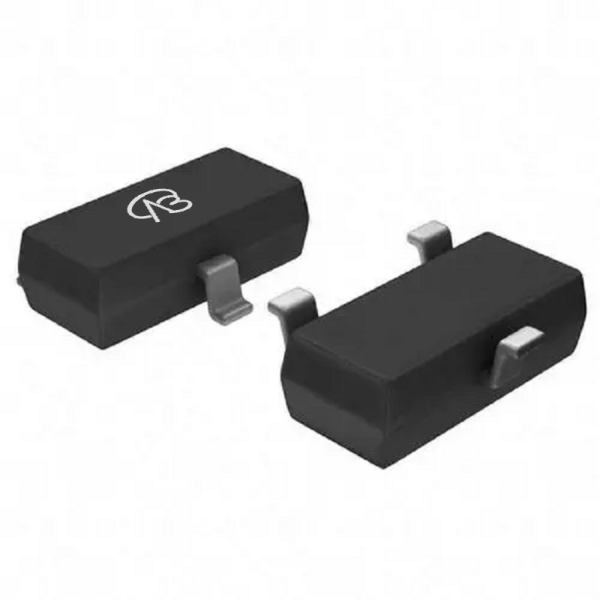
Comparative Analysis: BSS306NH6327 (N-channel) vs. VB1330
Analysis of the Original Model (BSS306NH6327) Core:
This is a 30V N-channel MOSFET from Infineon in a compact SOT-23 package. It is designed for space-constrained, low-to-medium power switching applications. Key advantages include logic-level gate drive (rated 4.5V), avalanche ruggedness, and compliance with AEC-Q101 for automotive-grade reliability. Its on-resistance is 57mΩ at 10V gate drive, with a continuous drain current of 2.3A.
Compatibility and Differences of the Domestic Alternative (VB1330):
VBsemi’s VB1330 is a pin-to-pin compatible alternative in the same SOT-23 package. The main differences are in electrical performance: VB1330 offers a significantly lower on-resistance of 30mΩ at 10V (versus 57mΩ) and a higher continuous current rating of 6.5A (versus 2.3A), while maintaining the same 30V drain-source voltage rating.
Key Application Areas:
Original Model BSS306NH6327: Ideal for automotive, industrial, or consumer applications requiring AEC-Q101 qualification and reliable performance in compact spaces. Typical uses include:
- Load switching and power management in low-voltage DC systems (e.g., 12V/24V).
- Signal switching, level shifting, and driver stages in control circuits.
- Battery-powered devices where logic-level drive and avalanche capability are beneficial.
Alternative Model VB1330: Better suited for applications demanding lower conduction loss and higher current capacity within the same footprint. It is an excellent upgrade for general-purpose switching, power distribution, or motor drive in portable devices, IoT modules, or low-voltage power supplies where efficiency and thermal performance are priorities.
Comparative Analysis: IPW65R080CFD (N-channel) vs. VBP165R47S
This comparison shifts to high-voltage power conversion, where efficiency, switching speed, and ruggedness are critical.
Analysis of the Original Model (IPW65R080CFD) Core:
This 650V CoolMOS CFD2 device from Infineon utilizes Superjunction (SJ) technology in a TO-247 package. It is engineered for high-efficiency, high-frequency switching in demanding power applications. Key features include an ultra-fast and robust body diode, low switching and conduction losses, and an on-resistance of 80mΩ at 10V gate drive. It supports a continuous current of 43.3A and a high power dissipation of 391W.
Compatibility and Differences of the Domestic Alternative (VBP165R47S):
VBsemi’s VBP165R47S is a direct alternative in a TO-247 package, offering enhanced performance parameters. It maintains the same 650V voltage rating but provides a lower on-resistance of 50mΩ at 10V and a higher continuous current rating of 47A. This indicates improved conduction loss and higher current-handling capability.
Key Application Areas:
Original Model IPW65R080CFD: Optimized for high-performance, high-voltage applications requiring fast switching and diode ruggedness. Typical uses include:
- Resonant and hard-switched power supplies (e.g., LLC converters, PFC stages).
- Solar inverters, UPS systems, and industrial motor drives.
- High-frequency DC-DC converters in telecom/server power supplies.
Alternative Model VBP165R47S: Suitable for similar high-voltage applications but where lower conduction loss, higher current capability, or improved thermal performance is desired. It is a strong candidate for next-generation power supplies, electric vehicle charging, and renewable energy systems aiming for higher power density and efficiency.
Summary
This analysis reveals two distinct selection pathways:
For general-purpose, low-voltage N-channel switching in compact packages, the original BSS306NH6327 offers AEC-Q101 qualification and reliable performance for automotive and industrial uses. Its domestic alternative VB1330 provides a performance-enhanced option with significantly lower on-resistance (30mΩ vs. 57mΩ) and higher current rating (6.5A vs. 2.3A), making it ideal for upgrades where efficiency and current capacity are critical.
For high-voltage, high-power Superjunction MOSFET applications, the original IPW65R080CFD delivers proven performance with fast switching and a robust body diode for resonant and hard-switched topologies. The domestic alternative VBP165R47S offers improved specifications—lower on-resistance (50mΩ vs. 80mΩ) and higher current (47A vs. 43.3A)—providing an efficient, high-performance substitute for demanding power conversion designs.
The core conclusion is that selection depends on precise requirement matching. In a diversified supply chain, domestic alternatives not only offer reliable backups but also enable performance upgrades in key parameters, giving engineers greater flexibility in design trade-offs and cost optimization. Understanding each device’s design philosophy and parametric implications is essential to leveraging its full potential in your circuit.

Download PDF document
 Download now


