 中文
中文 English
MOSFET Selection for Signal-Level Switching: BSS138BKW,115, BSS84AKVL vs. China Alternatives VBK162K, VB264K
Number of views:9999
 Back to previous page
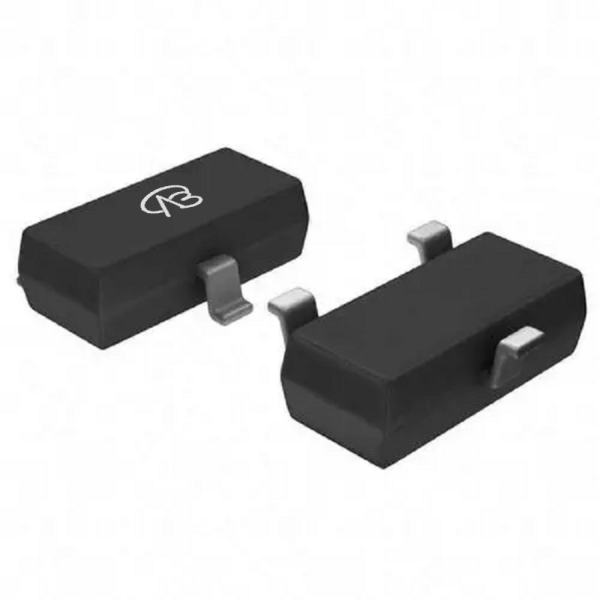
Comparative Analysis: BSS138BKW,115 (N-channel) vs. VBK162K
Analysis of the Original Model (BSS138BKW,115) Core:
This is a 60V N-channel MOSFET from Nexperia, housed in a miniature SC-70 (SOT-323) package. Its design core is to provide reliable signal switching and isolation in space-constrained applications. Key advantages include a drain-source voltage (Vdss) of 60V, a continuous drain current (Id) of 320mA, and a low on-resistance of 1.6Ω at a 10V gate drive. It utilizes trench MOSFET technology for enhanced performance in a tiny form factor.
Compatibility and Differences of the Domestic Alternative (VBK162K):
VBsemi's VBK162K is a pin-to-pin compatible alternative in the same SC70-3 package. The key differences are in electrical parameters: while it matches the 60V voltage rating, its continuous current rating is slightly lower at 300mA. Its on-resistance is higher, specified at 2000mΩ (2Ω) @10V compared to the original's 1.6Ω.
Key Application Areas:
Original Model BSS138BKW,115: Ideal for applications requiring efficient switching of low-current signals up to 60V. Typical uses include:
Level shifters and interface circuits in microcontrollers and logic systems.
Load switching for small sensors or peripherals.
Protection circuits and signal multiplexing.
Alternative Model VBK162K: A suitable alternative for applications where the voltage rating is critical, but the slightly higher on-resistance and marginally lower current capability are acceptable, such as in many general-purpose signal switching and isolation tasks.
Comparative Analysis: BSS84AKVL (P-channel) vs. VB264K
Analysis of the Original Model (BSS84AKVL) Core:
This is a -50V P-channel MOSFET from Nexperia in a SOT-23 package. It is designed for complementary signal-level switching where a P-channel device is required. Its core parameters include a Vdss of -50V, a continuous drain current (Id) of -180mA, and an on-resistance of 4.5Ω at 10V gate drive and 100mA.
Compatibility and Differences of the Domestic Alternative (VB264K):
VBsemi's VB264K offers a direct pin-to-pin alternative in a SOT23-3 package. It provides a higher voltage rating of -60V and a significantly higher continuous current rating of -500mA. However, its on-resistance is lower, specified at 3000mΩ (3Ω) @10V, offering potentially better conduction performance than the original in many conditions.
Key Application Areas:
Original Model BSS84AKVL: Well-suited for P-channel switching in low-power circuits, such as:
Power management switches for low-current rails.
Complementary push-pull stages with N-channel counterparts.
Signal inversion and analog switching.
Alternative Model VB264K: Represents a "performance-enhanced" option for P-channel needs. Its higher voltage (-60V) and current (-500mA) ratings, coupled with lower on-resistance, make it suitable for more demanding low-power switching applications or as a robust upgrade path.
Conclusion:
This comparison outlines two distinct substitution paths for small-signal MOSFETs:
For N-channel signal switching, the original BSS138BKW,115 offers a balance of 60V rating, 320mA current, and 1.6Ω on-resistance in a SC-70 package. The domestic alternative VBK162K provides package compatibility and voltage parity but with slightly relaxed current and resistance specs, serving well in cost-sensitive or backup scenarios.
For P-channel signal switching, the original BSS84AKVL is a reliable choice for -50V, -180mA applications. Its domestic alternative, VB264K, emerges as a compelling upgrade, offering higher voltage (-60V), significantly higher current (-500mA), and lower on-resistance, making it an excellent choice for enhanced performance or new designs.
The core takeaway is that selection hinges on precise requirement matching. Domestic alternatives like VBK162K and VB264K not only offer supply chain resilience but also present opportunities for parameter-specific enhancements, giving engineers greater flexibility in design optimization and cost management.

Download PDF document
 Download now


