 中文
中文 English
MOSFET Selection for High-Voltage Signal Switching and High-Power Motor Drives: BSS131H6327, IRFS7440TRLPBF vs. China Alternatives VB162K and VBL1402
Number of views:9999
 Back to previous page
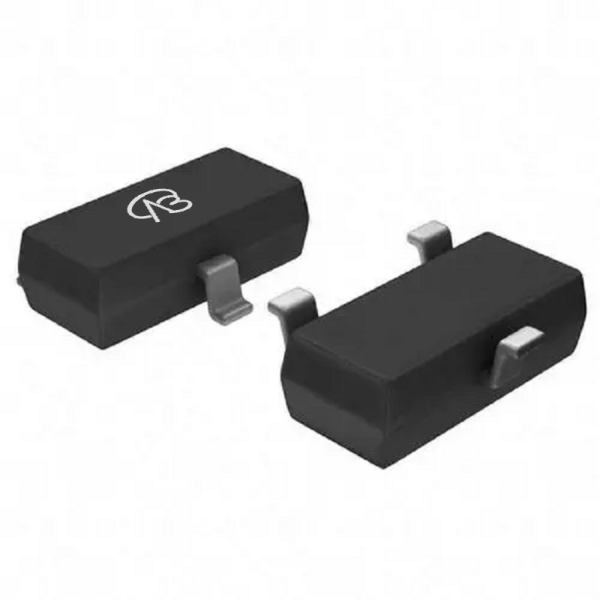
Comparative Analysis: BSS131H6327 (High-Voltage N-channel) vs. VB162K
Analysis of the Original Model (BSS131H6327) Core:
This is a 240V N-channel MOSFET from Infineon in a compact SOT-23 package. Its design core is to provide reliable high-voltage switching and isolation in signal-level circuits. Key advantages are: a high drain-source voltage (Vdss) of 240V, suitable for off-line or high-voltage bias applications. It features a continuous drain current (Id) of 110mA and an on-resistance (RDS(on)) of 14Ω at 10V gate drive. This combination makes it ideal for low-power, high-voltage switching where minimal gate drive is available.
Compatibility and Differences of the Domestic Alternative (VB162K):
VBsemi's VB162K is also in an SOT-23 package and is a pin-to-pin compatible alternative. The main differences are in electrical parameters: VB162K has a lower voltage rating (60V) but offers a significantly lower on-resistance—2.8Ω at 10V gate drive compared to 14Ω. However, its continuous current rating (0.3A) is higher than the original's 110mA.
Key Application Areas:
Original Model BSS131H6327: Its high voltage rating (240V) and low current capability make it perfect for:
High-voltage signal switching and isolation in industrial controls.
Off-line startup circuits or bias supplies in switch-mode power supplies.
Protection circuits or relay drivers requiring high voltage blocking.
Alternative Model VB162K: More suitable for lower-voltage applications (up to 60V) where lower on-resistance and slightly higher current capability (up to 0.3A) are beneficial, such as:
Low-side load switches in 12V-48V systems.
Power management for portable devices requiring efficient low-current switching.
Comparative Analysis: IRFS7440TRLPBF (High-Power N-channel) vs. VBL1402
This N-channel MOSFET is designed for high-current, low-voltage power switching, where low conduction loss and robust switching are paramount.
Analysis of the Original Model (IRFS7440TRLPBF) Core:
The core advantages of this Infineon part in a D2PAK package are:
Exceptional Current Handling: Continuous drain current rating of 208A, suited for very high-power applications.
Ultra-Low Conduction Loss: On-resistance as low as 2mΩ at 10V gate drive, minimizing power loss in the on-state.
Enhanced Robustness: Features improved gate handling, avalanche ruggedness, dynamic dV/dt capability, and a characterized body diode for demanding switching conditions.
Compatibility and Differences of the Domestic Alternative (VBL1402):
VBsemi's VBL1402 in a TO-263 (D2PAK compatible) package offers a compelling alternative. While its continuous current rating (150A) is lower than the original's 208A, it maintains a very competitive ultra-low on-resistance of 2mΩ at 10V. This makes it a strong candidate for many high-current applications where the full 208A is not required.
Key Application Areas:
Original Model IRFS7440TRLPBF: Its ultra-high current and ultra-low RDS(on) make it ideal for:
High-current brushed and brushless DC motor drives.
Power stages in high-density DC-DC converters for servers and telecom.
Inverter and drive circuits in automotive or industrial systems.
Alternative Model VBL1402: Suitable for high-power applications requiring excellent efficiency but with current demands below 150A, such as:
Motor drives for industrial tools or automotive subsystems.
Synchronous rectification in high-current DC-DC power supplies.
Power switching in UPS systems or energy storage.
Conclusion:
This analysis reveals two distinct selection paths:
For high-voltage, low-current signal switching, the original BSS131H6327, with its 240V rating, is essential for circuits interfacing with mains or high-voltage rails. Its domestic alternative VB162K, while not a direct voltage replacement, offers much lower RDS(on) for lower-voltage (≤60V) applications where efficiency at low currents is critical.
For high-current, low-voltage power switching, the original IRFS7440TRLPBF sets a benchmark with its 208A current and 2mΩ RDS(on) for the most demanding motor drives and power converters. The domestic alternative VBL1402 provides a robust, high-efficiency solution for applications up to 150A, often at a competitive cost.
The core conclusion is that selection hinges on precise requirement matching. Domestic alternatives like VB162K and VBL1402 not only provide viable backups but also offer specific performance trade-offs, giving engineers greater flexibility in design optimization and supply chain resilience. Understanding each device's design philosophy and parameter implications is key to maximizing its value in your circuit.

Download PDF document
 Download now


