 中文
中文 English
MOSFET Selection for Medium-Voltage Switching: BSP373NH6327XTSA1, IRF9393TRPBF vs. China Alternatives VBJ1101M, VBA2311
Number of views:9999
 Back to previous page
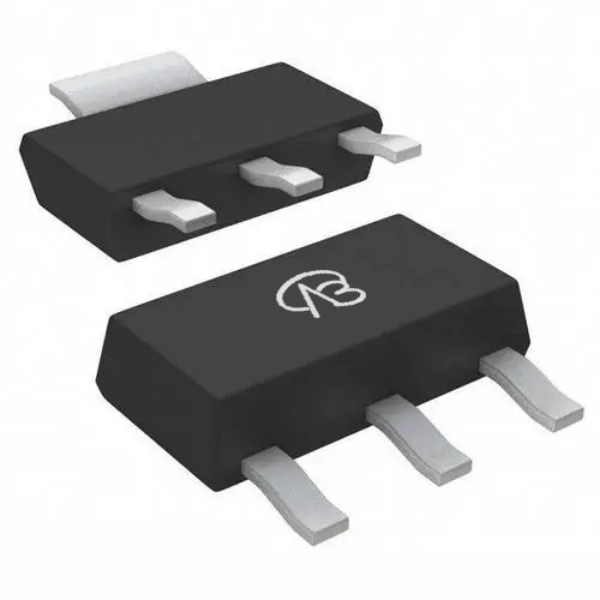
Comparative Analysis: BSP373NH6327XTSA1 (N-channel) vs. VBJ1101M
Analysis of the Original Model (BSP373NH6327XTSA1) Core:
This is a 100V N-channel MOSFET from Infineon in a compact SOT-223 package. Its design core is to provide reliable, AEC-Q101 certified switching for medium-voltage applications. Key advantages include: a 100V drain-source voltage rating, a continuous drain current of 1.8A, and an on-resistance (RDS(on)) of 240mΩ at 10V gate drive. It features avalanche ruggedness and is fully compliant with RoHS and halogen-free standards, making it suitable for automotive and industrial environments.
Compatibility and Differences of the Domestic Alternative (VBJ1101M):
VBsemi's VBJ1101M is also offered in an SOT-223 package and serves as a functional alternative. The key differences are in electrical performance: VBJ1101M matches the 100V voltage rating but offers significantly lower on-resistance—100mΩ at 10V—and a higher continuous current rating of 5A. This represents a substantial improvement in conduction loss and current-handling capability.
Key Application Areas:
Original Model BSP373NH6327XTSA1: Its AEC-Q101 certification and 100V rating make it ideal for automotive and industrial systems requiring robust, reliable switching at moderate currents, such as solenoid drivers, relay replacements, or low-power DC-DC converters in harsh environments.
Alternative Model VBJ1101M: With its lower RDS(on) and higher current rating, it is better suited for applications demanding higher efficiency and power density within the same voltage class, such as more demanding load switches, motor control, or power management circuits where reduced conduction loss is critical.
Comparative Analysis: IRF9393TRPBF (P-channel) vs. VBA2311
Analysis of the Original Model (IRF9393TRPBF) Core:
This is a 30V P-channel MOSFET in the industry-standard SO-8 package. Its design pursues a balance of low on-resistance, high current capability, and multi-source compatibility for low-voltage power management. Core advantages include: a low RDS(on) of 19.4mΩ at 10V gate drive, a continuous drain current of -9.2A, and a ±20V gate-source voltage rating for direct drive compatibility.
Compatibility and Differences of the Domestic Alternative (VBA2311):
VBsemi's VBA2311 is a pin-to-pin compatible alternative in an SOP8 package. It matches the -30V voltage rating and offers comparable performance: a slightly lower RDS(on) of 11mΩ at 10V and a similar continuous current rating of -11.6A. This positions it as a direct, performance-equivalent drop-in replacement.
Key Application Areas:
Original Model IRF9393TRPBF: Its low on-resistance and high current capability in an SO-8 package make it a classic choice for load switching and power path management in low-voltage systems, such as adapter input switches in notebooks, battery management, and general-purpose high-side switching.
Alternative Model VBA2311: As a direct replacement, it is suitable for the same application spaces—notebook power management, load switches, and DC-DC conversion—offering a reliable domestic alternative with equivalent electrical characteristics.
Conclusion:
This analysis reveals two distinct substitution scenarios:
For the 100V N-channel application, the domestic alternative VBJ1101M offers a significant performance upgrade over the original BSP373NH6327XTSA1 in terms of lower RDS(on) and higher current capability, making it an excellent choice for efficiency-focused designs within the same voltage class.
For the 30V P-channel application, the domestic alternative VBA2311 serves as a direct, performance-equivalent pin-to-pin replacement for the industry-standard IRF9393TRPBF, providing supply chain diversification without compromising key parameters.
The core takeaway is that selection depends on precise requirement matching. Domestic alternatives not only provide viable backup options but can also offer enhanced performance or cost benefits, giving engineers greater flexibility and resilience in their design trade-offs and component selection.

Download PDF document
 Download now


