 中文
中文 English
MOSFET Selection for Power Switching Solutions: BSP149H6327, IAUC120N04S6N013ATMA1 vs. China Alternatives VBJ1201K, VBQA1401
Number of views:9999
 Back to previous page
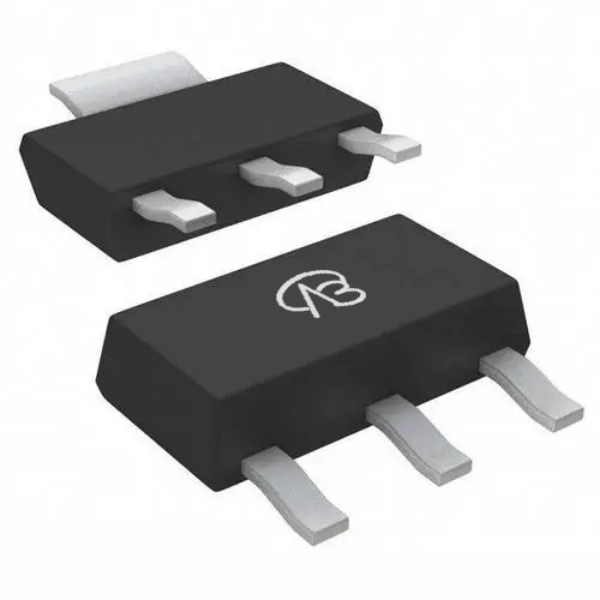
Comparative Analysis: BSP149H6327 (N-channel) vs. VBJ1201K
Analysis of the Original Model (BSP149H6327) Core:
This is a 200V N-channel depletion-mode MOSFET from Infineon in a compact SOT-223 package. Its design core is to provide reliable high-voltage switching with low gate drive requirements, suitable for circuits where a normally-on characteristic is needed. Key advantages include a high drain-source voltage (Vdss) of 200V, a continuous drain current (Id) of 660mA, and an on-resistance (RDS(on)) of 1.8Ω at 10V gate drive. It is AEC-Q101 qualified, halogen-free, and suitable for automotive and industrial applications requiring high dv/dt robustness.
Compatibility and Differences of the Domestic Alternative (VBJ1201K):
VBsemi's VBJ1201K is also an N-channel MOSFET in an SOT-223 package, offering a pin-to-pin compatible alternative. The main differences are in electrical parameters: VBJ1201K shares the same 200V voltage rating but has a higher continuous current rating of 1A. However, its on-resistance is higher at 1200mΩ (1.2Ω) at 10V, which may lead to slightly higher conduction losses compared to the original part.
Key Application Areas:
Original Model BSP149H6327: Ideal for high-voltage, low-current switching applications where depletion-mode operation or high dv/dt capability is required. Typical uses include:
Solid-state relays and high-voltage interface circuits.
Start-up circuits for switch-mode power supplies (SMPS).
Automotive and industrial control systems requiring AEC-Q101 reliability.
Alternative Model VBJ1201K: Suitable as a direct replacement in applications where the 1A current capability is sufficient and the slightly higher RDS(on) is acceptable, particularly in cost-sensitive 200V switching designs.
Comparative Analysis: IAUC120N04S6N013ATMA1 (N-channel) vs. VBQA1401
This comparison shifts to high-current, low-voltage power switching, where the design pursuit is minimizing conduction loss in demanding applications.
Analysis of the Original Model (IAUC120N04S6N013ATMA1) Core:
This is a 40V N-channel automotive-grade MOSFET from Infineon in a TDSON-8 package. Its core advantages are exceptional current handling and ultra-low on-resistance:
High Current Capability: Continuous drain current rated at 120A.
Ultra-Low Conduction Loss: RDS(on) as low as 1.9mΩ at a 7V gate drive.
Robustness: AEC-Q101 qualified, 100% avalanche tested, and suitable for high-reliability automotive applications like motor drives and DC-DC converters.
Compatibility and Differences of the Domestic Alternative (VBQA1401):
VBsemi's VBQA1401 is an N-channel MOSFET in a DFN8(5x6) package. It serves as a high-performance alternative with comparable voltage rating (40V). Key parameter comparisons:
VBQA1401 offers a very high continuous current of 100A.
It features an exceptionally low on-resistance of 0.8mΩ at 10V gate drive (and 1.2mΩ at 4.5V), which is lower than the original part's 1.9mΩ @7V, promising potentially lower conduction losses.
Key Application Areas:
Original Model IAUC120N04S6N013ATMA1: The benchmark for high-current, high-efficiency automotive and industrial power stages. Ideal for:
High-current DC-DC synchronous rectification in 12V/24V systems.
Brushed/Brushless DC motor drives (e.g., pumps, fans, window lifts).
Battery management system (BMS) discharge switches.
Alternative Model VBQA1401: An excellent "performance-enhanced" choice for applications where ultra-low RDS(on) is critical. Suitable for:
Upgraded designs requiring lower conduction losses and high current density.
High-efficiency power converters and motor drives where thermal performance is paramount.
Conclusion:
This analysis reveals two distinct selection paths based on application needs:
For high-voltage (200V), low-current switching with depletion-mode capability, the original BSP149H6327 offers a proven, AEC-Q101 qualified solution. Its domestic alternative VBJ1201K provides a compatible, cost-effective option with higher current rating (1A) but slightly higher on-resistance, suitable for direct replacement in many circuits.
For high-current, low-voltage (40V) power switching where efficiency is critical, the original IAUC120N04S6N013ATMA1 sets a high standard with 120A current and 1.9mΩ RDS(on), backed by full automotive qualification. The domestic alternative VBQA1401 presents a compelling "performance-enhanced" option, boasting an even lower 0.8mΩ RDS(on) and 100A current capability, ideal for designs pushing the limits of power density and efficiency.
The core takeaway is that selection depends on precise requirement matching. Domestic alternatives like VBJ1201K and VBQA1401 not only provide viable backup options but also offer competitive or superior parameters in specific areas, giving engineers greater flexibility in design trade-offs and cost optimization. Understanding each device's design philosophy and parameter implications is key to leveraging its full value in your circuit.

Download PDF document
 Download now


