 中文
中文 English
MOSFET Selection for Signal Switching & High-Current Applications: BSN20BK215, PSMN5R4-25YLDX vs. China Alternatives VB162K, VBED1303
Number of views:9999
 Back to previous page
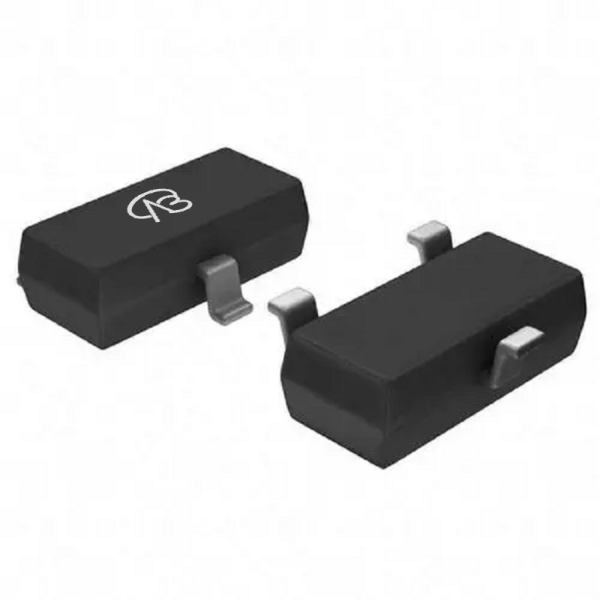
Comparative Analysis: BSN20BK215 (Small-Signal N-Channel) vs. VB162K
Analysis of the Original Model (BSN20BK215) Core:
This is a 60V small-signal N-channel MOSFET from Nexperia in a compact SOT-23(TO-236AB) package. Its design core is to provide reliable switching and amplification for low-current circuits in minimal space. Key advantages include a drain-source voltage (Vdss) of 60V, a continuous drain current (Id) of 265mA, and an on-resistance (RDS(on)) of 2.1Ω at 10V gate drive. It uses trench MOSFET technology for good performance in a tiny footprint.
Compatibility and Differences of the Domestic Alternative (VB162K):
VBsemi's VB162K is also offered in a SOT23-3 package and serves as a pin-to-pin compatible alternative. The main differences are in electrical parameters: VB162K matches the 60V voltage rating but has a significantly lower continuous current rating of 0.3A (300mA) compared to 265mA. Its on-resistance is higher at 2.8Ω (@10V) versus 2.1Ω for the original.
Key Application Areas:
Original Model BSN20BK215: Ideal for low-power signal switching, level shifting, and amplification circuits where a 60V rating and ~265mA current are required. Typical uses include:
Load switching for sensors, LEDs, or other peripherals in portable electronics.
Interface protection and signal routing in communication modules.
General-purpose switching in battery-operated devices.
Alternative Model VB162K: Suitable as a direct replacement in applications where the original's current headroom is not fully utilized and the primary requirement is package compatibility and voltage withstand (60V). Its 0.3A rating is sufficient for many signal-level applications.
Comparative Analysis: PSMN5R4-25YLDX (Power N-Channel) vs. VBED1303
This comparison shifts focus to high-current, low-loss power switching applications.
Analysis of the Original Model (PSMN5R4-25YLDX) Core:
This is a 25V, high-current N-channel MOSFET from Nexperia in a SOT-669 (LFPAK) package, designed for efficient power conversion and control. Its core advantages are:
High Current Capability: A continuous drain current (Id) of 70A.
Very Low On-Resistance: RDS(on) as low as 5.69mΩ at 10V gate drive, minimizing conduction losses.
Power-Optimized Package: The SOT-669 package offers excellent thermal performance for its size, suitable for demanding power applications.
Compatibility and Differences of the Domestic Alternative (VBED1303):
VBsemi's VBED1303, also in a SOT669 package, presents a "performance-enhanced" alternative. It achieves significant improvements in key parameters:
Higher Voltage Rating: 30V vs. the original's 25V.
Higher Current Rating: 90A continuous drain current vs. 70A.
Lower On-Resistance: 2.8mΩ (@10V) vs. 5.69mΩ, leading to potentially lower conduction losses and thermal stress.
Key Application Areas:
Original Model PSMN5R4-25YLDX: Excels in medium-voltage, high-current applications where efficiency and thermal performance are critical. Examples include:
Synchronous rectification in DC-DC converters for computing, telecom, or server power supplies.
Motor drive and control circuits for tools, robotics, or automotive systems.
High-current load switches and power distribution.
Alternative Model VBED1303: Is an excellent upgrade choice for applications requiring higher voltage margin (30V), higher current capacity (90A), and significantly lower conduction losses. It is well-suited for next-generation, high-efficiency power designs, high-power motor drives, or as a robust replacement in existing 25V systems for improved performance and thermal margins.
Summary
This analysis reveals two distinct selection pathways:
For low-power signal switching in compact designs, the original BSN20BK215, with its 60V rating and 265mA current in a tiny SOT-23 package, remains a reliable choice for general-purpose switching and amplification. Its domestic alternative VB162K offers direct package compatibility and a sufficient 0.3A rating for many signal-level applications, serving as a viable backup or cost-effective option.
For high-current power switching, the original PSMN5R4-25YLDX provides a strong balance of 70A current, 5.69mΩ on-resistance, and good thermal performance in the SOT-669 package. The domestic alternative VBED1303 stands out as a compelling "performance-enhanced" substitute, offering higher voltage (30V), higher current (90A), and dramatically lower on-resistance (2.8mΩ), making it ideal for designs pushing the limits of efficiency and power density.
The core conclusion is that selection depends on precise requirement matching. In the context of supply chain diversification, domestic alternatives like VB162K and VBED1303 not only provide feasible backup options but also, in the case of VBED1303, deliver significant performance gains, offering engineers greater flexibility in design trade-offs and cost control. Understanding the specific parameter implications of each device is key to unlocking its full potential in your circuit.

Download PDF document
 Download now


