 中文
中文 English
MOSFET Selection for Compact and High-Power Applications: BSH203,215, PSMN1R0-40YSHX vs. China Alternatives VB2355, VBGED1401
Number of views:9999
 Back to previous page
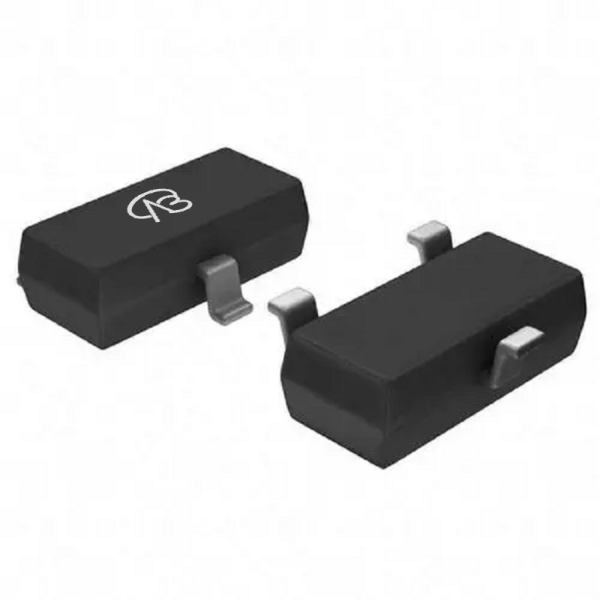
Comparative Analysis: BSH203,215 (P-channel) vs. VB2355
Analysis of the Original Model (BSH203,215) Core:
This is a -30V P-channel MOSFET from Nexperia in a compact SOT-23 package. Its design core is to provide reliable load switching in space-constrained, low-to-medium current applications. Key features include a continuous drain current (Id) of -470mA and a power dissipation (Pd) of 417mW, making it suitable for signal-level or low-power switching tasks.
Compatibility and Differences of the Domestic Alternative (VB2355):
VBsemi's VB2355 is a pin-to-pin compatible alternative in the same SOT23-3 package. The key differences are in enhanced electrical parameters: VB2355 supports a significantly higher continuous drain current of -5.6A and offers lower on-resistance (54mΩ @4.5V, 46mΩ @10V) compared to the original model's capabilities.
Key Application Areas:
Original Model BSH203,215: Ideal for low-power P-channel switching where space is critical and current demands are below 500mA. Typical applications include:
Load switches and power gating for low-power modules in portable/IoT devices.
Signal isolation and level shifting circuits.
Protection switches in battery-powered gadgets.
Alternative Model VB2355: Better suited for applications requiring the same compact footprint but higher current handling (up to 5.6A) and lower conduction loss. It's an excellent upgrade for power path management or load switches in more demanding compact designs.
Comparative Analysis: PSMN1R0-40YSHX (N-channel) vs. VBGED1401
This comparison shifts to high-power density applications, where the design pursuit is ultra-low loss and extreme current capability.
Analysis of the Original Model (PSMN1R0-40YSHX) Core:
This 40V N-channel MOSFET from Nexperia, in the LFPAK56E-4 package, is engineered for high-efficiency, high-current switching. Its core advantages are:
Extremely Low On-Resistance: An RDS(on) of just 1.0mΩ (@10V, 25A), minimizing conduction losses.
Very High Current Rating: A continuous drain current (Id) of 290A, suitable for the most demanding power stages.
Advanced Package: The LFPAK56 package offers excellent thermal performance and power density.
Compatibility and Differences of the Domestic Alternative (VBGED1401):
VBsemi's VBGED1401 is a direct, performance-enhanced alternative in the same LFPAK56 package. It achieves significant parameter improvements:
Even Lower On-Resistance: RDS(on) is reduced to a remarkable 0.7mΩ (@10V).
High Current Capability: Maintains a robust continuous current rating of 250A.
Key Application Areas:
Original Model PSMN1R0-40YSHX: The benchmark for high-current, low-voltage synchronous rectification and power switching. Typical applications include:
Synchronous rectifiers in high-current DC-DC converters (e.g., for servers, telecom infrastructure).
Motor drives for industrial equipment and electric vehicles.
High-density power supplies and inverters.
Alternative Model VBGED1401: An ideal choice for applications demanding the ultimate in efficiency and thermal performance. Its lower RDS(on) translates to reduced power loss and higher potential power density, making it suitable for next-generation, high-efficiency power designs in the same sectors.
Conclusion
This analysis reveals two distinct selection paths:
For compact, low-to-medium power P-channel applications, the original BSH203,215 is a proven solution for basic switching needs. Its domestic alternative, VB2355, offers a significant performance upgrade within the same footprint, providing much higher current capability and lower on-resistance for more demanding compact designs.
For high-power N-channel applications, the original PSMN1R0-40YSHX sets a high standard with its ultra-low 1.0mΩ RDS(on) and 290A current rating. The domestic alternative VBGED1401 pushes the boundaries further with an even lower 0.7mΩ RDS(on), representing a top-tier option for engineers prioritizing maximum efficiency and thermal performance in high-current designs.
The core takeaway is that selection hinges on precise requirement matching. In the context of supply chain diversification, domestic alternatives like VB2355 and VBGED1401 not only provide reliable compatibility but also offer performance enhancements, giving engineers greater flexibility and resilience in design trade-offs and cost optimization. Understanding each device's design philosophy and parameter implications is key to unlocking its full potential in your circuit.

Download PDF document
 Download now


