 中文
中文 English
MOSFET Selection for Automotive and High-Voltage Applications: AUIRFR540Z, IPA60R190E6 vs. China Alternatives VBE1104N, VBMB165R20S
Number of views:9999
 Back to previous page
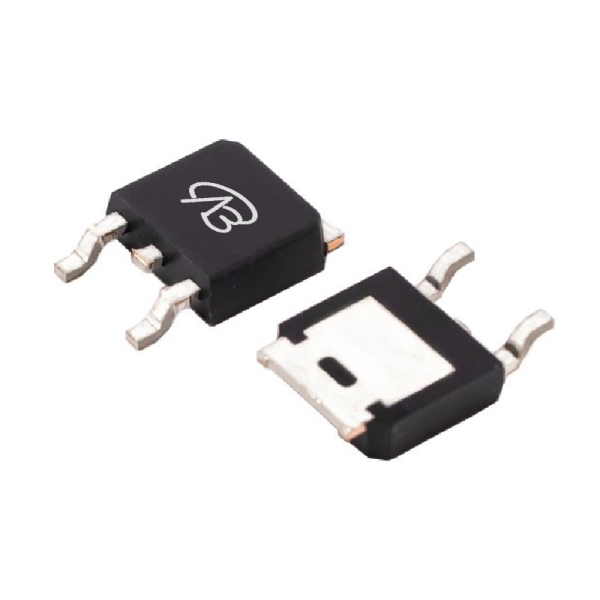
Comparative Analysis: AUIRFR540Z (100V N-channel) vs. VBE1104N
Analysis of the Original Model (AUIRFR540Z) Core:
This is a 100V N-channel MOSFET from Infineon, packaged in the DPAK (TO-252AA). Its design core is tailored for automotive applications, utilizing advanced processing technology to achieve very low on-resistance per silicon area. Key advantages include: a low on-resistance of 22.5mΩ at 10V gate drive, a high continuous drain current of 35A, a high junction operating temperature of 175°C, fast switching speed, and improved repetitive avalanche rating. These features combine to make it an extremely efficient and reliable choice for harsh environments.
Compatibility and Differences of the Domestic Alternative (VBE1104N):
VBsemi's VBE1104N is also offered in a TO-252 package, providing direct pin-to-pin compatibility. The main differences lie in the electrical parameters: while both are rated for 100V, the VBE1104N offers a significantly lower on-resistance of 30mΩ at 10V (vs. 22.5mΩ) and a slightly higher continuous current rating of 40A (vs. 35A). This indicates that the alternative may provide lower conduction losses in many scenarios.
Key Application Areas:
Original Model AUIRFR540Z: Its automotive-grade ruggedness, high current capability, and good RDS(on) make it ideal for demanding 12V/24V automotive systems and industrial controls.
Automotive Load Switching: Solenoid drivers, motor controls (e.g., fans, pumps), and LED lighting drivers.
DC-DC Converters: As a primary switch or synchronous rectifier in intermediate voltage bus applications.
Alternative Model VBE1104N: With its competitive low on-resistance and high current rating, it is well-suited as a high-performance, cost-effective alternative for similar 100V applications, including automotive subsystems, power tools, and medium-power SMPS, where efficiency and thermal performance are priorities.
Comparative Analysis: IPA60R190E6 (600V CoolMOS) vs. VBMB165R20S
This comparison shifts focus to high-voltage switching, where the design pursuit is minimizing switching and conduction losses at elevated voltages.
Analysis of the Original Model (IPA60R190E6) Core:
This 600V N-channel MOSFET from Infineon belongs to the CoolMOS E6 series, based on the revolutionary Super Junction (SJ) principle and packaged in TO-220FP. Its core advantages are:
Excellent High-Voltage Performance: A low on-resistance of 170mΩ at 10V for a 600V device, enabling high efficiency.
Optimized for Switching: The CoolMOS technology minimizes switching losses, making it ideal for high-frequency operation.
Good Power Handling: With a continuous current of 20.2A and a power dissipation of 34W, it suits medium-to-high power applications.
Compatibility and Differences of the Domestic Alternative (VBMB165R20S):
The domestic alternative VBMB165R20S represents a "performance-matched and enhanced" option. It uses a similar SJ_Multi-EPI technology. Key comparisons:
It offers a higher voltage rating of 650V (vs. 600V).
It features a lower on-resistance of 160mΩ at 10V (vs. 170mΩ).
It provides a similar continuous current rating of 20A.
The package is a standard TO-220F, offering robust thermal performance.
Key Application Areas:
Original Model IPA60R190E6: Its combination of low RDS(on) and fast switching makes it a prime choice for high-efficiency, high-voltage switch-mode power supplies (SMPS).
Server/Telecom PFC Stages: Power Factor Correction circuits.
Industrial SMPS: Main switches in AC-DC converters (e.g., 400V bus).
Lighting: High-performance LED driver power stages.
Alternative Model VBMB165R20S: With its slightly higher voltage rating and lower on-resistance, it is an excellent alternative for 600V-650V applications demanding high efficiency and reliability, such as upgraded SMPS designs, solar inverters, and UPS systems.
Conclusion
In summary, this analysis reveals two viable selection paths with competitive domestic alternatives:
For 100V automotive and industrial N-channel applications, the original AUIRFR540Z sets a high standard with its automotive-grade reliability and strong electrical characteristics. Its domestic alternative, the VBE1104N, offers direct compatibility with potentially lower conduction losses (30mΩ) and higher current (40A), presenting a compelling, cost-effective option for performance-oriented designs.
For 600V+ high-voltage switching applications, the original IPA60R190E6 CoolMOS demonstrates the benefits of Super Junction technology for efficiency. The domestic alternative VBMB165R20S not only matches this performance but offers a slight parametric advantage with a 650V rating and 160mΩ RDS(on), making it a strong candidate for next-generation high-efficiency power supplies.
The core conclusion is that selection is about precise requirement matching. In the context of supply chain diversification, domestic alternatives like VBE1104N and VBMB165R20S provide not only reliable backup options but also opportunities for performance enhancement or cost optimization. Understanding the specific demands of your application—voltage stress, current load, switching frequency, and thermal environment—is key to leveraging the full value of these components in your circuit design.

Download PDF document
 Download now


