 中文
中文 English
MOSFET Selection for Signal Switching & High-Power Applications: 2N7002NXBKR, BUK753R1-40E,127 vs. China Alternatives VB162K, VBM1402
Number of views:9999
 Back to previous page
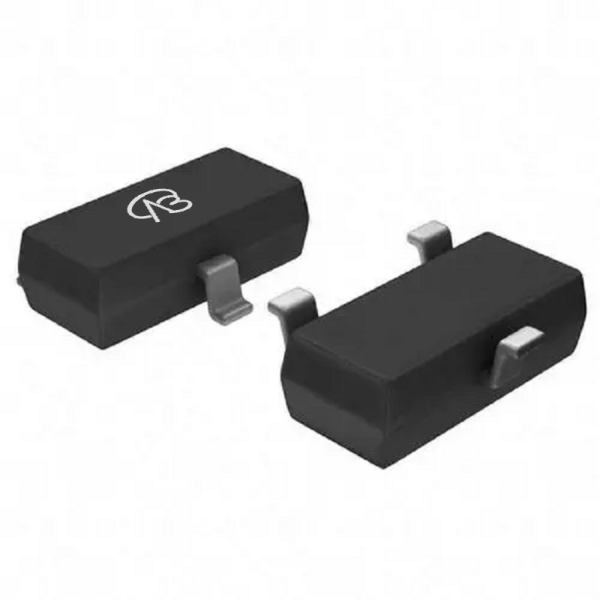
Comparative Analysis: 2N7002NXBKR (Small-Signal N-Channel) vs. VB162K
Analysis of the Original Model (2N7002NXBKR) Core:
This is a 60V N-channel MOSFET from Nexperia in a compact SOT-23 package. Its design core is to provide reliable switching for low-current signals and circuits in minimal space. Key advantages include a 60V drain-source voltage rating, a continuous drain current of 270mA, and an on-resistance (RDS(on)) of 2.2Ω at 10V gate drive. It utilizes trench MOSFET technology for good performance in a tiny footprint.
Compatibility and Differences of the Domestic Alternative (VB162K):
VBsemi's VB162K is a direct SOT-23 pin-to-pin compatible alternative. It matches the original's 60V voltage rating. The main differences are in current handling and on-resistance: VB162K has a slightly lower continuous current rating of 0.3A (300mA) and a higher on-resistance of 2.8Ω at 10V gate drive.
Key Application Areas:
Original Model 2N7002NXBKR: Ideal for general-purpose low-side switching, signal level shifting, and load switching in low-current circuits. Common in consumer electronics, IoT modules, and logic interfaces.
Alternative Model VB162K: Suitable as a functional replacement in applications where the specific 270mA current of the original is not fully utilized, and where cost or supply chain diversification is a priority.
Comparative Analysis: BUK753R1-40E,127 (High-Power N-Channel) vs. VBM1402
This comparison shifts to high-current applications, where the design pursuit is minimizing conduction loss and managing significant power dissipation.
Analysis of the Original Model (BUK753R1-40E,127) Core:
This is a 40V, 100A N-channel MOSFET from Nexperia in a TO-220AB package. Its core advantage is its very high current capability in a standard through-hole package, suitable for demanding power circuits requiring robust thermal performance.
Compatibility and Differences of the Domestic Alternative (VBM1402):
VBsemi's VBM1402 is a direct TO-220 pin-to-pin compatible alternative. It represents a significant performance enhancement. While matching the 40V voltage rating, it offers a dramatically higher continuous drain current of 180A and an extremely low on-resistance of just 2mΩ at 10V gate drive.
Key Application Areas:
Original Model BUK753R1-40E,127: Well-suited for high-current switching applications such as motor drives, power supplies, and DC-DC converters in industrial controls, automotive systems, or power tools.
Alternative Model VBM1402: An excellent upgrade choice for applications demanding even higher current capacity and lower conduction losses. It is ideal for next-generation designs seeking higher power density and efficiency, or for directly replacing the original to gain performance margin and potentially lower operating temperature.
Conclusion:
The selection path is clear:
For low-power signal switching, the original 2N7002NXBKR offers a balanced specification in a miniaturized package. The domestic alternative VB162K provides a functionally compatible option with slight parametric differences, suitable for cost-sensitive or dual-sourcing strategies.
For high-power switching, the original BUK753R1-40E,127 is a robust solution. However, the domestic alternative VBM1402 stands out as a superior performance choice, offering substantially higher current and lower on-resistance in the same package, enabling more efficient and powerful designs.
There is no universally best choice; the key is precise requirement matching. These domestic alternatives not only provide reliable backup options but, as seen with the VBM1402, can offer compelling performance advantages, giving engineers greater flexibility and resilience in their design and supply chain decisions.

Download PDF document
 Download now


