 中文
中文 English
MOSFET Selection for Compact Power Applications: 2N7002CKVL, BSP225,115 vs. China Alternatives VB162K, VBJ2251K
Number of views:9999
 Back to previous page
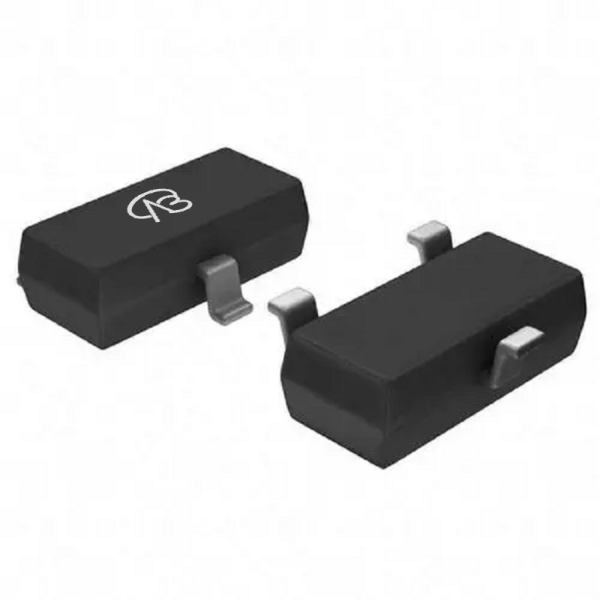
Comparative Analysis: 2N7002CKVL (N-channel) vs. VB162K
Analysis of the Original Model (2N7002CKVL) Core:
This is a 60V N-channel MOSFET from Nexperia in a compact SOT-23 package. Its design core is to provide reliable low-power switching in a minimal footprint. Key advantages include a drain-source voltage (Vdss) of 60V, a continuous drain current (Id) of 300mA, and an on-resistance (RDS(on)) of 1.1Ω at 10V gate drive. It is a classic choice for signal-level switching and low-current load control.
Compatibility and Differences of the Domestic Alternative (VB162K):
VBsemi's VB162K is also offered in an SOT-23 package and serves as a pin-to-pin compatible alternative. The main differences lie in the electrical parameters: while both are 60V N-channel devices, the VB162K has a slightly higher on-resistance (2.8Ω @10V) compared to the original's 1.1Ω. Its continuous current rating is also 300mA.
Key Application Areas:
Original Model 2N7002CKVL: Its characteristics make it suitable for general-purpose low-side switching, signal isolation, and driving small loads in space-constrained 5V-12V systems. Typical applications include level shifting, GPIO port protection, and driving LEDs or small relays.
Alternative Model VB162K: More suitable as a direct functional replacement in applications where the specific on-resistance of the 2N7002 is not critical, but pin compatibility and supply chain diversification are key priorities.
Comparative Analysis: BSP225,115 (P-channel) vs. VBJ2251K
This P-channel MOSFET is designed for applications requiring high-voltage switching in a small package.
Analysis of the Original Model (BSP225,115) Core:
This is a 250V P-channel MOSFET from Nexperia in a SOT-223 package. Its design pursues high-voltage capability for controlling inductive loads. Core advantages are a high drain-source voltage (Vdss) of -250V, a continuous drain current (Id) of -225mA, and an on-resistance (RDS(on)) of 15Ω at -10V gate drive. It is described as suitable for relay and transformer drivers.
Compatibility and Differences of the Domestic Alternative (VBJ2251K):
VBsemi's VBJ2251K is a SOT-223 packaged P-channel MOSFET offering significant performance enhancement. While both are -250V devices, the VBJ2251K boasts a much lower on-resistance (1.2Ω @-10V vs. 15Ω) and a significantly higher continuous drain current (-2.1A vs. -225mA).
Key Application Areas:
Original Model BSP225,115: Its high voltage rating makes it an ideal choice for high-side switching in 110V/220V offline applications, such as driving relays, isolating circuits, or as a startup switch in power supplies.
Alternative Model VBJ2251K: Is more suitable for upgraded scenarios requiring much lower conduction loss and higher current capability within the same high-voltage range. It can be a robust replacement in circuits like high-voltage side load switches or where improved efficiency and thermal performance are needed.
Conclusion:
This analysis reveals two distinct selection paths:
For classic N-channel, low-power switching needs, the original 2N7002CKVL offers a well-balanced performance in a tiny SOT-23 package. Its domestic alternative VB162K provides a functionally compatible option, prioritizing supply chain flexibility, albeit with a compromise on on-resistance.
For high-voltage P-channel applications, the original BSP225,115 serves its purpose in high-voltage, low-current control. Its domestic alternative VBJ2251K presents a substantial "performance-enhanced" option, featuring dramatically lower on-resistance and higher current capability, making it excellent for efficiency-critical upgrades.
The core conclusion is that selection hinges on precise requirement matching. In the context of supply chain diversification, domestic alternatives like VB162K and VBJ2251K not only provide viable backup options but also offer parameter-specific enhancements, giving engineers more flexible and resilient choices for design trade-offs and cost control. Understanding each device's design philosophy and parameter implications is key to maximizing its value in your circuit.

Download PDF document
 Download now


