 中文
中文 English
MOSFET Selection for Automotive and Power Applications: ZXMP7A17KTC, DMPH6023SK3Q-13 vs. China Alternatives VBE2610N, VBE2625
Number of views:9999
 Back to previous page
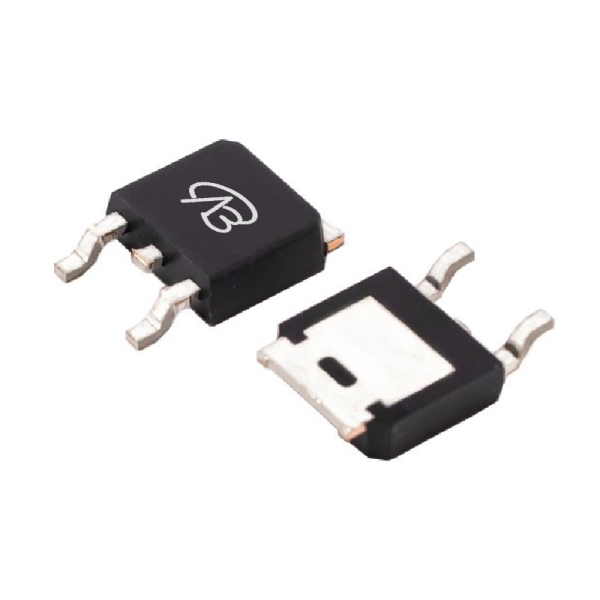
Comparative Analysis: ZXMP7A17KTC (P-channel) vs. VBE2610N
Analysis of the Original Model (ZXMP7A17KTC) Core:
This is a -70V P-channel MOSFET from DIODES in a TO-252 (DPAK) package. Its design focuses on providing reliable medium-voltage switching with a good balance of current handling and on-resistance. Key parameters include a continuous drain current of -5.7A and an on-resistance of 160mΩ at a 10V gate drive. It suits applications requiring a -70V drain-source voltage rating.
Compatibility and Differences of the Domestic Alternative (VBE2610N):
VBsemi's VBE2610N is a pin-to-pin compatible alternative in the same TO-252 package. It offers a slightly lower voltage rating (-60V) but significantly superior performance in key areas: a much higher continuous current rating of -30A and a drastically lower on-resistance (61mΩ @10V, 72mΩ @4.5V).
Key Application Areas:
Original Model ZXMP7A17KTC: Suitable for medium-power, medium-voltage switching tasks where -70V rating is utilized, such as in certain power supplies, industrial controls, or auxiliary systems.
Alternative Model VBE2610N: An excellent upgrade for applications where the -60V rating is sufficient. Its much lower RDS(on) and higher current capability make it ideal for improving efficiency and thermal performance in circuits like DC-DC converters, motor drives, or load switches handling up to -30A.
Comparative Analysis: DMPH6023SK3Q-13 (P-channel) vs. VBE2625
This comparison highlights a high-performance automotive-grade MOSFET against a powerful domestic alternative.
Analysis of the Original Model (DMPH6023SK3Q-13) Core:
This is an AEC-Q101 qualified P-channel MOSFET from DIODES, designed for demanding automotive applications. Housed in a TO-252 package, it features a -60V rating, a high continuous current of -35A, and a low on-resistance of 33mΩ @10V (40mΩ @4.5V). Its core advantage is automotive-grade reliability for engine management, body control, and in-vehicle DC-DC converters.
Compatibility and Differences of the Domestic Alternative (VBE2625):
VBsemi's VBE2625 is a direct pin-to-pin compatible alternative. It matches the -60V rating and offers a substantial performance enhancement: an even higher continuous current of -50A and a lower on-resistance of 20mΩ @10V (25mΩ @4.5V).
Key Application Areas:
Original Model DMPH6023SK3Q-13: The definitive choice for AEC-Q101 compliant automotive designs, including engine control units (ECUs), body control modules, and automotive power conversion systems.
Alternative Model VBE2625: A high-performance alternative for both automotive and industrial applications where the utmost current capability and lowest conduction loss are critical. It is perfectly suited for high-current DC-DC converters, motor drives, and power distribution systems requiring up to -50A.
Conclusion
This analysis reveals two distinct upgrade paths with domestic alternatives:
For the ZXMP7A17KTC, the alternative VBE2610N offers a major performance boost in current and RDS(on) for applications where its -60V rating is adequate.
For the automotive-grade DMPH6023SK3Q-13, the alternative VBE2625 provides significant performance gains in current and RDS(on), making it a powerful option for applications demanding maximum efficiency and power handling, including potential automotive use where AEC-Q101 qualification of the alternative is verified.
The core takeaway is precise requirement matching. In a diversified supply chain, these domestic alternatives not only provide reliable backup but also offer performance-enhanced options, giving engineers greater flexibility in design optimization and cost management. Understanding each device's parameter implications is key to unlocking its full potential in your circuit.

Download PDF document
 Download now


