 中文
中文 English
MOSFET Selection for Compact Power Applications: ZXMP10A17GTA, DMG3402L-7 vs. China Alternatives VBJ2102M, VB1307N
Number of views:9999
 Back to previous page
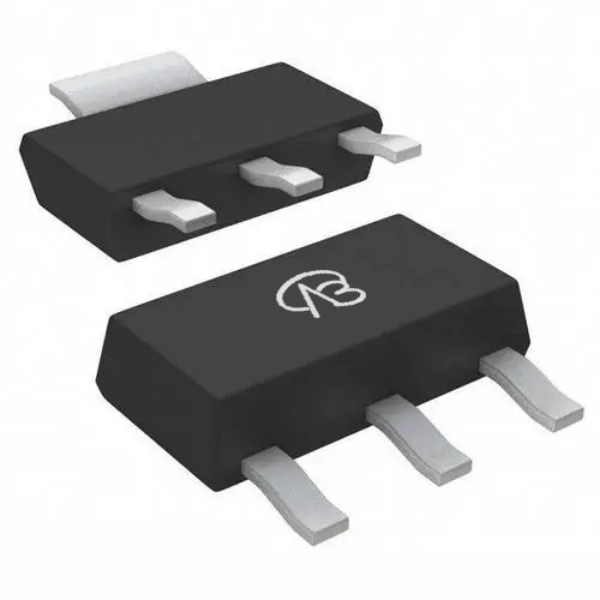
Comparative Analysis: ZXMP10A17GTA (P-channel) vs. VBJ2102M
Analysis of the Original Model (ZXMP10A17GTA) Core:
This is a -100V P-channel MOSFET from DIODES, using a compact SOT-223 package. Its design core is to provide reliable high-voltage switching in a space-conscious footprint. Key parameters include a continuous drain current of -2.4A and an on-resistance of 350mΩ @ -10V gate drive.
Compatibility and Differences of the Domestic Alternative (VBJ2102M):
VBsemi's VBJ2102M is a pin-to-pin compatible alternative in the SOT-223 package. The main differences are in the electrical parameters: VBJ2102M offers significantly lower on-resistance, specified at 230mΩ @ -4.5V and 200mΩ @ -10V, while maintaining the same -100V voltage rating and a similar continuous current rating of -3A.
Key Application Areas:
Original Model ZXMP10A17GTA: Suitable for applications requiring -100V P-channel switching with moderate current, such as power management in industrial controls, auxiliary power switches, or high-side load switches in various systems.
Alternative Model VBJ2102M: With its lower on-resistance, it is better suited for applications within the same voltage range where lower conduction loss and higher efficiency are desired, offering a performance-enhanced drop-in replacement.
Comparative Analysis: DMG3402L-7 (N-channel) vs. VB1307N
Analysis of the Original Model (DMG3402L-7) Core:
This is a 30V N-channel MOSFET from DIODES in an SOT-23 package. It balances compact size with capable performance, featuring a continuous drain current of 4A and a low on-resistance of 50mΩ @ 10V gate drive.
Compatibility and Differences of the Domestic Alternative (VB1307N):
VBsemi's VB1307N is a direct SOT-23-3 package compatible alternative. It demonstrates superior performance in key parameters: it supports a higher continuous drain current of 5A and achieves a lower on-resistance of 47mΩ @ 10V gate drive, while maintaining the same 30V voltage rating.
Key Application Areas:
Original Model DMG3402L-7: Its combination of small size, 30V rating, and 4A current capability makes it ideal for space-constrained applications like load switching, power management in portable devices, and signal level switching.
Alternative Model VB1307N: With its higher current rating (5A) and lower on-resistance (47mΩ), it is an excellent choice for upgraded designs requiring higher power handling, lower losses, and better thermal performance in the same compact footprint, such as in more demanding DC-DC converters or motor drive circuits.
Conclusion
In summary, this comparative analysis reveals clear selection and upgrade paths:
For -100V P-channel applications, the original ZXMP10A17GTA provides a solid solution. Its domestic alternative, VBJ2102M, offers a compelling performance upgrade with significantly lower on-resistance, making it suitable for efficiency-critical replacements.
For 30V N-channel applications in ultra-compact spaces, the original DMG3402L-7 offers a great balance. Its domestic alternative, VB1307N, provides a noticeable performance enhancement with higher current capability and lower on-resistance, enabling more robust designs.
The core conclusion is: Selection depends on precise requirement matching. In the context of supply chain diversification, these domestic alternatives not only provide reliable backup options but also offer performance advantages, giving engineers greater flexibility in design trade-offs and cost control.

Download PDF document
 Download now


