 中文
中文 English
MOSFET Selection for Signal-Level Switching: ZXMN7A11GTA, 2N7002DWQ-7-F vs. China Alternatives VBJ1695, VBK362K
Number of views:9999
 Back to previous page
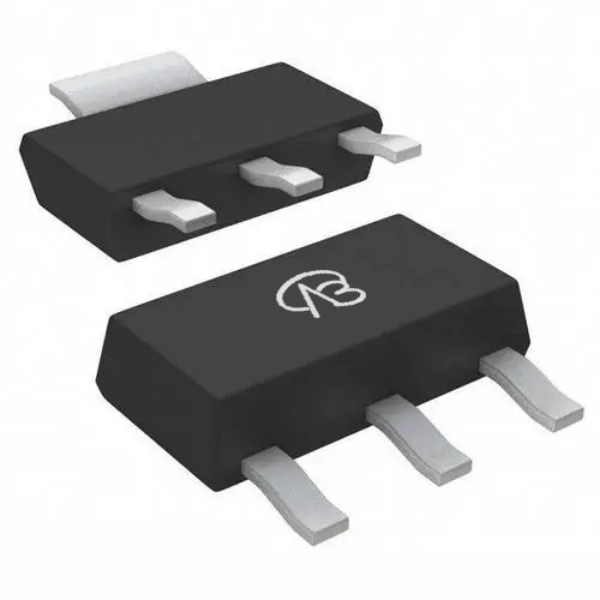
Comparative Analysis: ZXMN7A11GTA (Single N-channel) vs. VBJ1695
Analysis of the Original Model (ZXMN7A11GTA) Core:
This 70V N-channel MOSFET from DIODES in an SOT-223 package is engineered for efficient, low-voltage power management. Its next-generation trench structure delivers a balance of low on-resistance (130mΩ @10V) and fast switching speed. With a continuous drain current rating of 2.7A, it is designed for applications requiring reliable performance in a compact footprint.
Compatibility and Differences of the Domestic Alternative (VBJ1695):
VBsemi's VBJ1695 offers a pin-to-pin compatible alternative in the same SOT-223 package. Key parameter comparisons show:
Voltage Rating: VBJ1695 is rated for 60V, slightly lower than the original's 70V.
Current & On-Resistance: VBJ1695 provides a higher continuous current of 4.5A and a significantly lower on-resistance (76mΩ @10V vs. 130mΩ @10V), indicating potentially lower conduction losses.
Key Application Areas:
Original Model ZXMN7A11GTA: Ideal for efficient power management, load switching, and DC-DC conversion in 12V-48V systems where its 70V rating and 2.7A capability are sufficient.
Alternative Model VBJ1695: Better suited for applications demanding higher current handling (up to 4.5A) and lower conduction loss within a 60V framework, such as upgraded power switches or more efficient low-side switches.
Comparative Analysis: 2N7002DWQ-7-F (Dual N-channel) vs. VBK362K
Analysis of the Original Model (2N7002DWQ-7-F) Core:
This dual N-channel MOSFET in a space-saving SOT-363 package is optimized for minimal on-resistance and excellent switching performance. With a 60V rating and 230mA continuous current per channel, it excels in signal-level switching and low-power interface control where efficiency and board density are priorities.
Compatibility and Differences of the Domestic Alternative (VBK362K):
VBsemi's VBK362K is a direct dual N-channel alternative in an SC70-6 package. The key differences are:
Current & On-Resistance: VBK362K offers a slightly higher continuous current rating of 0.3A per channel. However, its on-resistance is significantly higher (2500mΩ @10V vs. 13.5Ω @10V for the original).
Key Application Areas:
Original Model 2N7002DWQ-7-F: Perfect for signal multiplexing, level translation, and low-power load switching in consumer electronics, IoT modules, and communication interfaces where its low RDS(on) is critical for signal integrity.
Alternative Model VBK362K: Suitable as a functional replacement in dual-channel switching applications where the higher on-resistance is acceptable, and the primary requirement is package compatibility and basic switching functionality at very low currents.
Conclusion:
The selection path is clear: For single N-channel applications, the domestic VBJ1695 presents a compelling performance-enhanced alternative with higher current and lower RDS(on) than the ZXMN7A11GTA, ideal for efficiency upgrades within a 60V limit. For dual N-channel signal switching, the original 2N7002DWQ-7-F retains an advantage in very low on-resistance for critical signal paths, while the VBK362K serves as a viable package-compatible alternative for less demanding current and loss requirements. Ultimately, precise matching of voltage, current, and loss parameters to the application ensures optimal circuit performance and supply chain flexibility.

Download PDF document
 Download now


