 中文
中文 English
MOSFET Selection for Automotive and High-Efficiency Power: ZXMN6A08GQTA, DMT10H032SFVW-7 vs. China Alternatives VBJ1695, VBQF1102N
Number of views:9999
 Back to previous page
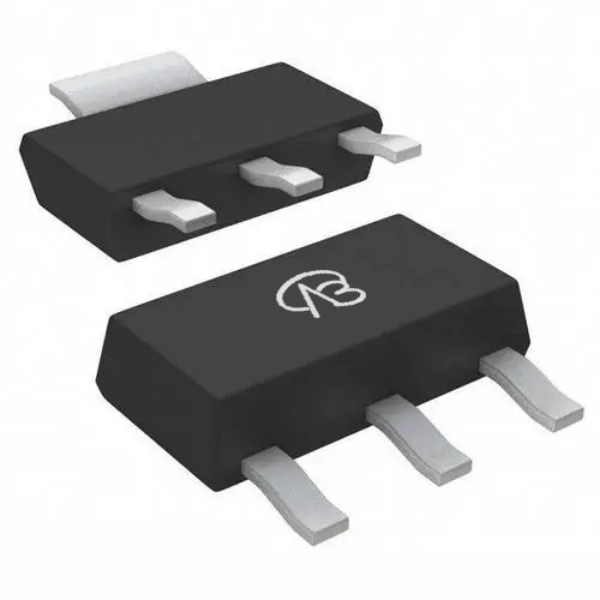
Comparative Analysis: ZXMN6A08GQTA (N-channel) vs. VBJ1695
Analysis of the Original Model (ZXMN6A08GQTA) Core:
This is a 60V N-channel MOSFET from DIODES, packaged in the compact SOT-223-3. Its design core is to meet the stringent requirements of automotive applications. The key advantages are: AEC-Q101 qualification and PPAP support, ensuring high reliability. It offers a continuous drain current of 5.3A and an on-resistance of 80mΩ @ 10V, providing a robust solution for space-constrained automotive circuits.
Compatibility and Differences of the Domestic Alternative (VBJ1695):
VBsemi's VBJ1695 is offered in the same SOT-223 package, providing direct pin-to-pin compatibility. The key differences lie in the electrical parameters: VBJ1695 has a comparable voltage rating (60V) and gate threshold voltage. Its on-resistance is slightly higher at 76mΩ @ 10V, and its continuous current rating is slightly lower at 4.5A compared to the original.
Key Application Areas:
Original Model ZXMN6A08GQTA: Its automotive-grade certification makes it the ideal choice for harsh-environment applications requiring guaranteed reliability.
Automotive BLDC Motor Control: For fans, pumps, or small actuators.
Automotive DC-DC Converters: In 12V/24V battery systems.
Load Switching in Automotive Modules: For power distribution and control.
Alternative Model VBJ1695: A viable cost-effective alternative for applications where full AEC-Q101 certification is not mandatory but similar voltage and current ratings are needed, such as in industrial controls, consumer electronics, or non-critical automotive functions.
Comparative Analysis: DMT10H032SFVW-7 (N-channel) vs. VBQF1102N
This comparison focuses on high-voltage, high-current applications where minimizing conduction loss is paramount.
Analysis of the Original Model (DMT10H032SFVW-7) Core:
This 100V N-channel MOSFET from DIODES uses the PowerDI3333-8 package. Its design pursuit is to minimize on-resistance while maintaining good switching performance. Its core advantages are:
Low Conduction Loss: An on-resistance of only 32mΩ @ 10V for a 100V device, supporting a high continuous current of 35A.
Optimized Package: The PowerDI3333-8 package offers an excellent balance between power handling capability (thermal performance) and footprint.
Compatibility and Differences of the Domestic Alternative (VBQF1102N):
VBsemi's VBQF1102N represents a significant "performance-enhanced" alternative in the same DFN8(3x3) package. It achieves a remarkable improvement in the key parameter of on-resistance: at the same 100V rating and similar 35.5A current capability, its RDS(on) is nearly halved to just 17mΩ @ 10V. This translates to substantially lower conduction losses and improved efficiency.
Key Application Areas:
Original Model DMT10H032SFVW-7: Excellent for high-efficiency power management applications requiring a balance of voltage, current, and resistance.
High-Voltage DC-DC Conversion: Primary-side or synchronous rectification in 48V/60V systems.
Motor Drives: For higher-power brushed or brushless DC motors.
Power Supplies: Server PSU, telecom rectifiers, and industrial SMPS.
Alternative Model VBQF1102N: Ideal for upgrade scenarios demanding the highest possible efficiency and power density. Its ultra-low 17mΩ RDS(on) makes it superior for applications where thermal management is critical or where output current needs to be maximized, such in next-generation high-efficiency converters or high-performance motor drives.
Conclusion:
This analysis reveals two distinct selection paths:
For automotive-grade, compact N-channel applications, the original ZXMN6A08GQTA, with its AEC-Q101 certification and robust 5.3A/80mΩ performance, remains the preferred choice for mission-critical automotive designs. Its domestic alternative VBJ1695 offers a compatible, cost-effective solution for applications where formal automotive qualification is not essential.
For high-voltage, high-current N-channel applications focused on minimizing loss, the original DMT10H032SFVW-7 provides a strong balance of 100V, 35A, and 32mΩ. The domestic alternative VBQF1102N delivers a compelling "performance leap" with its 17mΩ RDS(on), making it an excellent choice for designs prioritizing peak efficiency and thermal performance.
The core takeaway is that selection is about precise requirement matching. In the context of supply chain diversification, domestic alternatives like VBJ1695 and VBQF1102N not only provide reliable backup options but also offer opportunities for performance enhancement and cost optimization, giving engineers greater flexibility in their design trade-offs.

Download PDF document
 Download now


