 中文
中文 English
MOSFET Selection for Medium to High-Power Applications: ZXMN10A09KTC, DMTH61M5SPSWQ-13 vs. China Alternatives VBE1101M, VBGQA1602
Number of views:9999
 Back to previous page
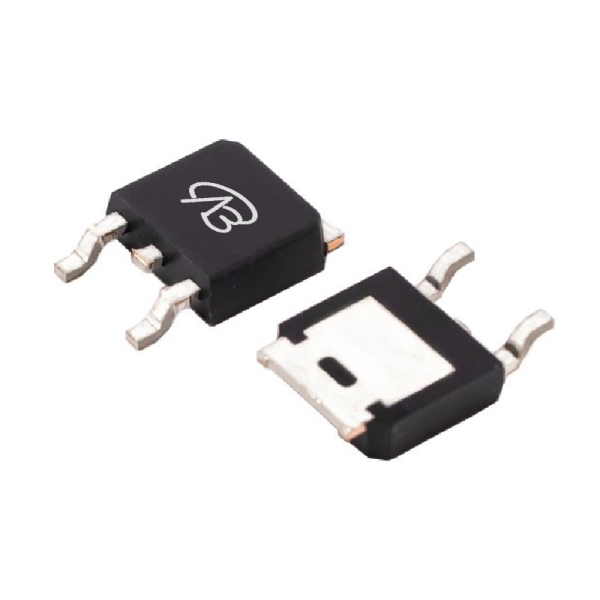
Comparative Analysis: ZXMN10A09KTC (N-channel) vs. VBE1101M
Analysis of the Original Model (ZXMN10A09KTC) Core:
This is a 100V N-channel MOSFET from DIODES in a TO-263 package. Its design focuses on efficient power management with low conduction loss and fast switching. Key advantages include a drain current of 7.7A, an on-resistance of 100mΩ at 6V, and high avalanche ruggedness, making it suitable for high-efficiency power applications.
Compatibility and Differences of the Domestic Alternative (VBE1101M):
VBsemi’s VBE1101M is a pin-to-pin compatible alternative in a TO-252 package. Key differences are in electrical parameters: VBE1101M offers a higher continuous drain current of 15A and a lower on-resistance of 114mΩ at 10V, providing improved current handling and slightly reduced conduction loss compared to the original.
Key Application Areas:
- Original Model ZXMN10A09KTC: Ideal for 100V systems requiring efficient power management, such as switching power supplies, motor drives, and DC-DC converters where low RDS(on) and fast switching are critical.
- Alternative Model VBE1101M: Suitable for applications needing higher current capacity (up to 15A) and lower conduction loss, such as upgraded power supplies, industrial controls, or automotive systems.
Comparative Analysis: DMTH61M5SPSWQ-13 (N-channel) vs. VBGQA1602
This N-channel MOSFET emphasizes ultra-low resistance and high-current capability for power-intensive applications.
Analysis of the Original Model (DMTH61M5SPSWQ-13) Core:
This 60V MOSFET from DIODES uses a PowerDI5060-8 package. Its core advantages include an extremely low on-resistance of 1.5mΩ at 10V and a high continuous drain current of 225A, enabling minimal power loss and robust performance in high-power scenarios.
Compatibility and Differences of the Domestic Alternative (VBGQA1602):
VBsemi’s VBGQA1602 is a direct alternative in a DFN8(5x6) package. It matches the 60V voltage rating but offers enhanced performance: a continuous drain current of 180A and an ultra-low on-resistance of 1.7mΩ at 10V (as low as 2mΩ at 4.5V), providing superior efficiency and thermal management in high-current applications.
Key Application Areas:
- Original Model DMTH61M5SPSWQ-13: Perfect for high-power applications like server power supplies, automotive systems, and industrial motor drives where ultra-low RDS(on) and high current (225A) are essential.
- Alternative Model VBGQA1602: Ideal for scenarios demanding high power density and efficiency, such as advanced DC-DC converters, electric vehicle components, or high-performance computing power modules, with its 180A current and 1.7mΩ RDS(on) offering a performance boost.
Conclusion:
This analysis highlights two selection paths:
- For 100V N-channel applications, the original ZXMN10A09KTC offers reliable performance with 7.7A current and 100mΩ RDS(on), while the domestic alternative VBE1101M provides enhanced current handling (15A) and lower RDS(on) (114mΩ) for upgraded designs.
- For 60V high-power N-channel applications, the original DMTH61M5SPSWQ-13 excels with 225A current and 1.5mΩ RDS(on), whereas the domestic alternative VBGQA1602 delivers strong performance with 180A current and 1.7mΩ RDS(on), suitable for efficiency-critical upgrades.
The core takeaway: Selection depends on precise requirement matching. Domestic alternatives like VBE1101M and VBGQA1602 not only offer reliable backups but also enable performance enhancements, giving engineers flexible options for design trade-offs and cost control. Understanding each device’s parameters ensures optimal circuit performance.

Download PDF document
 Download now


