 中文
中文 English
MOSFET Selection for Compact Power Applications: ZXMN10A08GTA, DMN6069SE-13 vs. China Alternatives VBJ1101M, VBJ1695
Number of views:9999
 Back to previous page
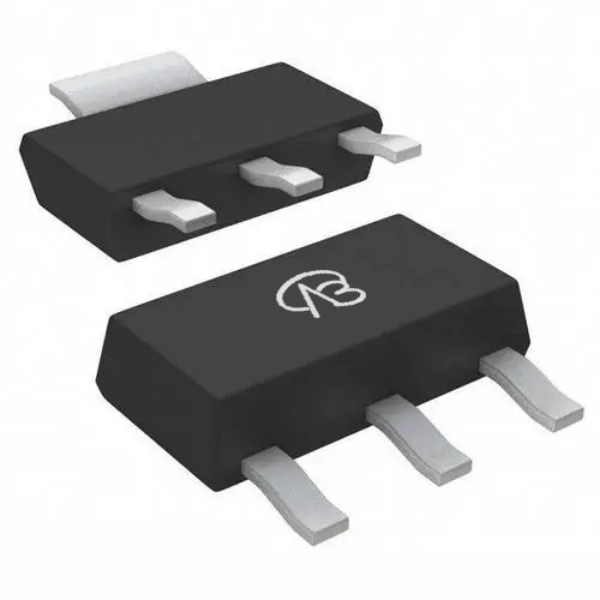
Comparative Analysis: ZXMN10A08GTA (N-channel) vs. VBJ1101M
Analysis of the Original Model (ZXMN10A08GTA) Core:
This is a 100V N-channel MOSFET from DIODES, using a compact SOT-223 package. Its design core is to provide a robust high-voltage switching solution in a space-efficient format. Key parameters include a drain-source voltage (Vdss) of 100V, a continuous drain current (Id) of 2.9A, and an on-resistance (RDS(on)) of 250mΩ at a 10V gate drive.
Compatibility and Differences of the Domestic Alternative (VBJ1101M):
VBsemi's VBJ1101M also uses the SOT-223 package and is a pin-to-pin compatible alternative. The key differences lie in the electrical parameters: VBJ1101M offers a significantly lower on-resistance of 100mΩ at 10V (vs. 250mΩ) and a higher continuous current rating of 5A (vs. 2.9A), while maintaining the same 100V voltage rating.
Key Application Areas:
Original Model ZXMN10A08GTA: Suitable for applications requiring 100V withstand voltage with moderate current, such as low-power switch-mode power supplies (SMPS), lighting controls, or high-side switches where its parameters are sufficient.
Alternative Model VBJ1101M: With its superior on-resistance and current capability, it is better suited for applications within the same voltage range that demand lower conduction losses and higher current handling, such as more efficient DC-DC converters or motor drives.
Comparative Analysis: DMN6069SE-13 (N-channel) vs. VBJ1695
Analysis of the Original Model (DMN6069SE-13) Core:
This is a 60V N-channel MOSFET from DIODES, also in SOT-223 package. It is designed to minimize conduction resistance (RDS(on)) while maintaining good switching performance. Its key advantages are: a low on-resistance of 69mΩ at 10V, a continuous drain current of 4.3A, and a drain-source voltage of 60V.
Compatibility and Differences of the Domestic Alternative (VBJ1695):
VBsemi's VBJ1695 is a direct pin-to-pin compatible alternative in SOT-223. It shows a comparable performance profile: a slightly lower on-resistance of 76mΩ at 10V (close to the original's 69mΩ), a similar continuous current rating of 4.5A (vs. 4.3A), and the same 60V voltage rating.
Key Application Areas:
Original Model DMN6069SE-13: Its low RDS(on) and good switching performance make it ideal for efficient power management applications like synchronous rectification in DC-DC converters, motor control for small brushed DC motors, or load switches in 12V/24V systems.
Alternative Model VBJ1695: Offers a highly comparable performance, making it a suitable alternative for the same application spaces—efficient DC-DC conversion, motor drives, and power management modules where a balance of low resistance, switching speed, and cost is required.
In summary, this comparative analysis reveals two clear selection paths:
For N-channel applications requiring 100V rating, the original model ZXMN10A08GTA provides a reliable solution. Its domestic alternative VBJ1101M offers a significant performance upgrade in terms of lower on-resistance and higher current capability, making it an excellent choice for efficiency-focused upgrades within the same voltage class.
For N-channel applications focused on 60V systems with low conduction loss, the original model DMN6069SE-13 delivers a strong balance. Its domestic alternative VBJ1695 provides nearly equivalent performance with a pin-to-pin compatible footprint, serving as a resilient and cost-effective alternative for maintaining design efficiency and reliability.
The core conclusion is: There is no absolute superiority or inferiority in selection; the key lies in precise matching of requirements. In the context of supply chain diversification, domestic alternative models not only provide feasible backup options but also achieve surpassing or parity in key parameters, offering engineers more flexible and resilient choice space in design trade-offs and cost control. Understanding the design philosophy and parameter implications of each device is essential to maximize its value in the circuit.

Download PDF document
 Download now


