 中文
中文 English
MOSFET Selection for Low-Voltage Signal & Medium-Voltage Switching: ZXM61N02FTA, DMN5L06K-7 vs. China Alternatives VB1240, VB162K
Number of views:9999
 Back to previous page
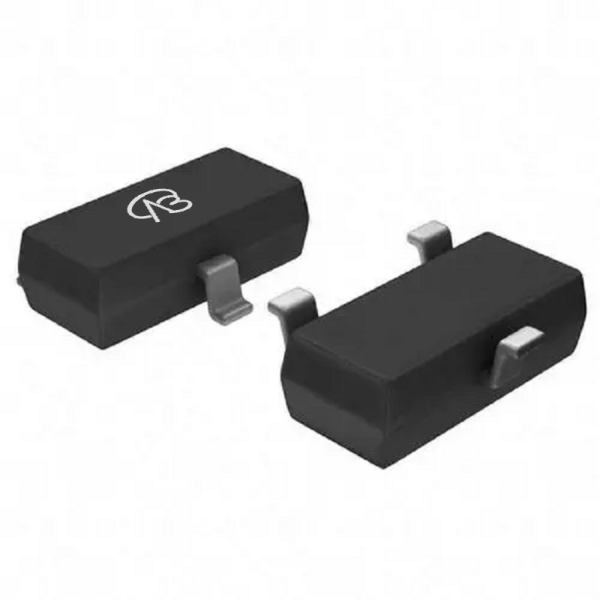
Comparative Analysis: ZXM61N02FTA (N-channel) vs. VB1240
Analysis of the Original Model (ZXM61N02FTA) Core:
This is a 20V N-channel MOSFET from DIODES in a compact SOT-23 package. Its design core is to combine low on-resistance and fast switching speed for efficient, low-voltage power management. A key parameter is its on-resistance of 180mΩ at a 4.5V gate drive and 0.93A. It supports a continuous drain current of 1.7A.
Compatibility and Differences of the Domestic Alternative (VB1240):
VBsemi's VB1240 is a pin-to-pin compatible alternative in the SOT-23 package. The main differences are significantly improved electrical parameters: VB1240 offers a much lower on-resistance of 28mΩ at 4.5V and a higher continuous current rating of 6A at the same 20V voltage rating.
Key Application Areas:
Original Model ZXM61N02FTA: Ideal for low-voltage, low-to-medium current switching applications where space is limited. Typical uses include:
Load switching and power management in portable electronics.
Signal switching and level shifting in low-power circuits.
As a switch in low-current DC-DC converters or power path control.
Alternative Model VB1240: Suited for the same application spaces but where significantly lower conduction loss and higher current handling (up to 6A) are required, enabling more robust design or efficiency gains in compact 20V systems.
Comparative Analysis: DMN5L06K-7 (N-channel) vs. VB162K
This comparison shifts to small-signal MOSFETs designed for higher voltage, lower current switching duties.
Analysis of the Original Model (DMN5L06K-7) Core:
This is a 50V, 300mA N-channel MOSFET from DIODES in a SOT-23 package. Its design is optimized for medium-voltage switching with very low gate drive requirements. It features an on-resistance of 2.5Ω at 2.5V gate drive and 50mA.
Compatibility and Differences of the Domestic Alternative (VB162K):
VBsemi's VB162K is a direct pin-to-pin compatible alternative. It offers a higher voltage rating of 60V and a comparable continuous current of 0.3A. Its on-resistance is 3.1Ω at 4.5V gate drive. This makes it a suitable replacement, especially where a higher voltage margin is beneficial.
Key Application Areas:
Original Model DMN5L06K-7: Perfect for low-current switching, signal isolation, or driving small loads in 24V-48V systems. Common applications include:
Switching in telecommunication line interfaces or industrial control I/O modules.
Driving small relays, LEDs, or other low-power peripherals.
Signal path selection in medium-voltage analog or digital circuits.
Alternative Model VB162K: A robust alternative for similar low-current switching applications, particularly advantageous where the design requires a higher voltage safety margin (up to 60V) without increasing the footprint.
Conclusion:
This analysis reveals two distinct selection paths based on voltage and current needs:
1. For low-voltage (20V) applications demanding high current density and low loss in a SOT-23 package, the domestic alternative VB1240 presents a substantial performance upgrade over the original ZXM61N02FTA, offering much lower RDS(on) and higher current capability for enhanced efficiency and power handling.
2. For medium-voltage (50V-60V), low-current signal switching and isolation, both the original DMN5L06K-7 and the domestic alternative VB162K are viable. The choice depends on the specific voltage requirement (50V vs. 60V) and the preferred gate drive characteristics.
The core takeaway is that selection hinges on precise requirement matching. Domestic alternatives like VB1240 and VB162K not only provide reliable, pin-compatible options but also offer opportunities for parameter enhancement or cost optimization, giving engineers greater flexibility in their design and supply chain strategy. Understanding each device's parameter implications is key to unlocking its full value in the circuit.

Download PDF document
 Download now


