 中文
中文 English
MOSFET Selection for Medium-Voltage Switching and Low-Voltage Power Management: ZVP4424GTA, ZXMN2A14FTA vs. China Alternatives VBJ2201K, VB1240
Number of views:9999
 Back to previous page
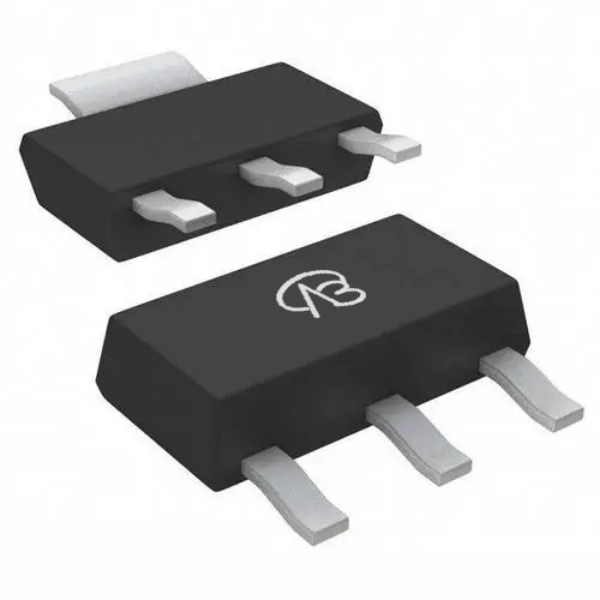
Comparative Analysis: ZVP4424GTA (P-channel) vs. VBJ2201K
Analysis of the Original Model (ZVP4424GTA) Core:
This is a 240V P-channel MOSFET in a compact SOT-223-4 package. Its design core is to provide reliable high-voltage switching and control in a small form factor. Key advantages include a high drain-source voltage (Vdss) of 240V, a continuous drain current (Id) of 480mA, and an on-resistance (RDS(on)) of 11Ω at a 10V gate drive. This combination makes it suitable for applications where space is limited but higher voltage isolation is required.
Compatibility and Differences of the Domestic Alternative (VBJ2201K):
VBsemi's VBJ2201K is also a P-channel MOSFET in an SOT-223 package, offering a pin-to-pin compatible alternative. The main differences are in the electrical parameters: VBJ2201K has a slightly lower voltage rating (-200V) but offers significantly improved current handling (-2A) and a much lower on-resistance (1000mΩ @10V, 900mΩ @4.5V) compared to the original model.
Key Application Areas:
Original Model ZVP4424GTA: Ideal for medium-voltage, lower-current switching applications where 240V capability is critical. Typical uses include:
High-voltage signal switching or isolation circuits.
Protection switches in offline power supplies or industrial controls.
Load switching in appliances or HVAC systems.
Alternative Model VBJ2201K: Better suited for P-channel applications requiring higher current capability (up to 2A) and lower conduction loss, even with a slightly reduced voltage margin (200V). Suitable for upgraded power paths, solid-state relays, or motor control circuits within its voltage range.
Comparative Analysis: ZXMN2A14FTA (N-channel) vs. VB1240
This N-channel MOSFET focuses on efficient power management in low-voltage, high-current scenarios.
Analysis of the Original Model (ZXMN2A14FTA) Core:
Housed in a tiny SOT-23 package, its design pursues a balance of low on-resistance and fast switching for space-constrained, efficient applications. Its core advantages are:
Good conduction performance: With an on-resistance of 60mΩ at 4.5V gate drive, it supports a continuous drain current of 4.1A.
Fast switching: Its trench structure provides quick switching speeds, beneficial for high-frequency DC-DC conversion.
Compact footprint: The SOT-23 package is ideal for portable and miniaturized devices.
Compatibility and Differences of the Domestic Alternative (VB1240):
VBsemi's VB1240, also in an SOT-23-3 package, represents a "performance-enhanced" alternative. It matches the 20V voltage rating but offers superior key parameters: a significantly higher continuous current of 6A and a much lower on-resistance of 28mΩ at 4.5V (42mΩ at 2.5V). This translates to lower power loss and higher current capability in a similar footprint.
Key Application Areas:
Original Model ZXMN2A14FTA: Excellent for low-voltage, moderate-current applications where efficiency and size are priorities. Examples include:
Load switches and power management in battery-powered devices (5V/3.3V systems).
Low-side switches in point-of-load (POL) DC-DC converters.
Motor drive for small fans or actuators.
Alternative Model VB1240: Ideal for upgrade scenarios demanding higher current (up to 6A) and lower conduction loss. Perfect for more demanding DC-DC converters, power switches in compact gadgets, or driving larger loads within the 20V range.
Conclusion
This analysis reveals two distinct selection paths based on application needs:
For medium-voltage P-channel switching, the original ZVP4424GTA, with its 240V rating, is the go-to choice for applications where high-voltage blocking is paramount. Its domestic alternative, VBJ2201K, trades some voltage margin for significantly better current handling (2A) and lower on-resistance, making it a strong candidate for higher-current switching within 200V systems.
For low-voltage N-channel power management, the original ZXMN2A14FTA offers a solid balance of 4.1A current and 60mΩ resistance in a miniaturized SOT-23 package. The domestic alternative VB1240 provides a clear performance upgrade with 6A current capability and 28mΩ on-resistance, enabling higher power density and efficiency for demanding compact designs.
The core takeaway is that selection depends on precise requirement matching. Domestic alternatives like VBJ2201K and VB1240 not only offer viable, pin-compatible replacements but also present opportunities for performance enhancement in specific areas, giving engineers greater flexibility in design trade-offs and supply chain resilience. Understanding each device's parameter implications is key to leveraging its full value in your circuit.

Download PDF document
 Download now


