 中文
中文 English
MOSFET Selection for Medium-Voltage Switching and High-Current Applications: ZVN4424GQTA, DMT31M6LPS-13 vs. China Alternatives VBJ1252K, VBQA1301
Number of views:9999
 Back to previous page
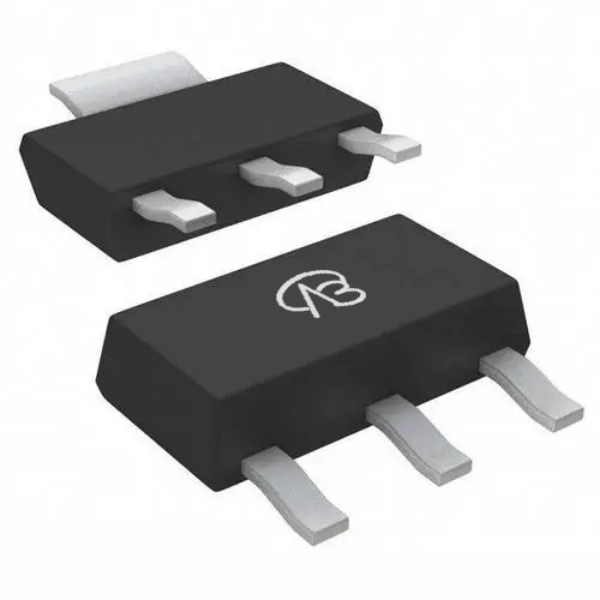
Comparative Analysis: ZVN4424GQTA (N-channel) vs. VBJ1252K
Analysis of the Original Model (ZVN4424GQTA) Core:
This is a 240V N-channel MOSFET from DIODES in a compact SOT-223 package. It is designed to minimize on-resistance while maintaining excellent switching performance, making it ideal for efficient power management. Key advantages include a high drain-source voltage rating of 240V, a continuous drain current of 500mA, and an on-resistance of 4.3Ω at 2.5V gate drive.
Compatibility and Differences of the Domestic Alternative (VBJ1252K):
VBsemi’s VBJ1252K is offered in a similar SOT-223 package and serves as a functional alternative. The main differences are in electrical parameters: VBJ1252K has a slightly higher voltage rating (250V) and a lower on-resistance of 2000mΩ (2Ω) at 10V gate drive, but a lower continuous current rating of 0.79A compared to the original.
Key Application Areas:
Original Model ZVN4424GQTA: Suitable for medium-voltage, low-to-moderate current switching applications such as offline auxiliary power supplies, LED drivers, or relay/valve control circuits in the 100-240V range.
Alternative Model VBJ1252K: A viable alternative for applications requiring a 250V rating and where the lower current (0.79A) is sufficient, such as in certain low-power AC-DC converters or protection circuits.
Comparative Analysis: DMT31M6LPS-13 (N-channel) vs. VBQA1301
This comparison shifts to high-current, low-voltage switching, where the design priority is minimizing conduction losses in power-dense applications.
Analysis of the Original Model (DMT31M6LPS-13) Core:
This 30V N-channel MOSFET from DIODES uses a PowerDI5060-8 package designed for superior thermal performance. Its core advantages are an extremely low on-resistance of 1.35mΩ at 10V and a very high continuous drain current rating of 150A, making it engineered for high-efficiency, high-current power paths.
Compatibility and Differences of the Domestic Alternative (VBQA1301):
VBsemi’s VBQA1301 comes in a DFN8(5x6) package and represents a performance-competitive alternative. It matches the 30V voltage rating and offers a slightly higher on-resistance of 1.2mΩ at 10V, but with a still-robust continuous current rating of 128A.
Key Application Areas:
Original Model DMT31M6LPS-13: Ideal for high-current DC-DC conversion (e.g., VRM, POL converters), motor drives, or battery protection circuits in 12V/24V systems where minimizing conduction loss is critical.
Alternative Model VBQA1301: A strong domestic alternative for applications requiring high-current switching up to 128A, such as in server power supplies, automotive systems, or high-power LED drivers, offering a good balance of performance and supply chain diversification.
Conclusion:
This analysis outlines two distinct selection paths:
For medium-voltage (200-250V) switching, the original ZVN4424GQTA offers a balanced 240V/500mA profile, while the domestic VBJ1252K provides a higher voltage rating (250V) with a lower current capability, suitable for voltage-critical, lower-current designs.
For high-current, low-voltage switching, the original DMT31M6LPS-13 excels with its ultra-low 1.35mΩ RDS(on) and 150A current rating for maximum efficiency. The domestic VBQA1301 presents a compelling alternative with 1.2mΩ RDS(on) and 128A capability, suitable for designs prioritizing supply chain resilience with minimal performance trade-off.
The core takeaway is that selection depends on precise requirement matching. Domestic alternatives like VBJ1252K and VBQA1301 provide viable, performance-competitive options, enhancing design flexibility and supply chain robustness.

Download PDF document
 Download now


